
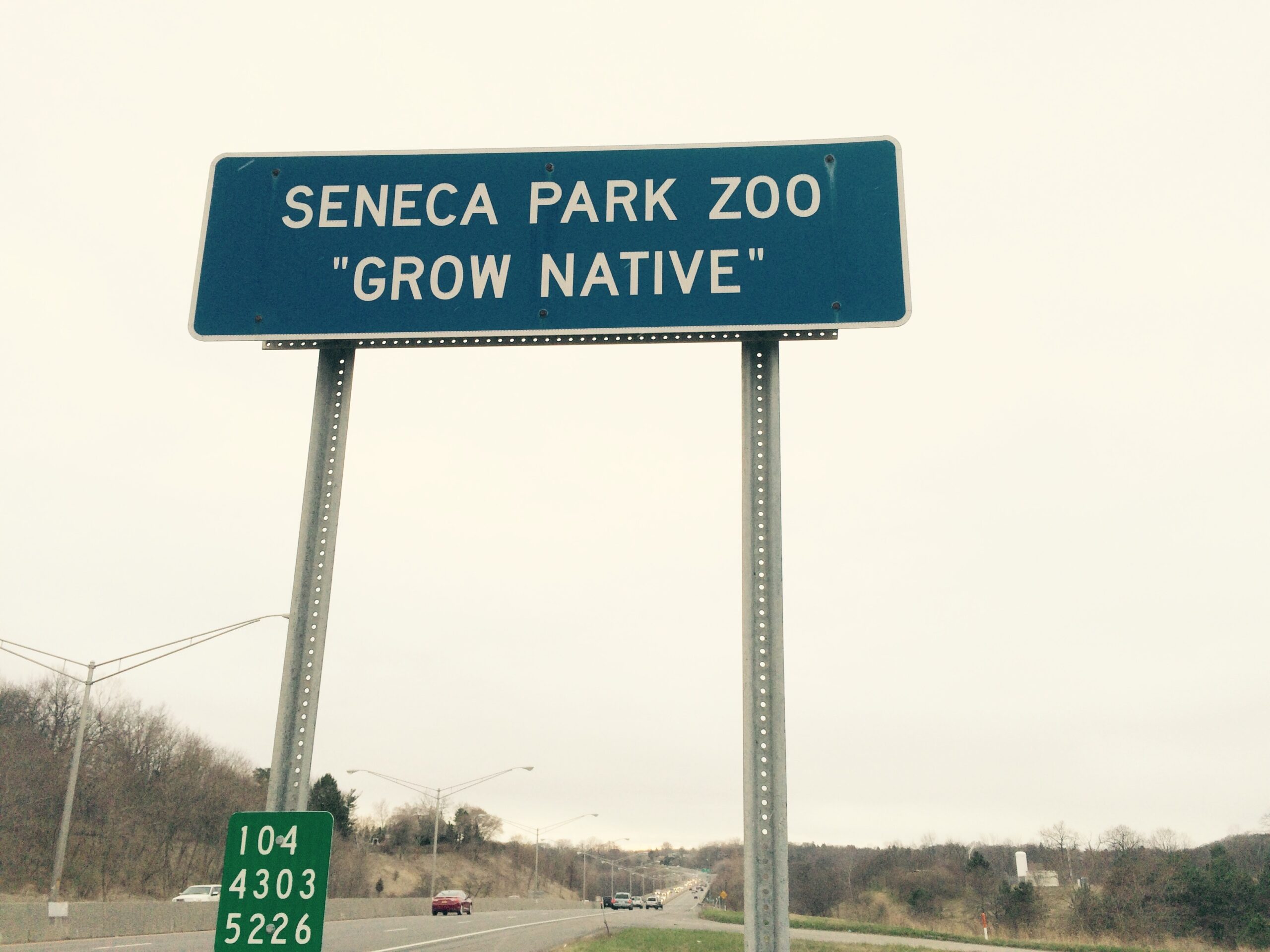
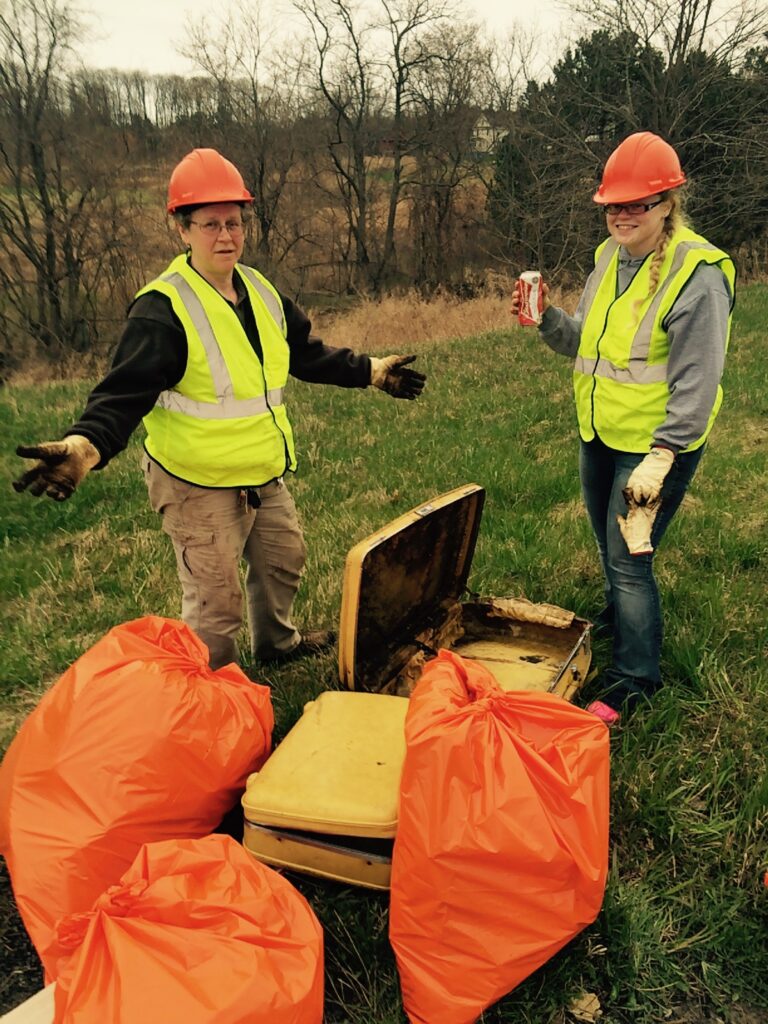
In their Department of Transportation hardhats and fluorescent vests, members of the American Association of Zoo Keepers (AAZK) chapter of Seneca Park Zoo have been busy beautifying Bay Bridge overlook, adjacent to the highway sign “Seneca Park Zoo, ‘Grow Native’.” For the last decade, Zoo staff has picked up litter at the site and maintained a garden of wildflowers native to Upstate New York such as blue lupines, orange milkweed and yellow black-eyed Susans.
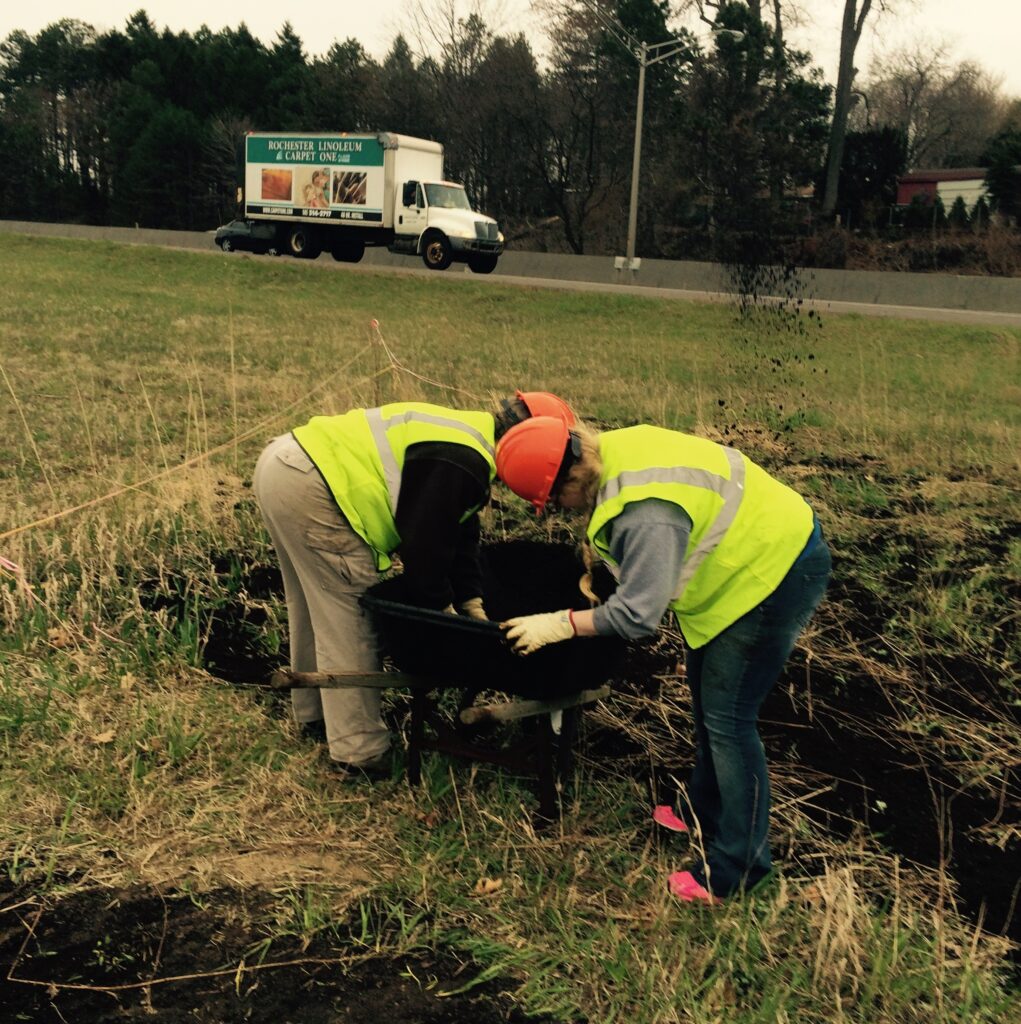
Our goal is to raise community awareness about the benefits of native gardening while cleaning litter from one of the most scenic meadows to be seen just before crossing above Irondequoit Bay.
Native flowers do not require fertilizer, which damages our waterways with excessive phosphorous and nitrogen, causing algal blooms which pose wildlife, pet and human health risks. Native flowers also do not require additional water given their acclimation to our Upstate environment.
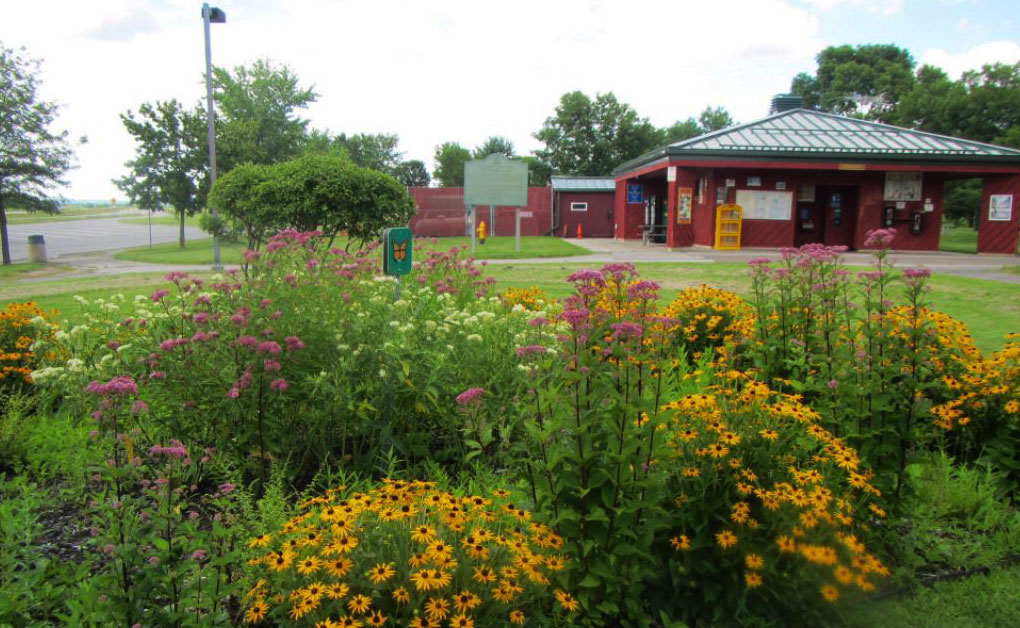
Growing native flowers instead of exotic ornamentals will help displace and prevent aggressive, invasive plant species from harming habitat.
Not using fertilizer or additional water and displacing invasive plant species are all welcomed practices to protect our waterways and beautify our communities the “natural” way. Go native — grow native in your own yard!
— Blog by Dr. Jeff Wyatt, Director of Animal Health and Conservation


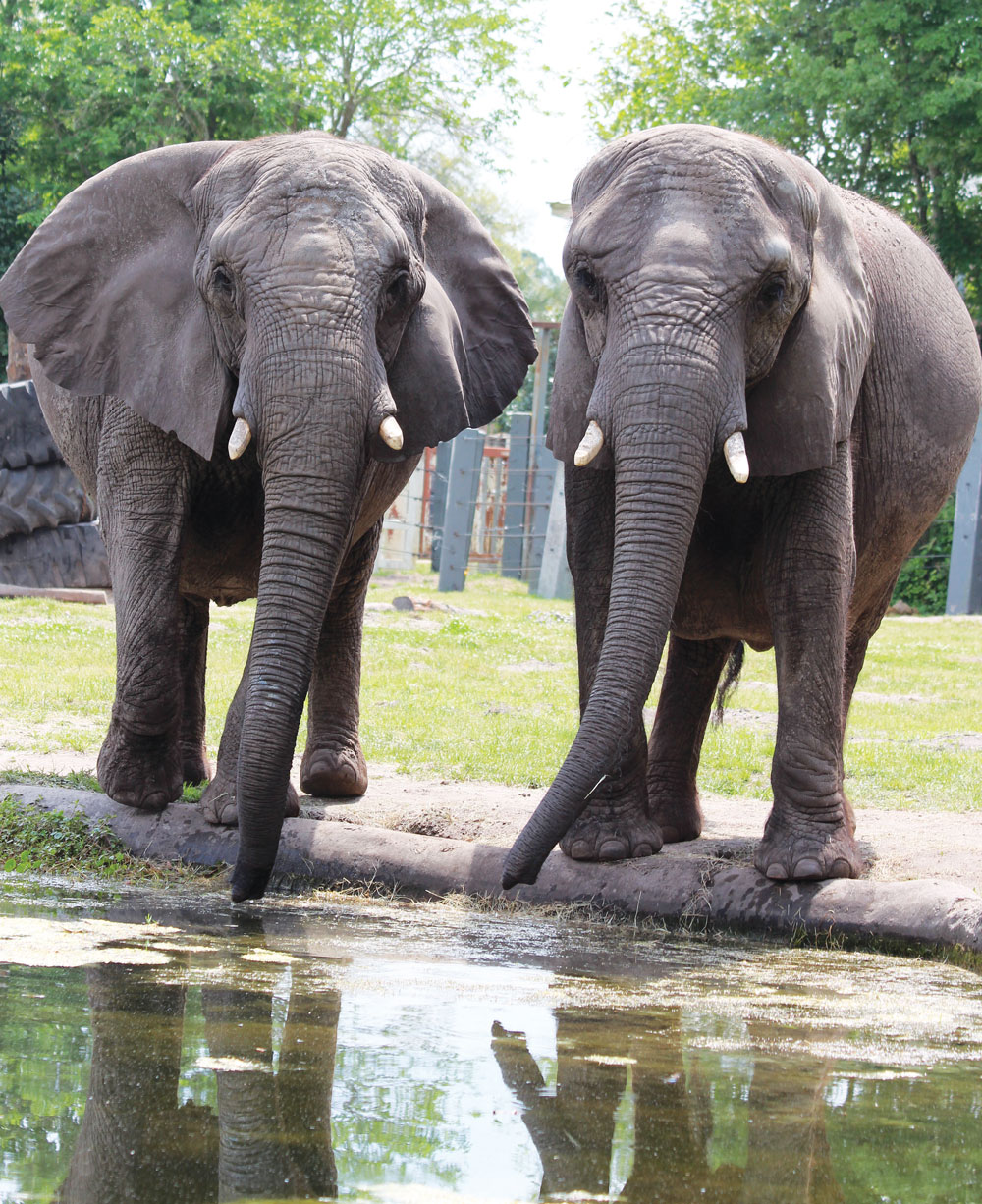


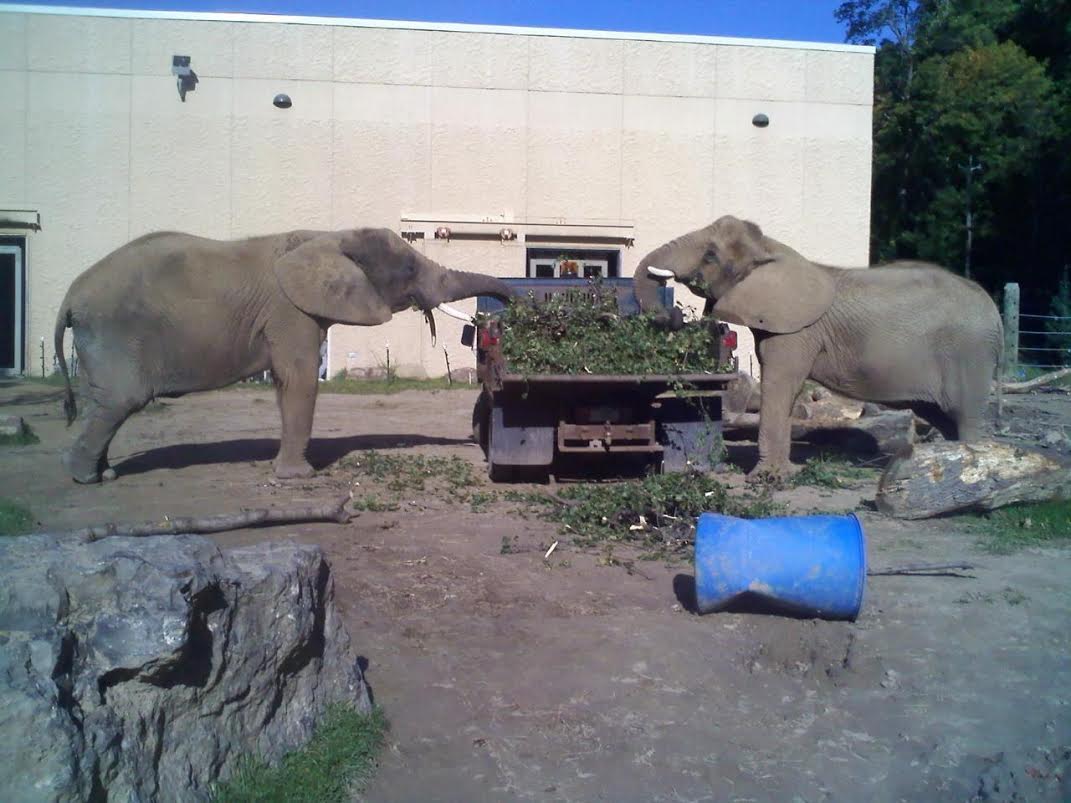

 The goal is to encourage species-appropriate appetite behaviors, as well as to promote dental health. Since elephant teeth migrate forward (not vertically), it is important that the right type of food is offered to promote dental health and allow for the natural progression of each molar.
 So the answer to the question “Do the elephants really eat trees?” is YES! Their favorites are sugar maple, Norway maple, silver maple and willow. They eat the leaves and small branches completely, chew the bark off of the medium size branches, and use their tusks to scrape the bark off of the large logs.