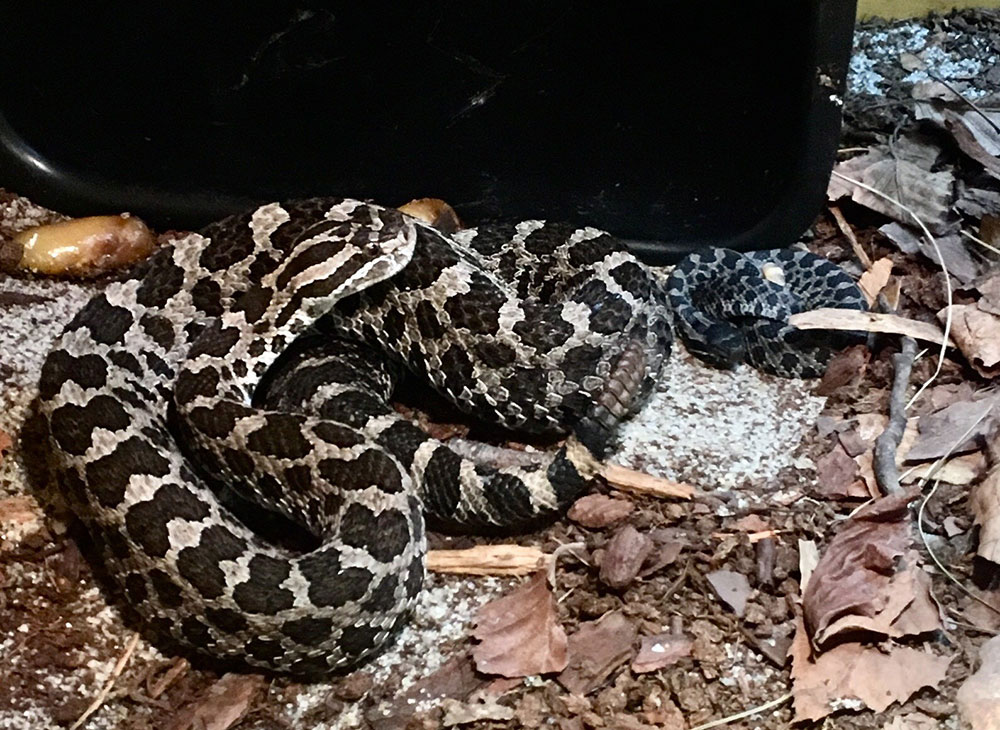
Solo: A Rattlesnake Conservation Story

November 14, 2018

On October 11, 2018, I received a surprising and unexpected call on my phone, “We have at least one baby Eastern Massasauga Rattlesnake!” Wow! This is something that hasn’t happened at Seneca Park Zoo since 1997, and something we (well, actually the snakes …) have been working to achieve for over 10 years.

The mother, Braveheart, was born at the Buffalo Zoo on July 8, 2013. She is named for the small heart shaped pattern on both of her parietal scales on top of her head. The father, Striker, came from the Toronto Zoo and is approximately four years old. He is aptly named for obvious reasons.In natural range, Eastern Massasauga Rattlesnakes (EMR’s) breed in the spring/summer and give birth the next summer. Females usually give birth every other season and sometimes in three-year cycles. A typical litter may consist of anywhere between 3-19 baby snakes (neonates), but smaller liters are more common. This gives EMR’s a really low biotic potential when it comes to reproduction. Paired with other threats, EMR’s have become federally threatened and Endangered in New York State.

After receiving the radio call, I decided to move Striker into another habitat with a lone male, Molson, to give Mom a break. This way she could continue to give birth. The following day, I came in to find that we had one neonate EMR and four undeveloped ova. We often refer to these as slugs – or eggs that were never fertilized. Mom and baby were seen laying together (see image above). Although rattlesnakes do not provide care to their young, it is common for them to spend time together after giving birth. Sometimes it can last up to a week.We named this new snake Solo, a fitting title since it was born without brothers and sisters, and it is the first Eastern Massasauga Rattlesnake born at any AZA-accredited zoo this year! This snake will be residing off exhibit as it grows and possibly moves to another recommended AZA institution. Once we determine the sex, it will be recommended to be paired with another EMR by the Eastern Massasauga Rattlesnake Species Survival Plan (SSP).

Every birth of an endangered species is a step forward towards a sustainable future for their counterparts in nature. Learn more about the Zoo’s work in the field for EMRs here.

– John Adamski, Assistant Curator

Recognizing the efforts of innovative leaders

September 4, 2018

One of the things I’ve learned in my four years at the Zoo Society is that there are many people, nonprofits, and companies that share our passion for protecting the environment and living more sustainably.  And they are taking actions in their own lives and in their business practices to ensure our region has a greener tomorrow.  Rochester has always been a hub of innovation, and this movement into the ecological age has brought innovations in every type of business, as well as the inception of entirely new organizations.   But – so far – no one was recognizing these successes and sharing these stories.  We created the Environmental Innovation Awards to honor the efforts of innovative leaders in our region, and, in so doing, inspire us all.  But we didn’t want to just host an awards event: we wanted to bring something new to our region, so we invited internationally renowned green design expert Bill Browning to join us.  He’ll speak with all of our guests at our awards breakfast about how (and why) we can bring nature into the workplace, and then he’ll be featured in a symposium, “Innovation Inspired by Nature.”   

Bill’s expertise in green design and sustainability has been sought by numerous governmental agencies and major corporations including Google, Walmart and Disney.  Bill and I recently were featured on WXXI’s Connections program, and you’ll find a link to the podcast here.  Take a listen, and you’ll get a taste of how powerful having Bill Browning with us can be.  Special thanks to our lead sponsor CPL, whose support for this event is making possible Bill’s participation.  If you know of a person or company that is deserving of recognition for their innovative environmental practices, please consider nominating them and helping us share as many great stories as possible.  Awards will be given in five categories:  Large Business, Small Business, Nonprofit/Civic, Individual, and Youth.  Self-nominations are welcome.  Click the button below to find out more. But don’t wait – nominations are due September 10 at noon.   

And I hope you’ll join us in celebrating environmental innovation and leadership in our region on October 25.  Together, we can all help ensure a greener tomorrow for our region.  

– Pamela Reed Sanchez, President and CEO, Seneca Park Zoo SocietyNominate an Environmental Innovator

Using camera traps to discover local wildlife

June 11, 2018

Did you know you can help local wildlife simply by setting up a trail camera in your backyard? Trail cameras, or camera traps, are used by organizations around the world to study and help conserve wildlife. Cameras are a way to observe wildlife without disrupting animals or the environment.

On Saturday, June 16, Seneca Park Zoo will be hosting Camera Traps as Conservation Tools, a day dedicated to showing guests how camera traps are used to contribute to conservation. Interactive stations and animal experiences will provide an in-depth look at conservation methods with the goal of empowering guests to support organizations that use camera traps, like Snow Leopard Trust or even your Zoo, or by setting up their own cameras to observe the wildlife right in their backyards!

Kirk Doran, a member of the Zoo Society’s Education Committee, moved to Rochester from Indiana four years ago and now calls Bushnell’s Basin home. A nature enthusiast with a house near Powder Mills Park, Kirk has set up trail cameras to capture images of the animals that venture onto his property.Q: Where did you set up your trail camera?
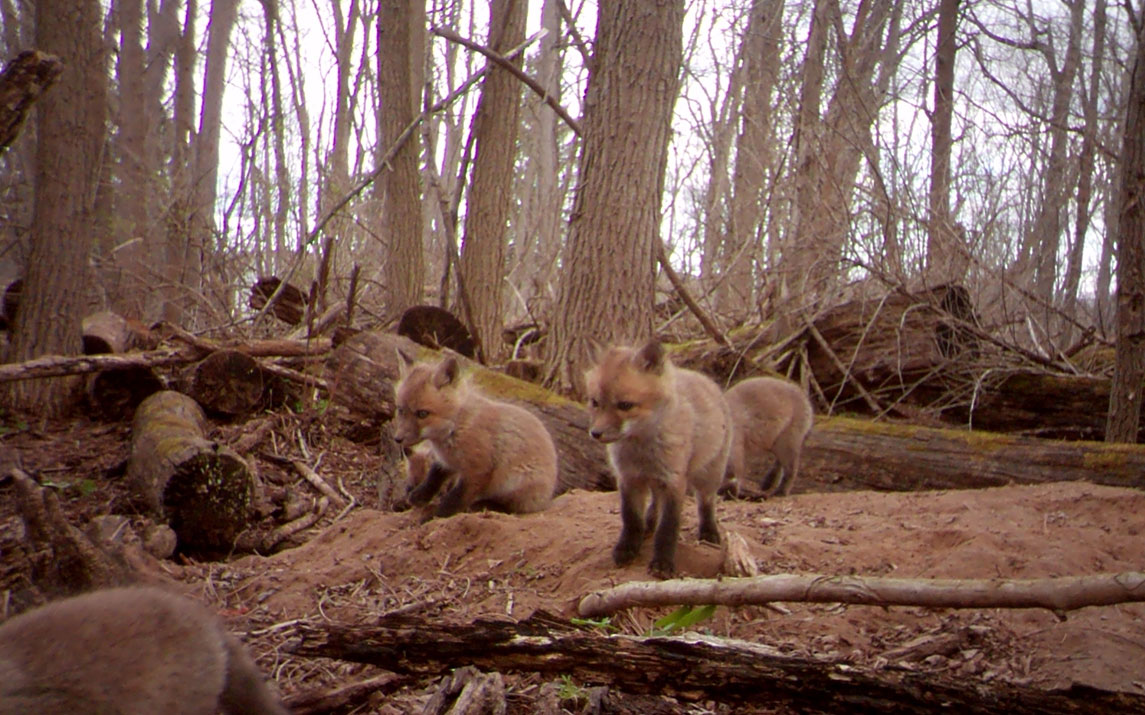
Kirk: We have about two to three acres of land with mature trees behind our home. Initially, I set up a camera just in the backyard and it caught foxes, skunk, the neighbor’s cat, lots of deer, wild turkey, coyotes, and more. But two years ago, in February, I noticed we had some baby foxes playing behind our fence – the den was about 10 feet from the back of the fence – so I put a camera next to one of the den openings.

Q: What was it like to have a family of foxes living on your property?
Kirk: It was amazing to watch the babies grow up, being nursed, and the parents bringing back game for them. I set up a second trail camera that records video to get even more footage of the foxes growing up. My wife and I watched them all summer long. We hoped they would return the following year and indeed – the same father, with a new female, was back in the den with a new liter. Our cameras captured images the babies coming out of their den for the first time but soon after, the mother moved them to a different location.

Q: Have your experiences with trail cameras taught you more about wildlife?
Kirk: I’ve always had an interest in wildlife, and now I find myself doing research to learn more about the behaviors of species we catch on camera. You wouldn’t think of some of these animals living around here, but you’d be surprised at what the camera captures.Q: What type of trail cameras do you have?
Kirk: Trail cameras are easy to find, whether online or in stores like DICKS or Field & Stream. But there are an overwhelming number of options out there. You can find something simple, easy-to-use, and affordable that still captures quality images.

I have a basic Moultrie trail camera that I got as a gift about five or six years ago. My other camera that captures video is one I bought right off Amazon.

Q: Can anyone use camera traps to observe wildlife?
Kirk: Camera trapping is easy for anyone to pick up. Whether you live in a more residential or rural area, you’d be surprised at the animals you see traveling through your backyard.

Q: What have you enjoyed most about camera trapping?
Kirk: Being able to witness those baby foxes grow up was incredible. It was almost like having a family of pets that we grew attached to. We were sad when they left. I can’t really put into words how exciting it was. Almost every evening at dusk we’d see them playing in the background.

Q: Did you do attempt to do anything for the animals?
Kirk: Wildlife always needs water, so at the end of one of the seasons, I put a big pan of water in our backyard. Within three weeks, the cameras captured many images of foxes, skunks, birds, opossums, deer, and more – all using that dish as a source of water. Even in a more residential neighborhood, water can bring in all types of wildlife.While the family of foxes has moved on, Kirk recently noticed a family of groundhogs has moved into the den and had baby groundhogs! He’s looking forward to following their journey.


Be sure to visit the Zoo Saturday, June 16, for Camera Traps as Conservation Tools Day to learn how you can get involved.

Paving the Way for Pollinator Migration

May 31, 2018

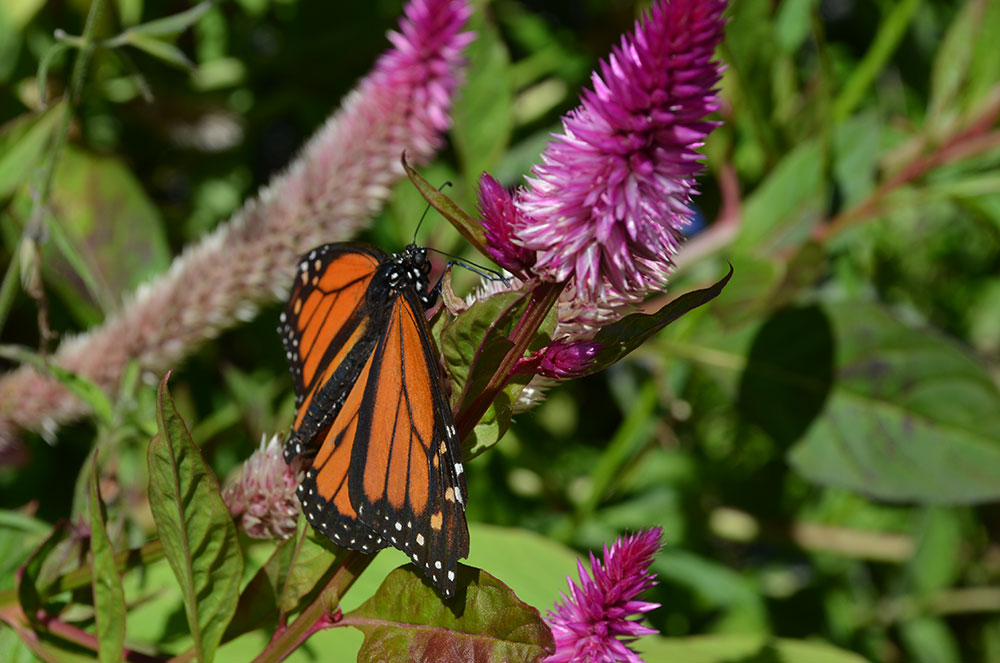
It’s nearly summer, but it’s not too late to plant a pollinator garden at your home. It’s important to keep in mind the variety of organisms that use your lawn or garden as a habitat, and to create some space on your property to assist them throughout their lifecycles.The Seneca Park Zoo Society is entering another season of our Butterfly Beltway Project, planting pollinator habitats with native New York plants that promote shelter, food, and host materials for these insects. Our goal is to increase the combined square footage of pollinator habitats throughout the urban and suburban centers of Rochester, as well as to make our pollinator habitats more accessible for a homeowner to plant on their property. To achieve this goal, we created a Pollinator Habitat Garden Kit, which is a packet of seed mix with over twenty species of local New York pollinator supporting plants that provide everything a pollinator species needs to live in our environment. We have packets that cover 100 and 250 square feet with instructions inside that outline how to easily sow the seeds in any part of your property.We are focusing on creating habitats for pollinating species of insects and other animals because pollination is incredibly important for the planet. Pollination plays a crucial role in flowering plant reproduction and in the production of most fruits and vegetables. These habitats are also used by monarch butterflies on their fall migration from Rochester to Mexico by creating waystations with food and shelter leading out of the urban areas and increasing survival rates of migrating monarchs.

Stop by the ZooShop during your next trip to the Zoo to purchase your very own Pollinator Habitat Garden Kit. Once you’ve planted your garden, we encourage you to register your garden with the Zoo Society so we can add it to our database.– Dave Will, Lead Zoo Naturalist for Citizen ScienceRegister Your Garden

Southern White Rhinos: The Conservation Story

May 3, 2018

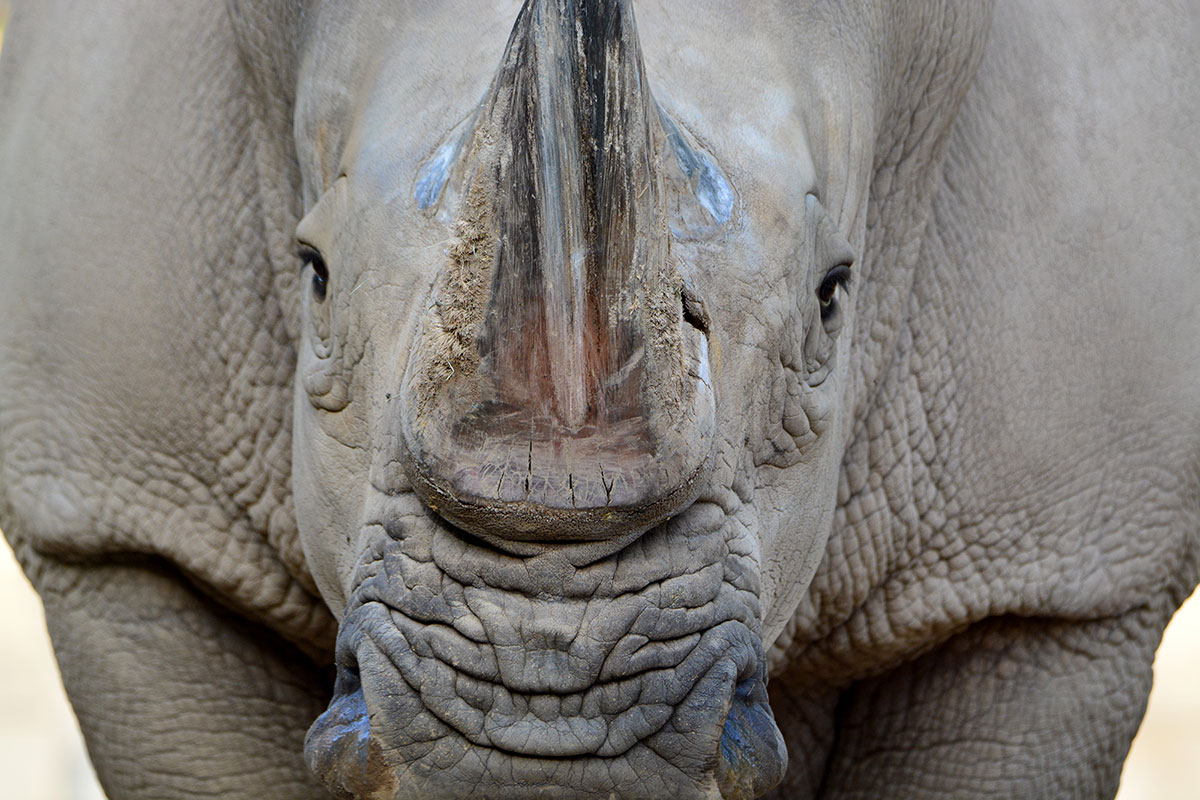
If you have visited Seneca Park Zoo you have probably met Bill the southern white rhinoceros, an impressive megaherbivore who has stolen the hearts of guests and staff alike. It’s hard to look into the eyes of such an incredible animal and think about the brutal poaching crisis rhinos are facing in their natural range. But if you have met Bill, you have already contributed to saving his species.The southern white rhino conservation story is one of rare overwhelming success. While the historical range of these rhinos was at one time widespread across southern Africa, they were believed to be extinct in the late 19th century. However, in 1895 a population of less than 100 individuals was discovered in the Kwazulu-Natal region of South Africa. Conservationists worked hard to protect this small population, and they began efforts to rebuild the species. Then came Ian Player, a passionate conservationist who spearheaded Operation Rhino at the Hluhluwe-iMfolozi Park. During the 1950s and 1960s, Player and his team worked tirelessly on this project to translocate white rhinos from iMfolozi to restock other neighboring reserves including Kruger National Park, where the largest population of white rhinos currently live. Thanks to the determination of one conservationist, a project was started that saw the population of rhinos grow from less than 100, and on the brink of extinction, to a stable population of about 20,000 today.Southern white rhinos are listed by the IUCN as Near Threatened, making them the only species of rhino that are not listed as Endangered today. However, over the last five years, South Africa has seen a major spike in poaching levels, with over 1,000 white rhinos killed by poachers every year. Poachers are after the rhino for their most distinguishable trait – their horn. Rhino horn is made of keratin, which is falsely alleged to have medicinal purposes in many Asian cultures. One rhino horn can be worth hundreds of thousands of dollars, which drives poachers to risk their lives to acquire them. Conservationists are getting creative with new ways to prevent poaching, utilizing drones to patrol reserves, implanting GPS trackers into rhino horns, and even air lifting rhinos from helicopters to relocate them to safer areas.

Earlier this year we saw the death of the last male northern white rhino, Sudan. The rapid decline of the northern white rhino population was largely to blame on unmanageable poaching, even in protected areas. This is a wake-up call for us to take action, to save other rhino species from the same fate. Rhinos only have a chance at survival if we fight to protect them. But what can we do in Rochester, NY to protect white rhinos in South Africa?

Making an impact for species survival is as simple as visiting Seneca Park Zoo. The Zoo partners with the International Rhino Foundation (IRF), an organization that is dedicated to the survival of the world’s rhino species through conservation and research. IRF’s Operation: Stop Poaching Now program is dedicated to putting a stop to South Africa’s unprecedented poaching crisis. When you support the Zoo by visiting or donating, you are not only supporting the animals you see during your visit, you are supporting global conservation efforts to save species from extinction.

The Zoo also participates in the Species Survival Plan (SSP), a program that oversees the management of populations within zoos.  Maximizing the genetic diversity of these populations ensures the long-term survival of their species.On Saturday, May 5, the Seneca Park Zoo Society will be hosting its third-annual Cinco de Rhino celebration. A portion of each ticket sold goes directly to the International Rhino Foundation. What better way to save rhinos than partying for a cause?– Annie Wheeler, Lead Zoo Naturalist for ProgramsSupport Rhino Conservation at Cinco de Rhino

Join the Zoo in our move towards sustainability

April 20, 2018

Have you ever been inspired by the roar of a lion or the stealth of a snow leopard?

If you have ever made this type of powerful connection, you may have also felt yourself transition from excitement to complete helplessness. Learning about the perils of these amazing animals in their natural range, and wondering what you can do to help when you live on the other side of the world, can be completely deflating. But making an impact for species survival may be as simple as recycling or turning your heat down a couple degrees.

Join Seneca Park Zoo in our move towards sustainability. We recognize that everyone can make a difference for our planet by making some simple lifestyle adjustments.But how can recycling or turning your heat down here in Rochester help save animals as far away as Africa or Asia? Many species that face extinction in the near future face threats in their environment that we can help to alleviate.

By recycling your cardboard and paper, you can help reduce the amount of deforestation for tree-based products. Habitat destruction is often driven by the need for natural resources. Reusing these resources lowers the demand for new ones.

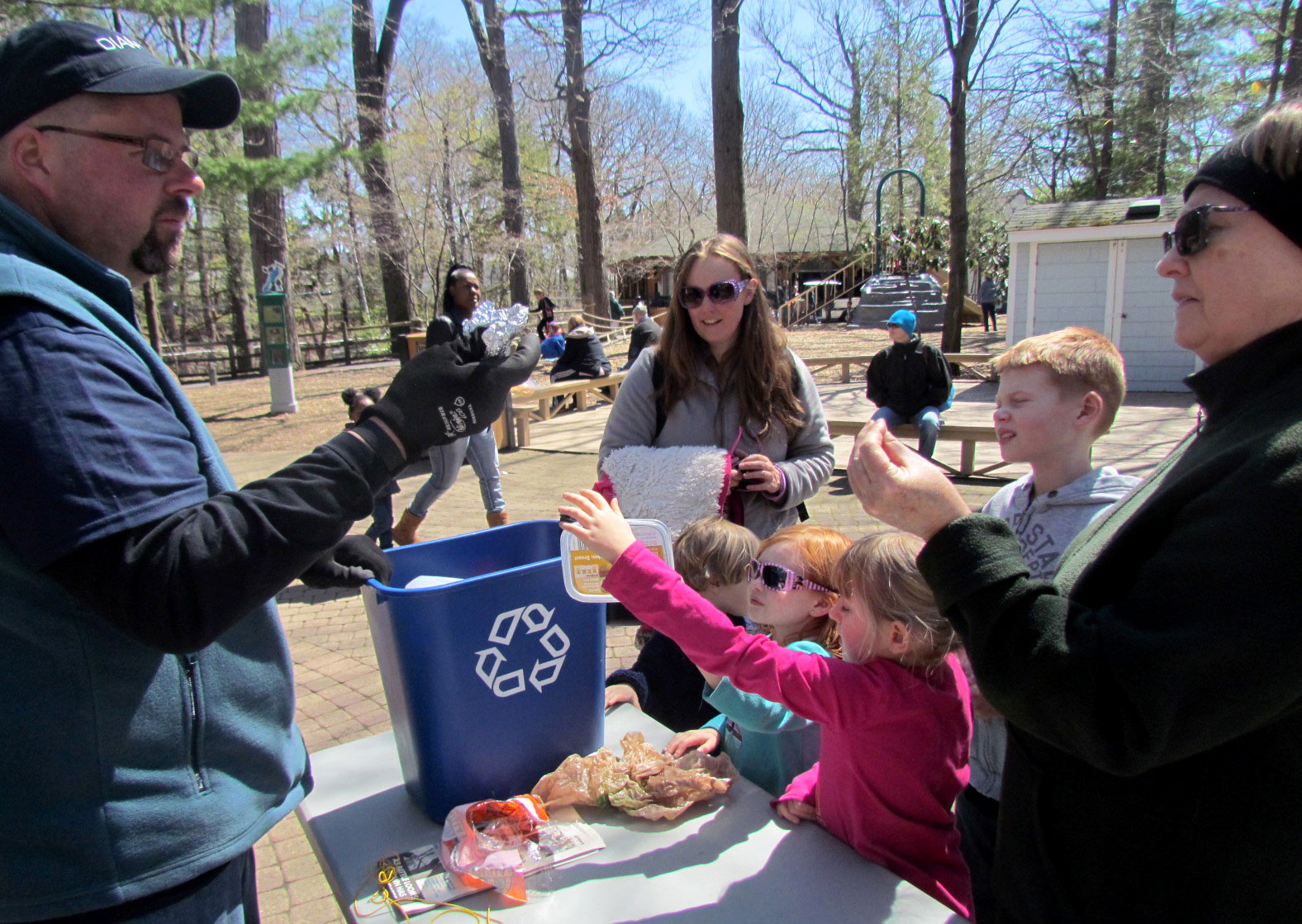
By turning your thermostat down a couple of degrees in the winter, you can help reduce your carbon footprint. Carbon dioxide and other heat-trapping gasses cause changes in our climate, which effect the ecosystem. Disruptions in ecosystems can wreak havoc for species, causing detrimental effects on their population numbers.On April 22, Seneca Park Zoo will be joining the rest of the planet in celebrating Earth Day. Staff, docents, volunteers, local partners, and guests will gather together in a joint effort to promote sustainability and caring for our natural world. Animal experiences and feedings will highlight the Zoo’s many inspiring animals, and how you can help to save their wild counterparts. People of all ages will be able to enjoy games and hands-on activities that will create a fun and meaningful learning experience, and a nature hike in lower Seneca Park will provide the opportunity to connect to nature. Diamond Packaging – our sponsor for Earth Day, and a zero-waste to landfill organization (yes, you read right – zero waste) – will demonstrate how you can work towards zero waste and sustainability. They will also be giving away tree saplings and Seneca Park Zoo’s own native western NY seed mix for a butterfly garden so that you can help plant and create important natural habitat.We hope that you join us for our Earth Day celebration, and in our move towards sustainability. Next time you visit the Zoo, stop by our ZooShop to find sustainable products such as no-container shampoo, bins that allow you to compost in your own kitchen, and a water pebble that helps you to save water.  Check out your compostable straw and utensils next time you enjoy a meal from Eagle’s Landing Café or Crater Canteen. Watch our animal care staff compost animal waste. Take part in our citizen science programs like One Cubic Foot to learn about aquatic health and caring for our waterways. Help establish critical pollinator habitat by taking part in Butterfly Beltway. Speak to a Zoo Naturalist and ask for information on becoming an educated consumer, like purchasing sustainable seafood or products that contain sustainably sourced palm oil.

If we all work together to make some small changes, we can make a big difference for our planet and its amazing biodiversity. Use the list below to help you become empowered and take action to help save species from extinction!– Rhonda McDonald, Program Manager

  1. Recycle, Reduce, Reuse!
  2. Use educated consumerism – buy local products and follow the Seafood Watch Consumer Guide from the Monterey Bay Aquarium.
  3. Turn off lights when not in use. Replace old light bulbs with energy-efficient bulbs.
  4. Use proper trash receptacles for things that can’t be recycled.
  5. Carry reusable bags & water bottles.
  6. Avoid single-use plastics like straws, utensils, to-go drink lids.
  7. Walk, cycle, carpool, or take public transportation.
  8. Turn off taps and take shorter showers to save water.
  9. Unplug appliances (toaster, laptop etc.) when not in use.
  10. Turn off vehicles while waiting rather than idling.
  11. Turn your thermostat two degrees down in the winter, two degrees up in the summer.
  12. Avoid the dryer and hang your clothes to dry.
  13. Use rechargeable batteries.
  14. Eliminate Styrofoam – it doesn’t decompose!
  15. Compost!
  16. Eat one or more meatless meals a week, avoid red meats.
  17. Weatherize your house to prevent heat loss.
  18. Plant a tree or garden.
  19. Speak up – organize a campaign or event to educate others & raise awareness about conservation issues.
  20. Assist in a community recycling collection event.

Reforesting Madagascar one tree at a time

April 5, 2018

As someone who travels for the Zoo, developing conservation action projects and working on strategic partnerships, I am constantly amazed by the people I meet, their passions, and their drive for a better, more sustainable world.

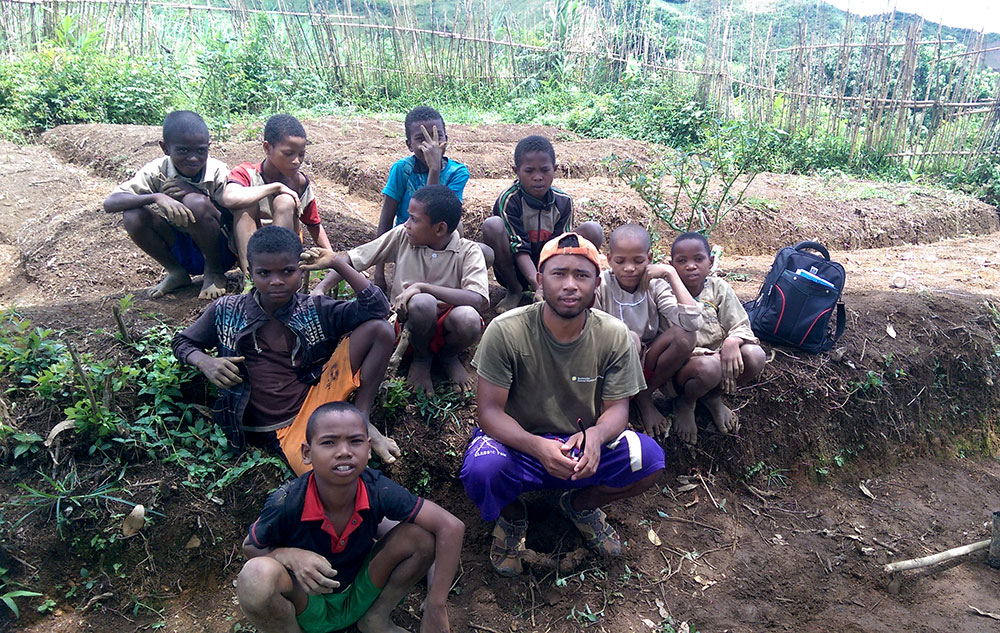
The 2016 One Cubic Foot trip to Madagascar was no different. One of the people I met on that trip was Mahandry Hugues Andrianarisoa. Mahandry was assigned to us as a requirement for our permits to conduct research in the country. When I met Mahandry, he told me he was most interested in working on conserving the fossa, a secretive carnivore that lives on the island.As we worked on the project, we asked Mahandry about his story. He told us he has never seen trees in his hometown, and only through his dad’s stories did he even know there used to be trees there. I thought about the trees, in the yard of my childhood home, which just a few years ago were 25-30 feet tall. The trees that my father planted, their growth seen through multiple childhood photos in our family photo album of trees growing exponentially quicker than us kids. I tried to imagine not having that memory, and honestly, I couldn’t do it. How do we imagine not having something that is so deeply embedded in our lives? Living in the Northeast, we have always seen vast expanses of forests and trees.As Mahandry was telling us his story, I reflected on our 10-hour trip to the field station. Vast amounts of terraced rice fields, and every once in a while, a plot of land that had an acre or more of trees on it. The silence that occurs with no tree diversity is deafening as you travel the landscape of Madagascar. The small plots of trees that are there are like islands. Islands that biodiversity searches for in a vast sea of subsistence farms and hundreds and hundreds of small fires. Fires that represent families with no food security, income, or any other way of living.As we continued our project, it was heartening to see Mahandry’s eyes opened to the world that was right before him. He went from focusing on a large mammalian species, to living in the minute species. The same way we see Rochester school kids becoming connected to nature through our One Cubic Foot ZooMobile, we saw Mahandry’s appreciation for the interconnectedness of it all.

What made this more powerful was the place where this transformation was happening – Ranomafana National Park. A young park – only 25 years old – Ranomafana is also a young forest.  Most of the park is reforested and regenerated. And in a short 25 years, we were finding some amazing biodiversity already returning and residing in the forest. As the week went on, Mahandry told me his true dream.

He told me that if he could, he would work on reforesting. He didn’t know the way to do that. We talked a lot. Mahandry said he dreamed of coming to the United States. He dreamed of becoming a director of a National Park. I am not sure how much Mahandry dreamed before, or how many times he actually shared that dream with anyone.Fast forward a year, and Mahandry was spending time at the Smithsonian Museum of Natural History and at Seneca Park Zoo, receiving training and seeing conservation from “our side of things”.  While he was here, Pat Wright, the Zoo’s partner from Stony Brook University, offered Mahandry a supporting role in the reforestation project happening out of the field station we stayed at in Madagascar.

In February of this year, through support from Seneca Park Zoo Society and our Docents, Mahandry traveled the same trip I had taken a year and a half ago. Through the barren, but beautiful landscape from Antananarivo south to Ranomafana. Through countless subsistence farms, towns with no electricity, and hundreds of small fires.  This trip was different though, as Mahandry was on his way to begin reforesting this landscape.

In the short two-months he has been on the job, Mahandry has moved from training to action. Just a few weeks ago, he set out on a week-long excursion to assess the nurseries in the area as well as to search for ideal trees to propagate. On this first trip, Mahandry’s project planted 3,000 trees. Mahandry has begun to give a new generation of Malagasy kids the same experience I had as a child.  And I am incredibly proud to know that Seneca Park Zoo had a role in that experience.– Tom Snyder, Director of Programming and Conservation Action

Discover local biodiversity at the Zoo’s FrogWatch USA volunteer training session

February 15, 2018

Do you ever listen to the sounds of wildlife on a warm summer night and wonder what the animals are communicating?

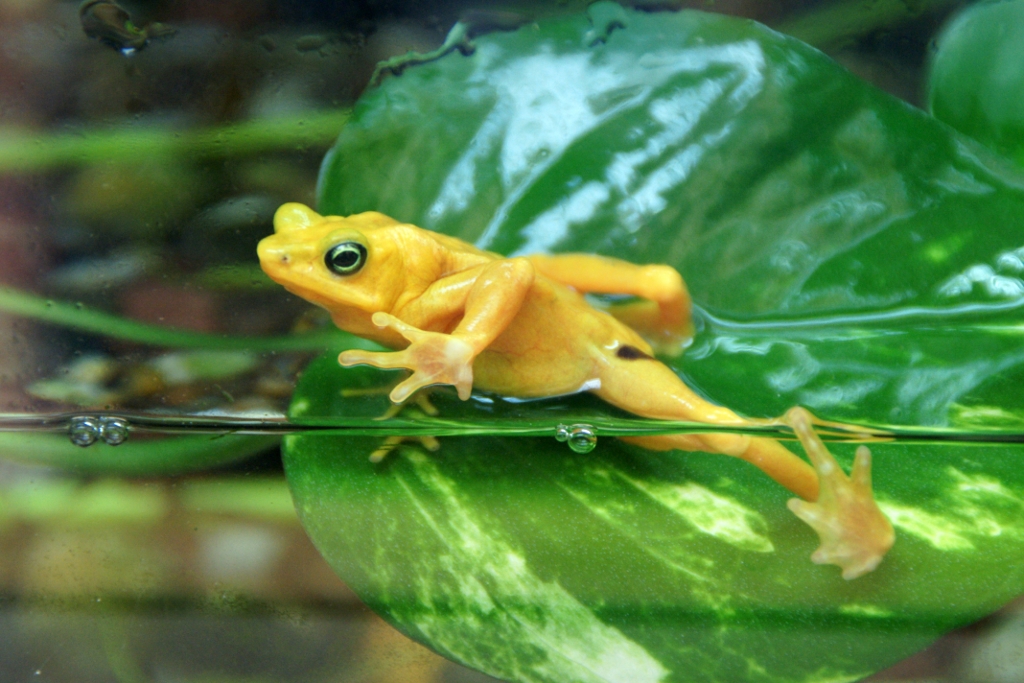
At Seneca Park Zoo, we understand the importance of local biodiversity and water quality, and have taken action to report it anyway we can. The Zoo is a part of a program run by the Association of Zoos and Aquariums (AZA) called FrogWatch USA. This program utilizes a strategy called citizen science, which is a way for individuals, groups, and families to take part in and contribute to scientific projects that are far too big for a team of scientists to complete on their own.As a member of the FrogWatch USA community, the Zoo will be working to map the location and biodiversity of local frog and toad populations by listening to mating calls in three-minute intervals. We’ll document our observations and then upload them to the national online database. FrogWatch USA is a national study with hundreds of volunteers. Having this data is crucial to documenting diseases, shifts in population or biodiversity, and overall distribution of the very important frogs and toads of the United States. Amphibians are amazing indicators of health in an ecosystem because they can “breath” through their skin, making them susceptible to pollution and other health factors. This unique adaptation is why we look for them to help us determine the health of a specific area.Anyone is welcome to become a FrogWatch USA volunteer through the Zoo. To ensure the data is usable by scientists, a one-time training session is required of all volunteers to participate in the program. The training includes simple frog and toad call information as well as a large amount of resources to get you on your way. Once a training session is complete, you will be able to access the FrogWatch USA database online and upload observations on your own.If this is something that interests you or your family, the Zoo is hosting a free FrogWatch USA volunteer training session on March 4th at 10 a.m. The training session is open to all ages however, the material is most beneficial for adults and children in middle school or older. Zoo admission is not required.In addition to the training and learning materials, the session will include a walk down to an area of the Zoo that we’ll be observing all summer for a “mock observation”. FrogWatch USA is a very beneficial and easy study to participate in, as well as a great local message for our Rochester amphibians. Join us in frog and toad conservation at Seneca Park Zoo!– Dave Will, Lead Interpreter for Citizen Science

A partnership to protect polar bears

February 4, 2018

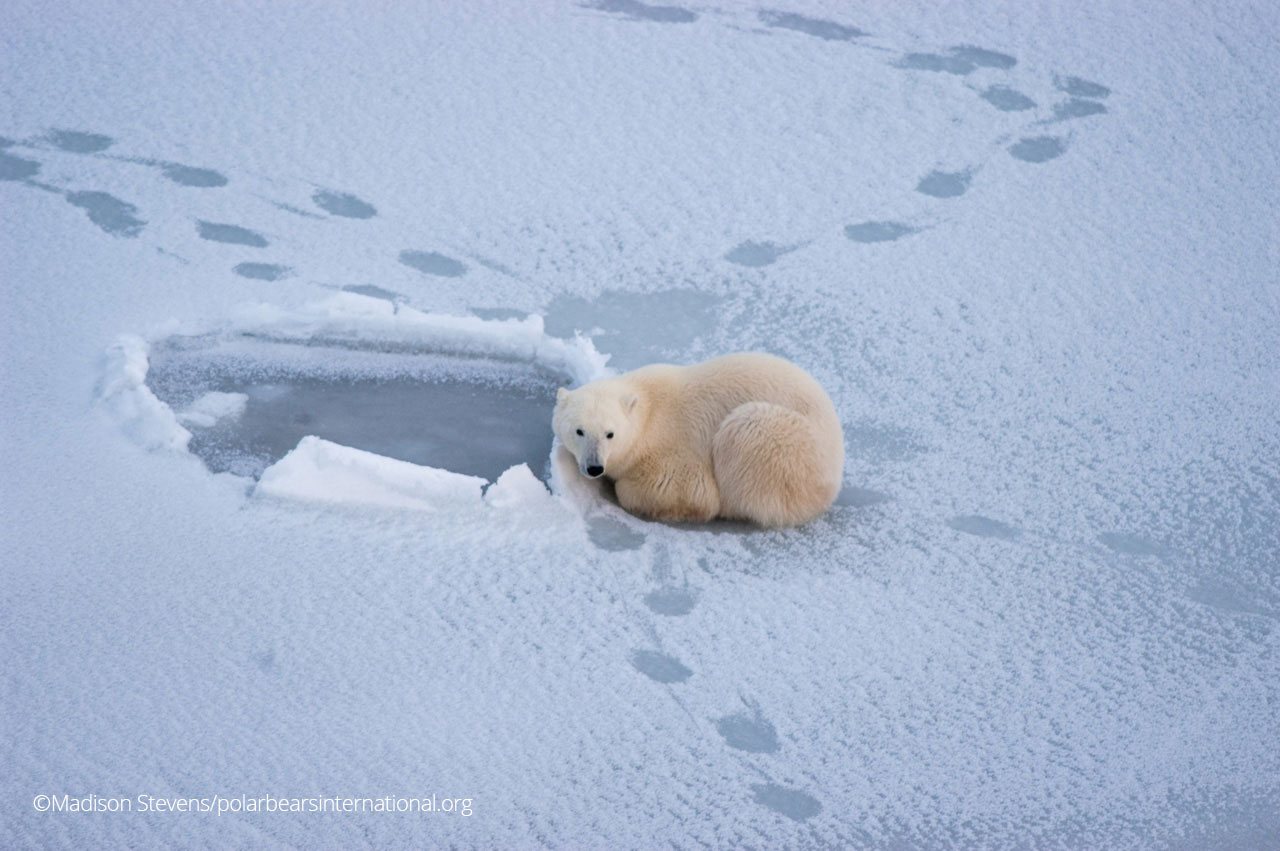
What do the Amerks and polar bears have in common? They both depend on ice! While the former requires ice to play a hockey game, the latter requires ice for survival. Rapidly increasing rates of receding sea ice in the Arctic pose a serious threat to polar bears and their ability to hunt their main prey, seals. In response, the Amerks and Seneca Park Zoo Society have teamed up for Defend the Ice Month. The entire month of February is dedicated to raising awareness of polar bear conservation and highlighting how the community can help make a difference.Ice is so important to polar bears because it provides the platform on which to hunt seals. Just like humans, seals are air-breathing mammals that must resurface eventually while swimming. Polar bears are well aware of this, and will wait hours by a breathing hole, which is essentially an opening in the ice, until a seal pops up for a breath of air. Seals contain large stores of fatty blubber essential for sustaining polar bears through the long and brutal Arctic winters. However, increasing atmospheric temperatures are causing sea ice to melt at an unprecedented rate, leaving behind fewer breathing holes and hence fewer opportunities for polar bears to hunt. With less fatty nourishment from seals, polar bear populations have declined sharply in recent years.Although the future of polar bears in a changing Arctic may seem bleak, there are many ways you can help at home, at the Zoo, or even at a hockey game. Simple actions to reduce one’s carbon footprint, such as turning down the thermostat a couple degrees during the colder months and consuming less meat, helps to depress increasing atmospheric temperatures – the main culprit behind receding sea ice. In addition, the Amerks and Zoo Society have partnered up to provide exciting new – and fun – ways to help this February as part of Defend the Ice Month.At the Zoo, guests can help by joining us during Polar Bear Awareness Weekend from February 24-25. Along with interpreted enrichment demos with the Zoo’s polar bear Aurora, interactive games, and BioFact stations highlighting the polar bear’s unique adaptations, guests will have the opportunity to enjoy a special meet and greet with Amerks players on Sunday from 10:30 a.m. to 11:30 a.m. Guests will also have the chance to enter multiple drawings on Sunday for signed Amerks merchandise and a behind-the-scenes tour of Rocky Coasts with the Amerks players. All proceeds will go towards Polar Bears International (PBI), a conservation partner of the Zoo and nonprofit organization working towards a better future for polar bears through research, education, and community programs.Hockey fans can also support PBI by attending any Amerks home game during the month of February. On February 2, 16, and 18, the ZooMobile will be at Blue Cross Arena with live animals and BioFacts. On February 23, join us for “Defend the Ice Night” where there will be an auction to win a custom game jersey worn by Amerks players that night! All proceeds will go to the Seneca Park Zoo Society and Polar Bears International. Rochester may appear worlds away from the Arctic, yet there are so many ways we can help locally to promote a better future for Aurora’s counterparts in their natural ranges.– Karen Wu, Lead Interpreter

Zoo Society receives Environmental Excellence Award

December 14, 2017

Last month, the State Department of Environmental Conservation (DEC) awarded  Seneca Park Zoo Society and partner, the NYS Department of Transportation, with an Environmental Excellence Award. At the ceremony held at Union College, the Zoo Society and DOT were recognized for their collaborative efforts to restore pollinator habitats along Interstate 390.

The project included altering mowing practices along a six-mile stretch of the interstate (between Mt. Morris and Sonyea), which resulted in 93 acres of naturally regenerating wildflowers for butterflies, bees, and other pollinators to complete their life-cycle free from mowing disruptions.

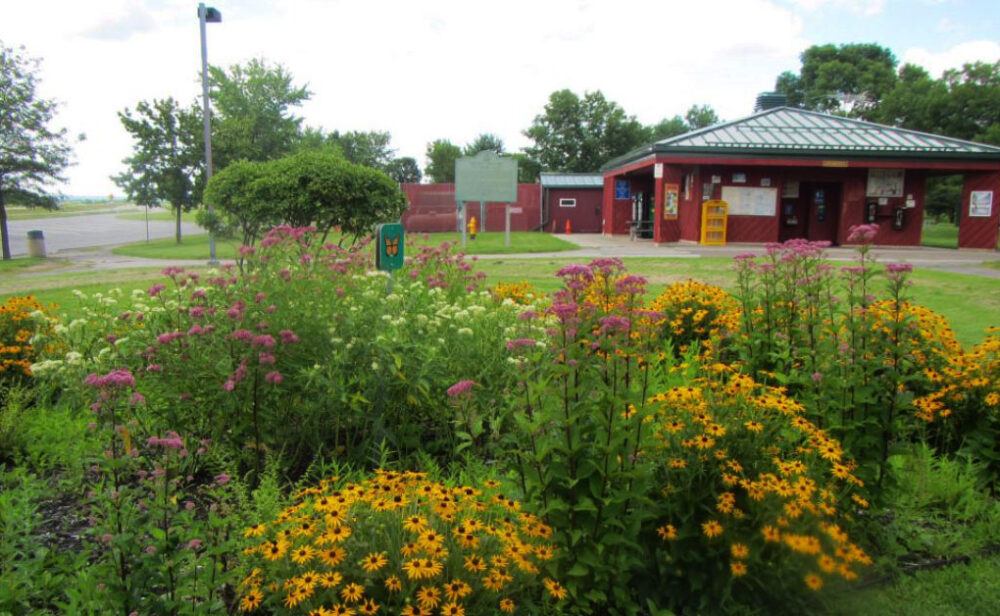
“Having our Butterfly Beltway program recognized by the New York State DEC shows how a long-term project can continue to grow and evolve to be relevant and impactful years after its creation,” said Tom Snyder, Director of Programming and Conservation Action.More than 13,300 vehicles travel this stretch of I-390 each day. The Zoo Society/NYSDOT team planted pollinator gardens at rest stops to educate the public about pollinator migration and provide information on what they can do to help protect these important species.

Tom adds, “Our collaboration with the NYSDOT to create pollinator habitats is an example of how two different organizations can come together and create a marketable, cost-effective program that benefits the region and serves as a model for other regions to replicate. We are honored to have received this award and are excited to continue building and improving Butterfly Beltway.”Since 2002, the Zoo Society has been conserving pollinator sites through its Butterfly Beltway program. Anyone can participate in this program, from working with the Zoo to plant a pollinator garden to purchasing native seed packets for your home or business.

Now in its 14th year, the Environmental Excellence Award honors New York organizations and municipalities for their innovative programs and commitment to environmental sustainability, social responsibility, and economic viability. Read about all the DEC’s Environmental Excellence Award recipients here.

Do you want to make a conservation impact on monarch butterflies and other pollinators?

LEARN MORE