ZooTeens: Committed to Conservation

For educators, being able to share one’s love of a subject with new learners is exhilarating. From the first curious glance to the last presentation, conservation education can be such an enriching experience. We’ve been hard at work as the ZooTeen season is in full swing here at the Seneca Park Zoo, from designing new stations to face painting, or even helping out with ZooCamp!

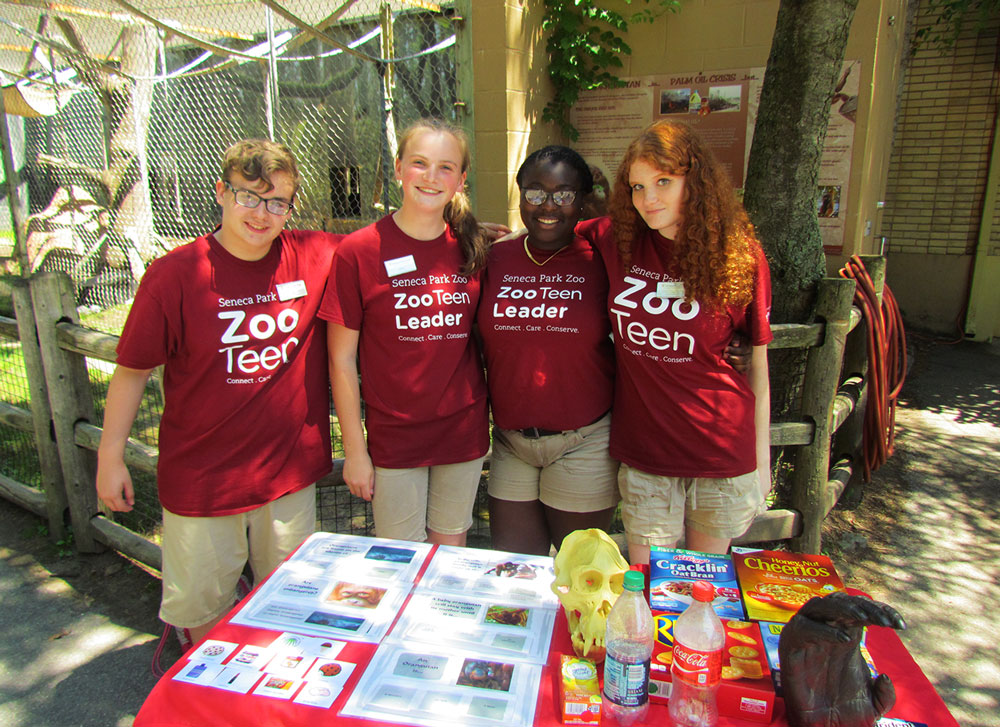
When we recruit for the ZooTeen Program, we look for the best and brightest middle- and high-school students in the Rochester area. Though our interview process might seem daunting, we’re simply looking for students who are passionate about animal conservation, and can easily talk with guests about it.

This is, at its core, what ZooTeens do: educate guests on how the Seneca Park Zoo and zoos worldwide help to save species from extinction, and what guests can do to help. Each teen is committed to at least 2 days a week. Along the way, ZooTeens grow and strengthen their public speaking skills.

After their time with the program, our ZooTeens go on to become conservation advocates in their own communities, and in their own ways. Brenden John, one of our graduating ZooTeen Leaders, will be studying to become a naturalist filmmaker in college. Several of our own Zoo staff members are ZooTeen alumni!This year’s ZooTeens are especially representative of the diversity in the greater Rochester area. Nearly half of all ZooTeens live within 30 minutes of the city. One quarter of ZooTeens live in the city proper, and another quarter live in nearby Irondequoit or Greece. Some ZooTeens even drive over an hour to come volunteer.

At 116 ZooTeens, it’s one of our biggest seasons yet. Though nearly half of our staff are new recruits, you’d be hard pressed to notice; many new ZooTeens are as outgoing as our returners. In addition to engaging in some public outreach programs throughout the school year, this year’s ZooTeen Leaders were able to design some new station materials for the program.

Many of these newly-designed stations are smash hits, including: ‘A Wake Up Call’, which educates guests on the effects of microplastics from common household products. These new arrivals join perennial favorites such as our African Elephant station, which educates guests on how we partner with conservation organizations like the International Elephant Foundation (IEF) to best help our cared-for species. Whether through using BioFacts or hands-on activity, these stations offer engaging materials to draw guests in, and teach through play and experience, to help our guests to understand conservation care.

Please feel free to reach out to either of us at [email protected] if you have any questions about the program. If you are an environmentally-conscious teen in the Rochester area, and would like to help out at the Zoo, we will soon be accepting applications for the 2017-2018 ZooTeen Leader Program. Additionally, information for the 2018 ZooTeen Program will be available during the first quarter of 2018.

Alex Baer & Kristi Frey
2017 ZooTeen Coordinator Team

Interested in the ZooTeen Program?

LEARN MORE
One Cubic Foot Madagascar

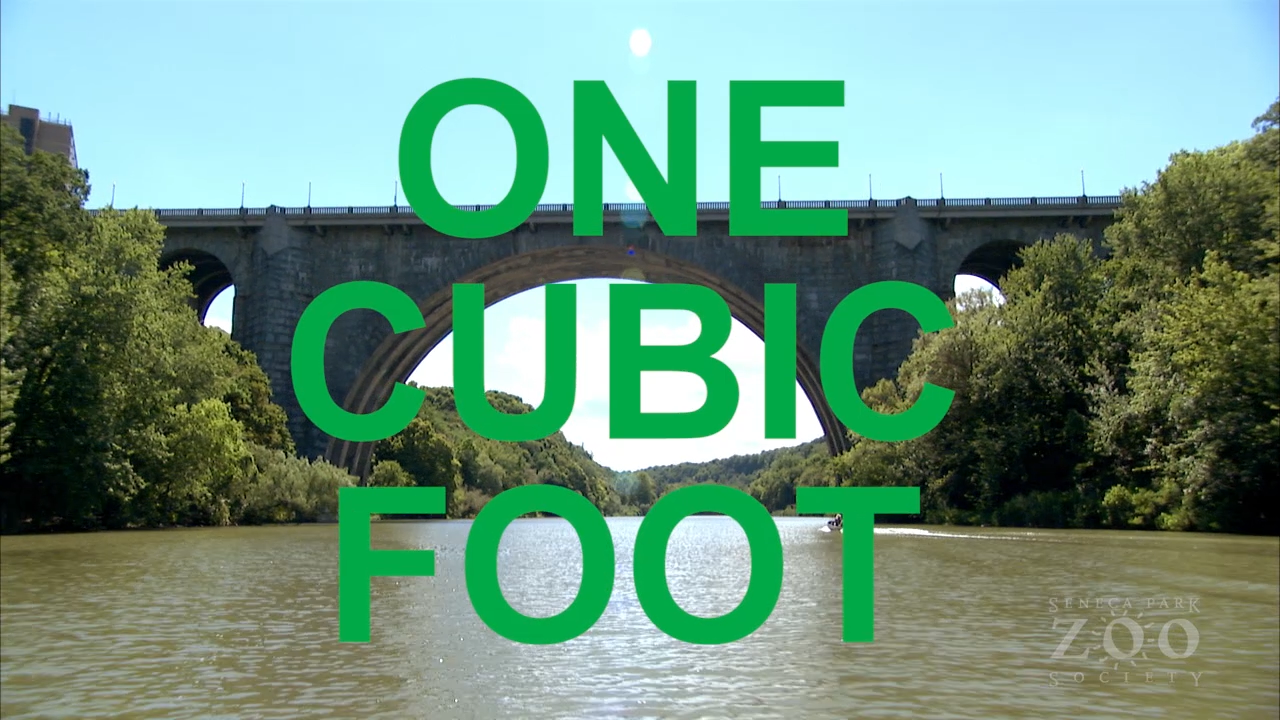
This month, the Zoo Society will continue its conservation science initiative One Cubic Foot in Madagascar, the large island nation off the coast of southeast Africa.

The team

The One Cubic Foot team is comprised of photographer and environmentalist David Liittschwager and his team; Zoo Society directors; and Smithsonian Institution scientists. They will begin arriving on the African island later this week, and most will stay for two weeks. This multi-discipline, collaborative team will document the unique biodiversity of Madagascar, an ecosystem home to thousands of animal species found nowhere else in the world, using the same technique Liittschwager has used everywhere from Costa Rica to Central Park during the last decade. Last summer, he replicated One Cubic Foot in Rochester’s Genesee River in partnership with the Zoo Society.

The privately funded trip to Madagascar will create a unique educational experience for students from Rochester’s Allendale Columbia School. 15 students selected through a rigorous application process will assist the One Cubic Foot team with field work, data collection, and research in an area of federally protected land in Ranomafana National Park.

The process

As featured in his book A World in One Cubic Foot: Portraits of Biodiversity and by National Geographic, Liittschwager records every plant and animal species that moves in and out of a one cubic foot frame set into nature throughout the course of a day. He then creates a photographic portrait of the rich biodiversity found there, highlighting the ecosystem’s resilience, challenges and beauty.

For two decades, the Zoo Society has supported the conservation work of Ranomafana’s Institute for the Conservation of Tropical Environments, led by world-renowned Madagascar conservation expert Dr. Patricia Wright. Dr. Wright has been a driving force of the conservation of many endangered species in Madagascar, including ring-tailed lemurs, a species currently represented at the Zoo.

The conservation science

Like One Cubic Foot in the Genesee River, which contributed meaningful data to the scientific record and 28 newly-documented species to an international DNA barcoding database, the project in Madagascar is expected to yield important insights about the biodiversity in Ranomafana National Park. An estimated 30% of the DNA barcodes collected could be new to the database.

Along with Chris Meyer, Research Zoologist and Curator at the Smithsonian Institution, Liittschwager, the Zoo Society’s Executive Director Pamela Reed Sanchez, and Director of Programming and Conservation Action Tom Snyder will monitor the primary cube while Allendale Columbia School students monitor their own supplemental cubes.

Read journal updates from the field.iNaturalist JournalFollow the Zoo and #OneCubicFoot on Facebook, Twitter and Instagram.Follow the Zoo’s new conservation Twitter account for day-to-day updates from Madagascar.

Read Zoo Society Director of Programming and Conservation Action Tom Snyder’s updates on the project’s findings:Read Zoo Society Executive Director Pamela Reed Sanchez’ travel logs:Help the team identify species they find in Madagascar.

iNaturalist.org

Education research at Zoo highlights informal learning

Peter Kalenda, Ed.D. is a researcher and educator who recently completed his dissertation Creating Learning Experiences that Promote Informal Science Education: Designing Conservation Focused Interactive Zoo Exhibits through Action Research.

In this study, Peter asked the overall question: How can interactive exhibits be designed to promote socialization, engagement in science, and real-world conservation-related practices (RCPs) among zoo guests? He found answers through observation and data collection in the Rocky Coasts Gallery as well as direct interviews and follow-up calls with visitors.

The findings of Peter’s study–regarding the importance of signage placement, parental guidance in informal learning, and more–will be incorporated by the Education Department into future exhibit design. We had the chance to ask Peter a few questions to learn more about how he executed the project:

Why did you decide to focus on the Zoo for your dissertation work?

I grew up with a passion for studying animals. As an undergraduate, I majored in Biology with a focus in Zoo Biology and Animal Behavior. This eventually led me to becoming a science educator for the Rochester City School District. I wanted my dissertation research to focus on the informal science education that takes place at zoos and was fortunate that the zoo was looking for an Exhibit Redesign Facilitator at that time.

Picture1

How can informal learning be just as powerful as formal learning?

Informal learning provides levels of engagement, personal connections and reflection that are often missed in formal learning scenarios. Informal learning approaches, whether in a school classroom or outside of school, provide students with meaningful opportunities to ask questions, explore, investigate and become an expert in an area they are passionate about.

Picture3
How did you tackle the process of data collection? 

Most of my data collection was completed in the underwater viewing area of the Rocky Coasts. Zoo guests were welcomed to participate in the use of our new prototype exhibit. Nearly all guests who were asked participated! I then interviewed each family who agreed to participate before and after they used the exhibit, and also wrote down their conversations and movements within the exhibit.

Our redesign team analyzed this data using grounded theory qualitative data analysis techniques and collaboratively identified patterns and trends among the data that helped us to continually redesign and improve our prototype exhibit for guests.Picture2What surprised you most about the feedback you received?
I was impressed at how insightful our zoo guests were on exhibit design. Many of our guests made impressive suggestions on how to improve the exhibit, which helped to inspire out exhibit design shifts during each round of redesign.

What do you think was the best improvement that came about from your research?

The best improvement to the prototype exhibit was our shift in signage design for readability, which included improving the use of vocabulary, syntax and white space. As scientists and educators, we often wanted to supply our audience with many facts and images. This study helped to show that both children and adults were not reading signage with excessive images and text. However, once our signage was redesigned with a literacy expert, both adults and children were using our signage regularly. Adults were often scaffolding the learning of their children with these new signs, children were using this signage on their own, and many adult groups enjoyed the signage without children. During these same visits by guests, the other signs in the original exhibit that had colored backgrounds, excessive text, small text, difficult vocabulary and multiple pictures were repeatedly ignored.

These prototype exhibit signs and interactives were all temporary installations to help us collect data and inspire the future redesign of the Rocky Coasts. All of these signs and interactives have been donated to the Zoo Teens program, and they will be utilized by Anneke Nordmark and the Zoo Teen staff starting this summer.

Picture4

Your research notes that “Most behaviors during engagement were breakthrough.” What is a breakthrough behavior and why is it important for higher-level learning?

The research by Chantel Barriault (1999) identifies three levels of behaviors that guests can display while engaging with an exhibit. Each level of behavior indicates a different “depth of learning.” These include initiation behaviors (using an interactive, watching others do an activity, talking to a docent), transition behaviors (repeating an activity, expressing an emotional response) and breakthrough behaviors (referring to past experiences, seeking out information, sharing information with others or using information from the exhibit). Guests engaging in breakthrough behaviors are the most engaged and leave with the greatest depth of understanding of new concepts. By the third iteration of our exhibit redesign, the majority of behaviors exhibited by guests were breakthrough behaviors. This was a significant shift from our first version of the prototype exhibit which only exhibited initiation behaviors. Reaching this depth of understanding is critical to helping our zoo meet the AZA’s ultimate goal of having zoo guests take conservation action at home and in their communities.


Thank you to Peter for contributing this fascinating research to the Zoo! You can read his full dissertation here.


Photos courtesy of Peter Kalenda

Undercover HERP survey in Rochester wetlands

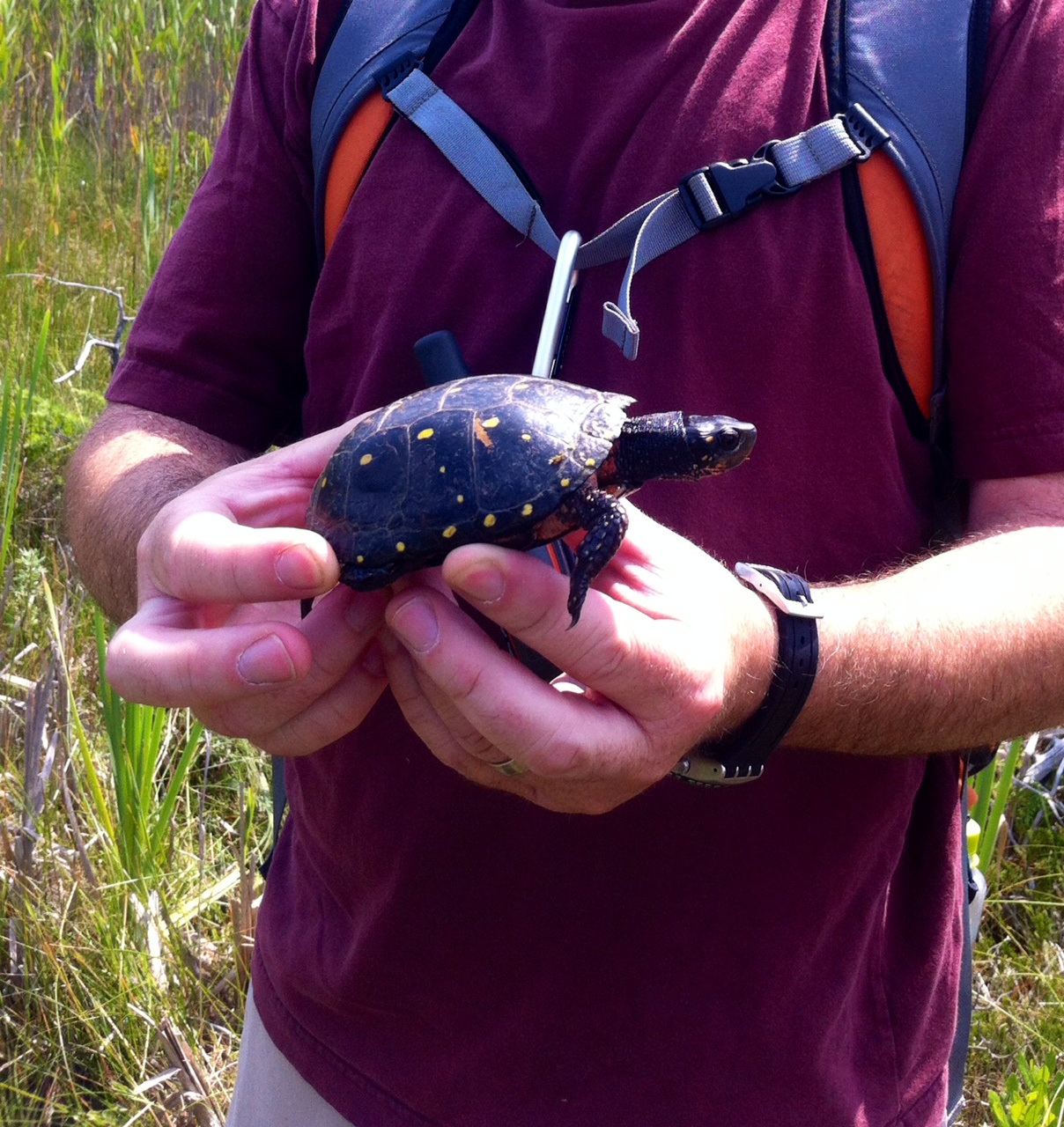
A team of nine herpetologists (specialists in amphibian, turtle and snake biology) from Toronto, Milwaukee and Buffalo zoos and SUNY Environmental School of Forestry (ESF) recently surveyed with Seneca Park Zoo staff a unique wetland in Greater Rochester.

The biologists hiked and waded through the boggy habitat in search of New York State’s endangered, protected reptiles and amphibians. The location of this special place is kept confidential to protect the animals from illegal harvest by poachers selling to high bidders in the black market pet trade.

Yes – endangered and protected animals are at risk of poaching in upstate New York just like the biodiversity hot spots in Africa, Asia and South America. The team of herpetologists identified many reptiles and amphibians, several of which may be seen in photographs taken by the Zoo’s Assistant Curator John Adamski and myself. This unique habitat and wildlife are saved and protected only due to the efforts of the private landowner and neighbors.

We all thank these habitat guardians for their vision saving New York’s wildlife in wild places for future generations.

– Dr. Jeff Wyatt, Director of Animal Health and Conservation and John Adamski, Assistant Curator