Gray Wolf
(Canis lupus)
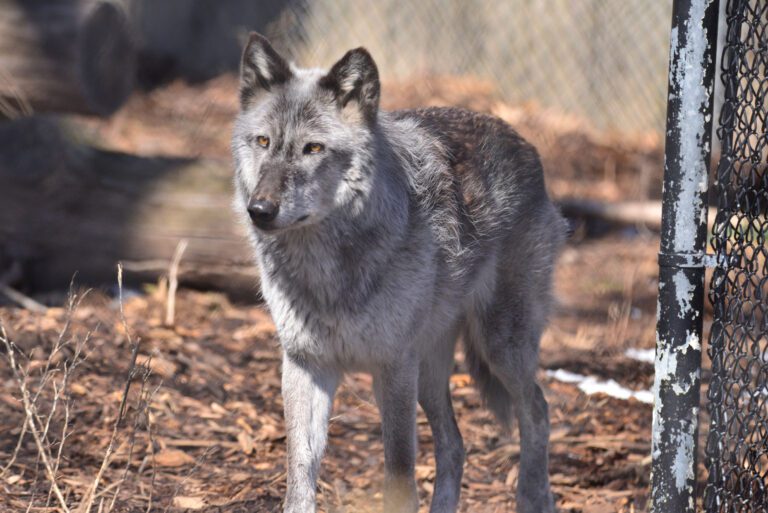
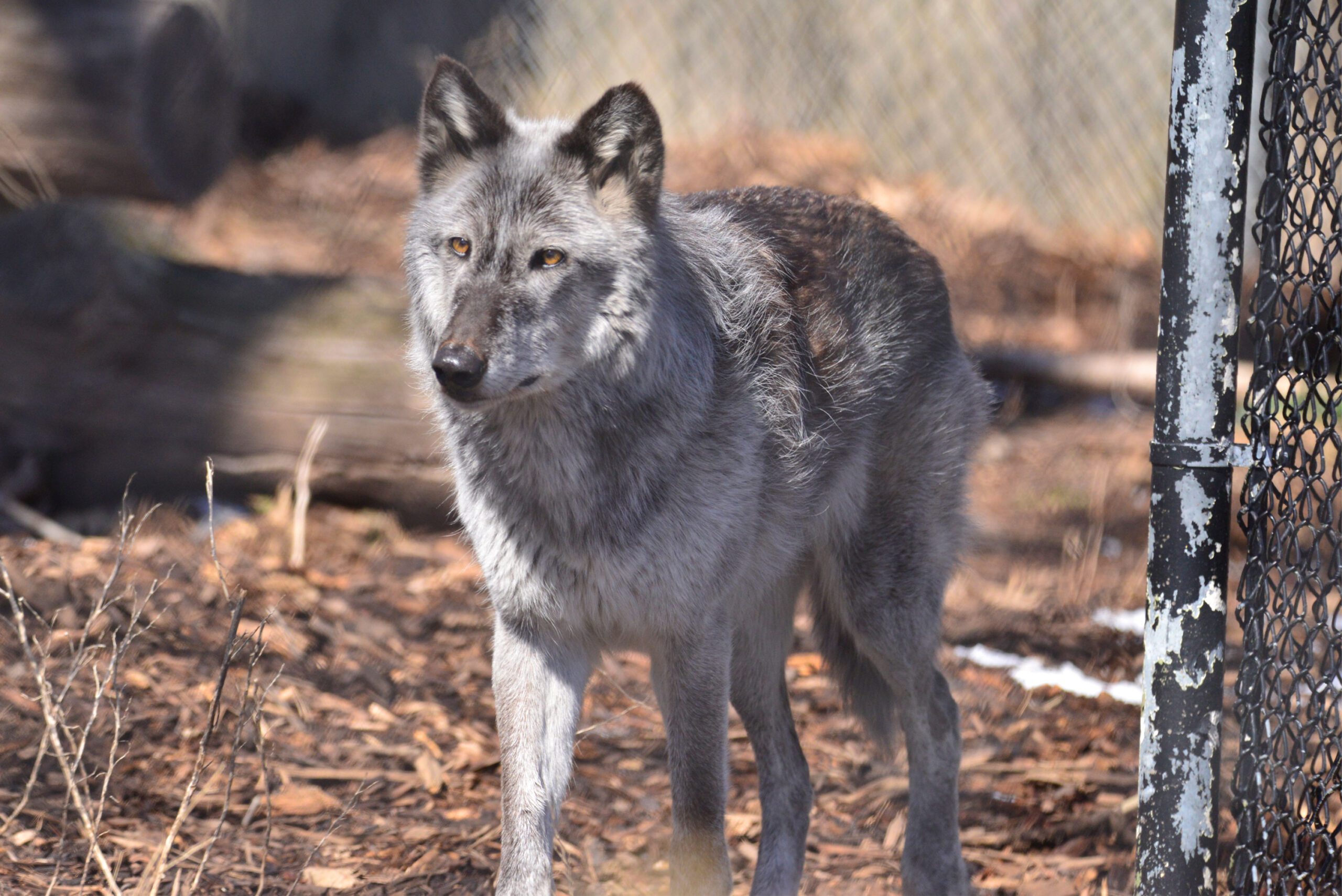
The Zoo is home to two gray wolves, Timber and Willow. Born in April 2014 at New York State Zoo in Watertown, NY, the brother and sister pair came to the Zoo from Buffalo Zoo in March 2016. Wolves are intelligent, social predators. Their complex social structure divides responsibilities, allowing packs to better raise young, patrol territory, and secure prey. By controlling prey populations, wolves balance the ecosystem and promote biodiversity.
Animal Facts
Diet
Carnivorous. Gray wolves eat large animals such as deer and elk; occasionally smaller animals, and carrion.
Status in The Wild
- Least Concern
International Union for Conservation of Nature (IUCN) Red List status
Gray Wolves inhabit a variety of habitats including: deserts, plains, forests, and tundra. Their range is throughout the Northern Hemisphere, generally in areas with fewer humans.
Because of the diversity in climate, topography, vegetation, human settlement and development of wolf range, wolf populations in various parts of the original range vary from extinct to relatively pristine.