Support Earth Day Through the Canopy Project

April 22, 2021

Right now, climate change is having serious effects on this planet. We are seeing a major loss of sea ice, an increase in droughts, and even changes in the ocean’s chemistry. One major cause of climate change is deforestation. Because trees absorb CO2 from the atmosphere, when people remove trees for agriculture and development, the amount of CO2 in the atmosphere increases. According to the United Nations’ Food and Agriculture Organization, almost 18 million acres of forests are lost every year, and almost half of Earth’s tropical forests have been cleared already.Seneca Park Zoo believes it is important to protect the planet by saving these forests. Reforestation is one of the easiest and most important actions we can take to help solve climate change. Trees act as carbon sinks by absorbing CO2 from the atmosphere, keeping the air clean for local communities. Reforestation programs not only help maintain habitats for a variety of species, but also help stabilize the land from erosion and natural disasters and promote economic development in local communities.

So, what can you do to help? Join us at Seneca Park Zoo to help raise funds for The Canopy Project; for every $1 donated, one tree will be planted!

The Canopy Project has planted trees across the globe. Currently they are working on projects in Madagascar, Sierra Gorda in Mexico, the Mt. Elgon region in Uganda and the foothills of the Himalayas in India. A lot goes into picking these planting sites. Coordinators consider the following when choosing locations: urgency to protect biodiversity, threats to the location from climate change and environmental disasters, development of local communities, cost-effectiveness, and accessibility. Local communities benefit from planting sites as it creates new jobs learning how to care for and maintain the forests for future generations. Many species of trees that are planted also provide fruit and other resources for communities.Help us reach our goal of planting 500 trees with the Canopy Project! By working together, we can make positive changes for both people and animals around the world. Stay tuned all week to learn other ways you can help protect the planet for future generations to enjoy.

– Randi Krieger, Zoo KeeperDonate

How Your Support Advances Polar Bear Conservation

February 27, 2021

Human-wildlife interaction is a conservation challenge widespread throughout the natural world. There is little true wilderness left on our planet, and if we want crucial ecosystems to survive, we must constantly assess the effects of our activities on wildlife. With support raised through guest donations at Seneca Park Zoo, our partner, Polar Bears International (PBI) was able to take part in a study to better understand the impact human interaction and disturbance has on denning polar bears and their reproductive success.PBI teamed with researchers from the U.S. Geological Survey (USGS), the U.S. Fish and Wildlife Service (FWS), and Brigham Young University (BYU) to study polar bears in the Prudhoe Bay Operations Area and adjacent habitats across Alaska’s North Slope. Researchers were able to document 138 human-bear interactions, spanning a 42-year period from 1975-2017, with the objective of analyzing the different disturbance stimuli at den sites and the associated bear responses. To ensure consistency in the data, each human-bear interaction was categorized by type of stimulus (humans on foot, small machinery, large machinery, or aircraft) distance between stimulus and bear (0-150m, 151-300m, or 300+m), intensity of stimulus (on a scale of 1-3), and intensity of bear response (on a scale of 1-4).Although individual bears responded differently to each type of stimulus, the study concluded that polar bears in this area are largely tolerant of human activity near den sites. During the study, researchers did not observe any instances of polar bears abandoning sealed dens. This may be due to either the fact that sealed dens are highly insulated and therefore less sensitive to sound and vibrations, or the high cost of abandonment, since polar bears expend so much time and energy to complete their dens. Most den abandonment events were caused by high intensity interactions of low-flying aircraft, and occurred during the fall when dens are in the early phases of construction and the bears have less to lose by abandoning the site.

Data collected from this study is immensely important for not only wildlife managers, but also for industrial workers. Prudhoe Bay is home to the largest active oil field in North America, which leads to a higher frequency of human-bear interactions. This study showed a 1.6km (1 mile) buffer zone is effective for minimizing den disturbances, which means wildlife managers can work together with industrial workers to coordinate human activity rather than halt it altogether.

Studies like this one are crucial when considering the future survival of any species, especially the largest land carnivore of the Arctic. The first step toward conservation is research, and our Zoo is proud to be able to support polar bear research projects through our partnership with Polar Bears International.

 Annie Wheeler, Lead Zoo Naturalist for Programs

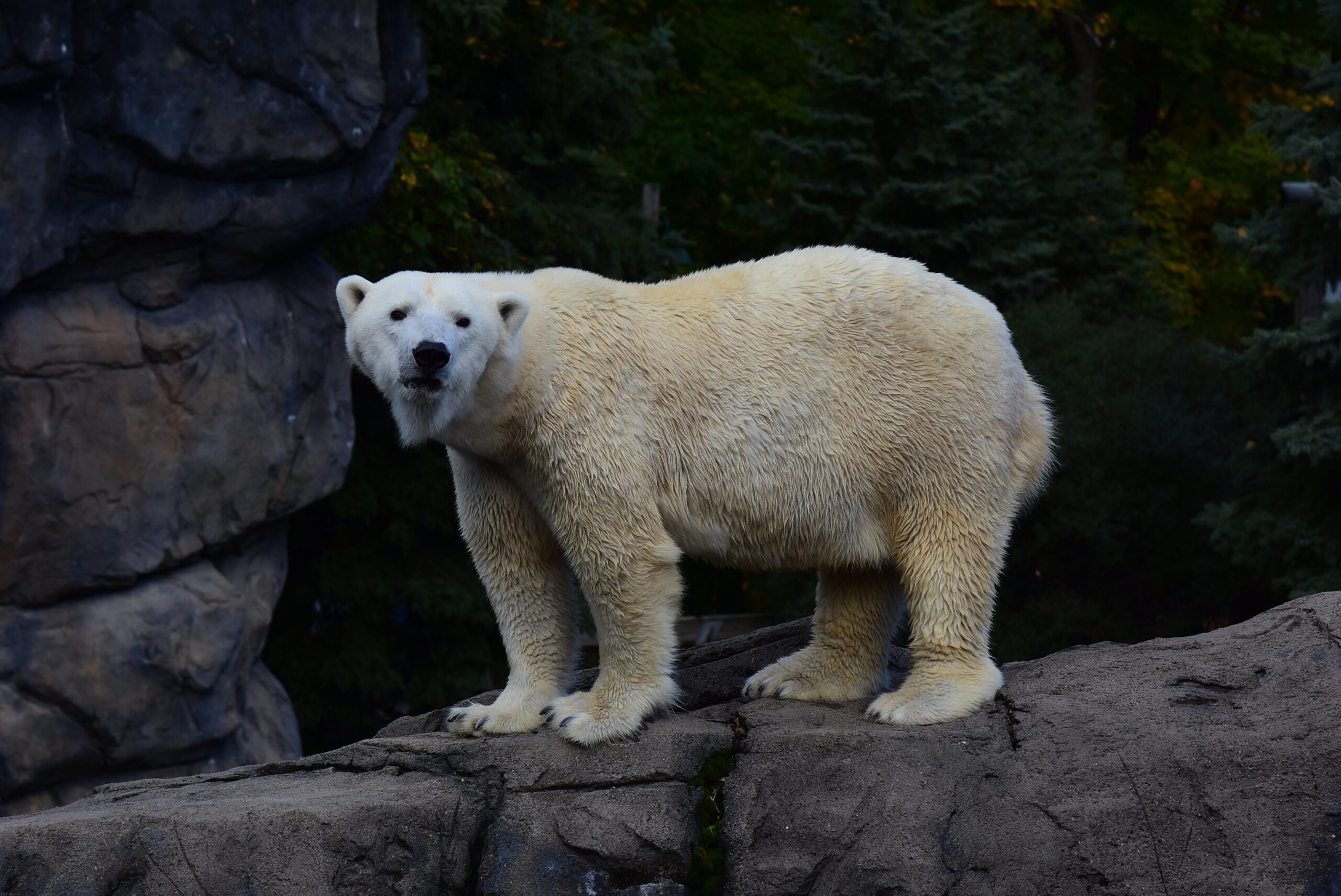
*Banner photo of Seneca Park Zoo’s Ambassador Polar Bear Anoki by Wayne Smith

Upcoming Zoo Camps for Kids on Break!

January 22, 2020

We know how hard the past year has been for so many and one of the most difficult things to deal with has been the lack of social interaction and involvement, especially for kids. We have just the thing! ZooCamp at Seneca Park Zoo immerses kids in wildlife, the environment, and the need to protect and care for both, all in a unique setting: the Zoo! Campers explore nature and animals, create projects, share ideas, and make new friends.For our upcoming Winter Break ZooCamp we have a really exciting ‘Around the World’ theme so each day will focus on a different continent or continents and the animals that live there.  Campers will learn and be tasked with activities like sorting out what animal is found in what part of the world. If the intersection of animals, maps and geography are things that your little will be interested, you won’t want to miss out on this camp!

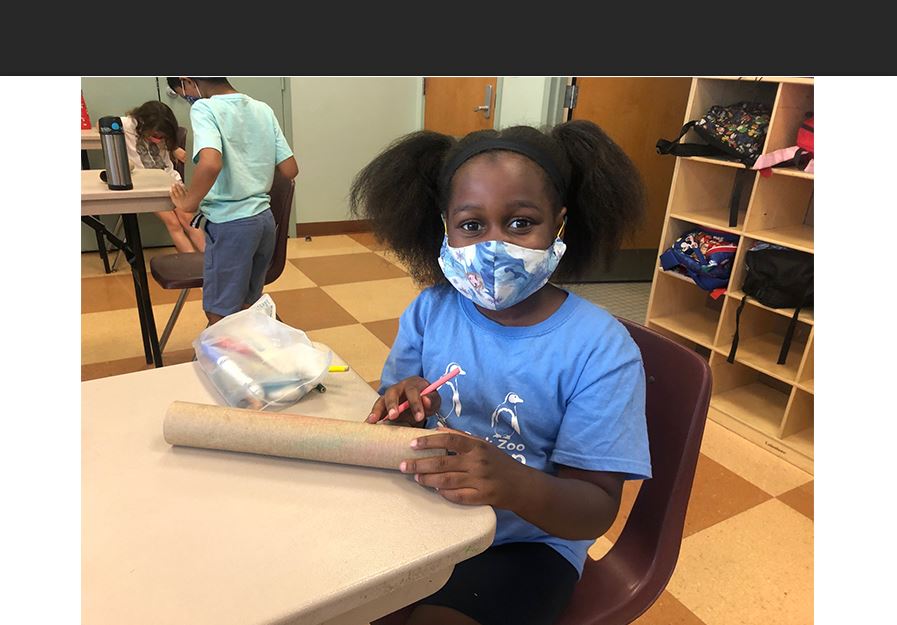
Looking a little further down the calendar we have our Spring Break ZooCamp March 29 – Friday, April 2. Spring Break ZooCamp is Big Cat Habitat themed this year so each day is focused on a habitat and the campers figure out which cat lives there.  This camp has many different cat crafts, habitat learning activities and more! Rumor has it there may even be some ‘animal yoga’ and leap like a lion activities to get some exercise and maybe even go on a journey with the ever-popular Freddie the Fish!We have implemented safety protocols for ZooCamps, including universal face coverings.  Read more about our COVID safety precautions and register for a camp today!Learn More

The Unexpected Joys of a Winter Visit to the Zoo

December 31, 2020

As the temperature drops and the snow flurries begin, many people forget the Zoo as a safe and fun outdoor destination.   Winter is a great time to visit Seneca Park Zoo, and the experience can be quite different than that on a warm busy summer day!

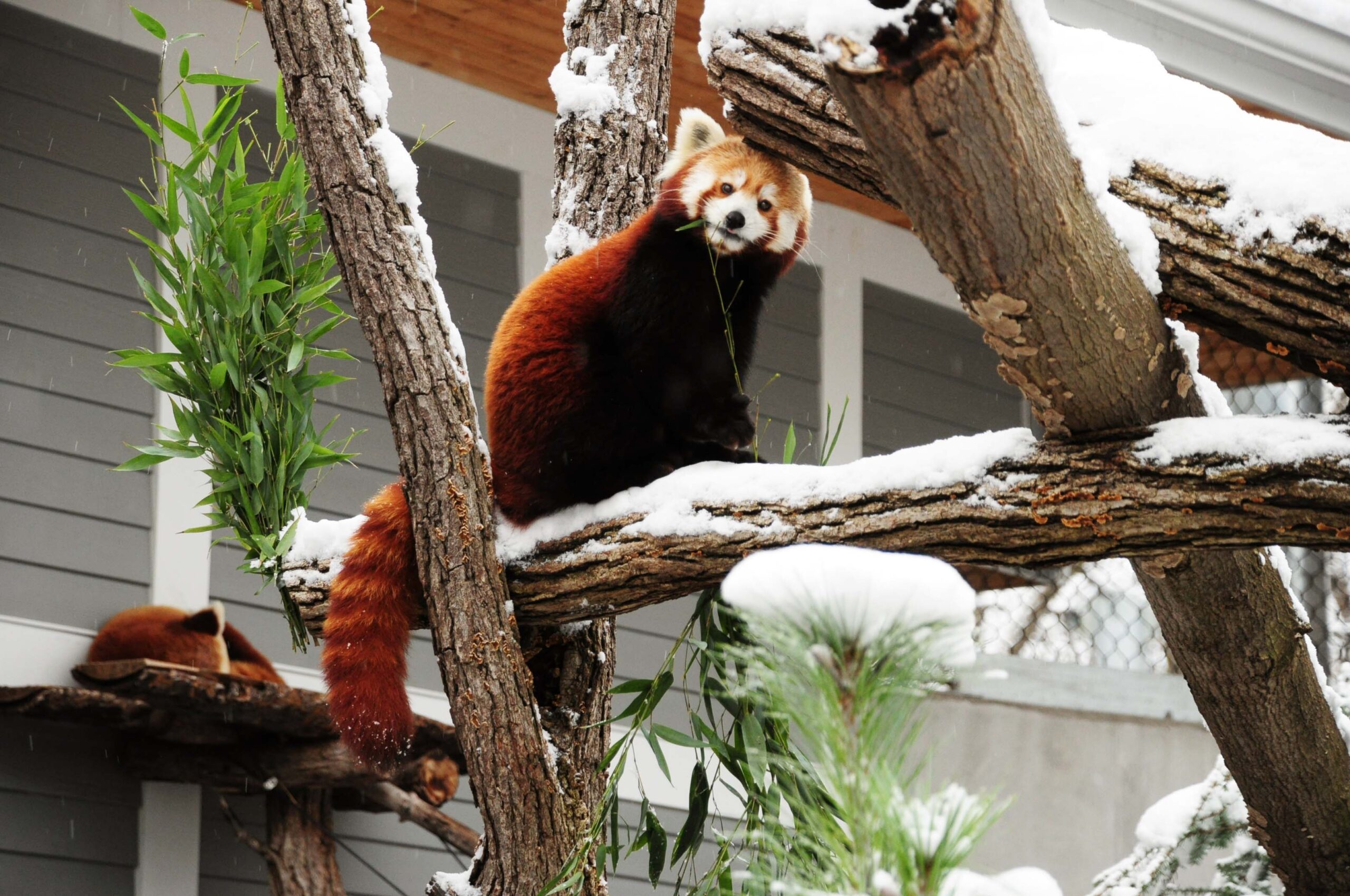
Winter Zoo visits can be quite peaceful.   There are typically few people here, so the hub bub of kids laughing and crowds meandering is replaced with quiet.  There’s a stillness in the air.  But there is still plenty to see and do.  Here are some suggestions on making the most of your winter visit.A must-see on a winter visit is the animals of cold Asia. The snow leopards and red pandas, in particular, are quite active when it’s cold outside.  This winter, keepers will be reintroducing snow leopard Timila and Kaba for breeding season, so you could have the opportunity to see them together.  Additionally, if you haven’t seen red panda Willie, you’ll love spending some time watching him and Starlight as they enjoy the cold air.   The wolves and tiger are also typically quite active!

Another good stop on your winter visit is the baboon habitat.  It has recently been completely reconfigured (link) and the baboons are having a ball! The baboon habitat has a covered area where you can get out of the wind or snow as well.

Keep heading into Animals of the Savanna to meet the Zoo’s newest resident, white rhino Jiwe’.  Whether Jiwe’ is inside or outside, he’s fun to observe as well.  As a juvenile, Jiwe’ can be playful and curious.

With the smaller crowds, a winter visit is a great time to spend some time at the aviary in the Animals of the Savanna building.   See how many species you can count.  Marvel at the variation in the songs of the different birds.  Admire the setting, which was all hand painted by artisans.

Another great winter stop is the Rocky Coasts Gallery, which can provide a quiet warm-up spot.   Take a seat on one of the benches and be mesmerized by the graceful California sea lions swimming back and forth.  Watch the videos in the gallery which provide interesting background about polar bears and sea lions from our conservation partners.  And be sure to spend some time at the reef tank.  See how many species of corals and fish you can find.  The signs in that area can help you learn more about coral in particular.A winter visit is a great time to read some of the interpretive signage throughout the Zoo.  You’ll be surprised about how much you can learn!  The “Why Save This Species” signs are fairly new and particularly interesting. You’ll find them by snow leopards, eagles, giraffes, and more!

Another great warm up spot is the ECO center.  North American River otter Ashkii is usually swimming in the pool visible from inside.  Have you ever seen a hellbender?  These elusive amphibians camouflage in their habitat.  But with a bit of time and observation, you can usually find them!

A great way to end your visit is a hot lunch special from Eagle’s Landing.  Every day there is a home-made soup, and a lunch special. Ask at the counter or better yet, pre-order your meal here (specials are listed at the top) and it will be ready for you when you schedule it.  The pavilion is heated and provides a comfortable, sheltered spot to enjoy your meal.

As you head out, you can take one last warm up stop at the ZooShop.  Be sure to check out the “Live Sustainably at Home” section.   There are many great items for yourself or for gifts!

Give a winter Zoo visit a try!  We are open 362 days a year.  Be sure to get your timed tickets in advance, and please – fill out the survey you’ll receive after your visit.  We love to get your feedback.

*Banner photo by Elesa Kim

Your Support Helps Snow Leopard Conservation

Your Support Helps Snow Leopard Conservation

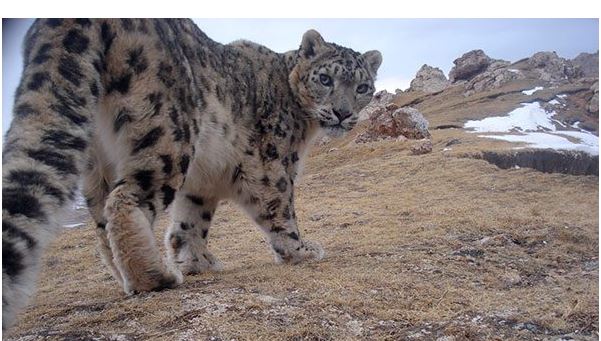
High in the mountains of Central Asia lives one of the most elusive predators on our planet: the snow leopard. Known as the “ghost of the mountains”, the snow leopard’s remote natural habitat, stealthy movements, and perfect camouflage make it very difficult for researchers to locate and track. This species is currently facing threats including poaching, loss of habitat, and conflict with herders when snow leopards prey on their livestock. If left unaddressed, these critical threats will drive snow leopards to extinction. Seneca Park Zoo is working together with Snow Leopard Trust to learn more about these cats, and the best ways to ensure the future survival of this species.

Snow Leopard Trust recognizes and works with governments and conservationists in the 12 countries where snow leopards are naturally found. Current efforts are focused in China, Kyrgyzstan, India, Mongolia, and Pakistan, which are thought to collectively contain more than 75% of the world’s wild snow leopards. Your donations to snow leopard conservation help Snow Leopard Trust’s programs tackle all sides of the threats that snow leopards are facing in their natural habitat. Their mission and conservation philosophy states:
The Snow Leopard Trust aims to protect this endangered cat through community-based conservation projects that are based on an improved scientific understanding of snow leopard behavior, needs, habitats and threats.

The wide scope of their work has propelled Snow Leopard Trust to be a leader in the efforts to secure the future of the snow leopard.

However, snow leopard conservation efforts are further complicated by the fact that conservationists still have many unanswered questions about this species. Even with the use of research tools including camera traps and GPS tracking collars, the unforgiving mountain terrain can make it difficult to locate and track a specific snow leopard for a long-term study. This is where zoos can come in to help. Under the care of their dedicated zookeepers and highly skilled veterinary staff, snow leopards in zoos act as ambassadors for their wild counterparts. Animal care staff can observe snow leopard behavior and gather information including the foods they prefer, enrichment scents that attract them, and denning practices, which can be shared with field research teams to help them track snow leopards more effectively. Veterinary staff can learn more about snow leopard biology through routine health exams which can involve x-rays, ultrasounds, and bloodwork – tasks which are much easier to achieve in the zoo’s animal hospital setting rather than a remote mountainside.

Seneca Park Zoo’s three snow leopards (Kaba, Timila and Kenji) also prove that snow leopards in zoos help people connect with a species that they would otherwise never see. This connection can inspire zoo guests to learn more about the animal they see, and even contribute to their conservation. Whether it’s spreading the word about the plight of a species, or donating to a conservation partner, every bit helps.

To learn more about the snow leopards at our Zoo, and what you can do to protect this species, follow Seneca Park Zoo on social media or stop by in-person during Cold Asia Week!

To learn more about the expansive work that Snow Leopard Trust is doing, visit snowleopard.org.

Sensory Inclusion Certification: It’s all about breaking down barriers to equitable access for all

October 14, 2020

At Seneca Park Zoo, we want every member of our community to feel they are welcome from the moment they arrive – or even before, when visiting our website.

We all know someone who is on the autism spectrum.  We likely all know someone who suffers from PTSD.  And some of us care for people with sensory issues as a result of a stroke, or dementia.    We might think a day at the Zoo would be a perfect outing, because we know it to be a place where our blood pressure falls, our breathing evens, and we feel a sense of calm as we encounter nature.But for the one in six members of our community that have sensory issues, the Zoo can be an overwhelming and overstimulating experience – one that can lead to frustration and even fear as they struggle to make sense of the sights and sounds and smells.  For people with sensory issues, it isn’t just that being in crowds makes them uncomfortable, or that loud sounds are jarring, or bright lights annoying.  Rather, these things can make it difficult to make sense of the world.

To make the Zoo accessible for this large segment of the population, we had to look at these obstacles and find ways to ameliorate them.  For us, and a growing number of zoos accredited by the Association of Zoos and Aquariums, the answer was becoming certified as Sensory Inclusive by KultureCity.

KultureCity has trained all our team members and much of our volunteer corps.  They’ve provided sensory kits that include noise-cancelling headphones and verbal cue cards families can borrow when visiting.  They’ve helped us identify places on site where our guests might want to use those headphones, and other places where a family that needs a bit of a time out can pull off the path and rest for a bit.  They’ve helped us with providing social stories on our website, and they’ve added us to their app (Apple Store / Google Play ).

Perhaps Gretchen Spencer, who works on our education team, sums it up best: “As a mom of a son with sensory sensitivities, knowing that the Zoo is sensory inclusion certified makes me feel like my family is welcome here.  As an educator, I feel proud that this is a safe place to bring all students.”We know there are other barriers to inclusion, and that become sensory inclusion certified is just one step among many we need to take.  But it’s an important step, and one we are proud to have made, in service to our community.

-Pamela Reed Sanchez, President & CEO Seneca Park Zoo Society


* Guests who would like to take a sensory bag on loan for their visit can do so at the ZooShop.

The Urban Ecology Program Grows and Evolves

September 2020

They said, ”Do you want to be an urban ecologist?”

I said, “Sure, I’ll be an Urban Ecologist.” 

Naaman and I were discussing how he didn’t know at the time that this decision would lead to a morning deep in the Genesee river gorge on a path that offered little room to move between the flowing water on his left and layered stone cliffs to his right.As the Urban Ecologist program manager I think I can safely say that most of the 15 Urban Ecologists we hired this summer weren’t really sure what they are getting themselves into. Each one applied through the City of Rochester’s Summer of Opportunity program with the hope of getting some real life work experience. Luckily this diverse group of high school students were willing to take a chance on a job that was explained as an opportunity to spend the next two years developing their future readiness, studying their relationship to the urban environment, engaging the community in nature-based activities, and working to improve the natural environment through stewardship projects. This adventurous spirit has led to a team of young people who are confidently and courageously facing the particularly challenging set of circumstances we find ourselves in this summer. 

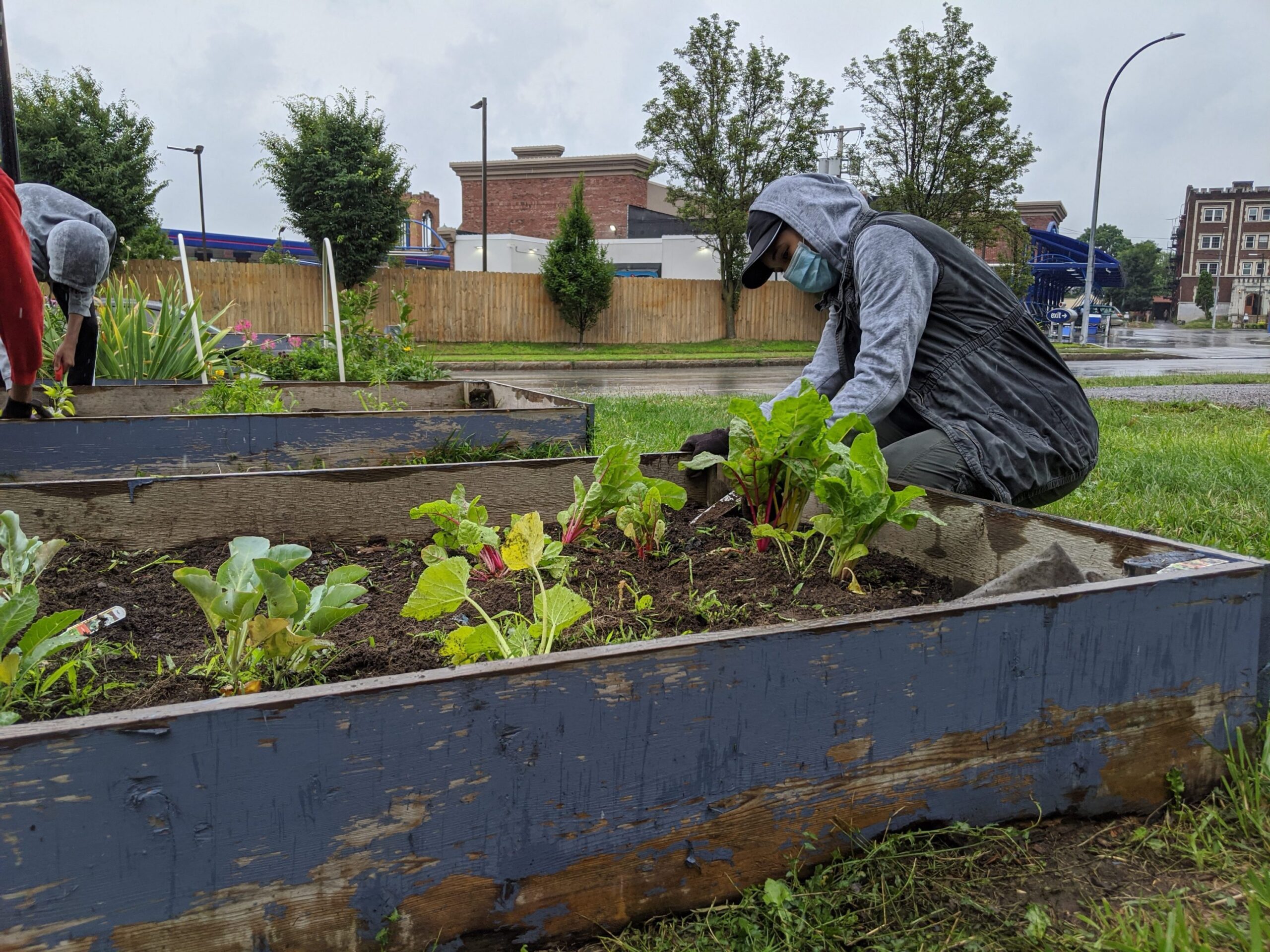
As we considered how to run a program that kept our young people and the community safe and healthy, we saw online work as an opportunity we could take advantage of, but early conversations with our senior urban ecologists provided motivation for figuring out how to provide in-person work as well. They had spent the spring in their homes and they emphatically expressed a desire to get out in nature.  There is plenty of research to back up the idea that getting out would be good for their social, emotional, and physical health. Fortunately the outdoor work embedded in this program lends itself well to a work environment that is well ventilated with space to spread out. We have been able to create a hybrid program that provides both in person and online learning.We have used our time online and at home for a variety of experiences. We worked with an expert to take a financial literacy course. We had a video conference call with an EPA attorney in Baltimore and an expert in environmental justice education in Buffalo. We have had workshops to dissect our sense of place by considering what an urban ecosystem is and how we map our world.  We have read “The Home Place” by J. Drew Lanham and have worked on self-designed community engagement projects.Our in-person work has benefited from the fact that the Urban Ecologists have taken to heart the idea that their attention to health and safety makes a greater impact possible.  With daily health checks, masks on and six feet between each other breaths of fresh air fills our lungs, dialogue about the state of the world fills our ears and gardening soil fills our hands. We have spent several mornings tending community food gardens. We now have a deeper connection to the neighbors who benefit from the freely available fresh food and the pollinators who make that food possible. Removing invasive species in an urban forest has connected us to the ecosystems that bring people in the city peace. Sharing photo stories of Seneca Park connects us to the land in our city and the community of people telling their stories on instagram.

The Urban Ecologists sometimes ask me about getting paid for activities that hardly seem like work like hiking and reading. I tell them it is some of the most important work that can be done right now. Connecting to our environment and each other is necessary in a way it has never been before. I tell them they have a responsibility to share that connection with others. Finding a path through the urban wilderness on foot is just one of the ways they are preparing to lead our communities down an uncertain path. The skills, knowledge, and relationships they are building today will create the hopeful tomorrow we need.

Chris Widmaier, Seneca Park Zoo Society Urban Ecology Program Manager

*Banner photo by Chris Widmaier

The Seneca Park Zoo Society Urban Ecology Workplace Development Program began 2017 in response to the lack of diversity in the field of conservation.  Now conducted in partnership with the City of Rochester Summer of Opportunity program, participants connect with nature, learn important life skills, and make an impact on their communities. Follow @rocurbanecologists on Instagram.

COVID-19 and Animals

July 6, 2020

Since the novel coronavirus that causes COVID-19 emerged in December 2019, scientists and veterinarians have struggled to understand its relationship to animals.Most scientists now agree that the virus originated in bats, and probably passed through another species before infecting the first humans. Diseases that spread from animals to people are called zoonotic, and they are actually a lot more common than you think. Rabies, Ebola, and lyme disease are common examples, and more than 3 out of 4 emerging infectious diseases are zoonotic. Zoonotic diseases make this jump whenever humans are in close proximity to animals. As human populations grow and expand, and climate change forces animals to adapt, the possibility of new diseases is greater than ever.

Initially, scientists thought animals would not be susceptible to infection from humans. That all changed when two dogs and a cat in Hong Kong, living with humans infected with the virus tested positive. Since then, fewer than 20 pets have tested positive globally, all in homes with infected humans. With over ten million cases in people, this means that pets are at least somewhat resistant, and there is no evidence that pets play any role in transmission of the virus.

Based on laboratory studies, we also know that ferrets, Syrian hamsters, and cats may serve as “animal models” of human infection. This means that they potentially can become infected and transmit the virus to one another, as occurs in people. This is important because these animal models may be critical to understanding the virus and developing treatments and vaccines. At the Zoo, we assumed that primates, closely related to humans, would be susceptible, as they are to many human diseases including the common cold and the flu.Since ferrets had already proven to be susceptible, we had also assumed that otters and red pandas may be similarly susceptible as they are genetically related. When a tiger, and later lions, at the Bronx Zoo became infected by an asymptomatic zookeeper in early April, it changed everything, and required us to implement the same safeguards that have been implemented to prevent spread between people – universal face coverings for staff working near the animals, a smaller social bubble through limiting staff involved with each animal, and physical distancing whenever possible. Outbreaks at mink farms in Europe in April and May, presumably initiated by infected caregivers, have also shown us that some animals are susceptible to the virus and can transmit it, highlighting our need to remain vigilant about the precautions for the animals and the staff.

So, those are the animals that we consider at highest risk based on infections in those species or in their close relatives. It appears, though, that all mammals may have some risk of COVID-19, and as in people, there are still many more questions than answers. While we have phased some of our safeguards out, similar to the phased re-opening, many are here to stay as we create a new “normal” behind the scenes at the Zoo until we understand more about this virus. The key to keeping our animals healthy is, as it always has been, keeping our community and staff healthy. That’s why your participation in the public health activities like wearing face coverings and physically distancing are so important. We are excited to welcome you back, safely. We can’t wait to see you, and your cool animal mask, at your next Zoo visit!

– Dr. Louis DiVincenti, Assistant Zoo Director – Animal Care and Conservation

*Banner photo by Wayne Smith

The Attainable Sustainable Lifestyle

April 22, 2020

There’s a good chance you have picked up some sustainable behaviors – intentionally or not – as you’ve adjusted to a new routine during the COVID-19 pandemic. As many of us are sheltering in place, we are no longer driving our cars every day, we are shopping less, and we are carefully planning out our meals. You may have even picked up a new hobby that involves stepping away from your screens or getting outside. As carbon emissions decline, our planet is showing signs of a temporary rebound. We are seeing clearer skies, cleaner waterways, and signs of hope for our Earth. This poses the question – what could our world look like if we lived sustainably? During this time, we have an opportunity to look at our personal lifestyles and find ways to form sustainable habits, and keep them after the world returns to normalcy.

Our current society often falls victim to a culture of excessive consumerism, which damages planetary health on multiple levels. We want stylish clothes, the newest technology, Pinterest-worthy home décor, the best foods, and a thriving social life. We don’t always pause to think about the pollution created by factories as our new clothes and furniture are produced, or the fact that constantly buying new electronics is causing rapid destruction of gorilla habitat. We don’t read all the labels on our food to find out if it’s contributing to the decline of animal populations, or think about the destructive carbon emissions that transportation methods create when we travel. However, once we come to these realizations, we become aware of the impact our individual lifestyle has on our earth’s health.

“We humans are part of the natural world—we relate to each other and with all the other animals who inhabit the planet with us.” -Dr. Jane Goodall

The human race has a responsibility to care for our planet, and to make it better for not only our future generations but also for the natural world we depend on. Our actions create a ripple effect, and we choose whether they are helpful or harmful to the environment. This poses the question: where and how do we start becoming sustainable? You may not be aware of it, but you have probably already started. Compare your current routine to your pre-pandemic routine. If you are carefully planning your meals and making less trips to the grocery store, you are likely reducing your food waste. If you are unable to shop for new goods, may find yourself upcycling items around your house or fixing things you would have otherwise thrown away, reducing factory demand. If you are going stir crazy indoors and have found a new outdoor hobby, you are saving electricity. Take some time to evaluate your current “new normal”, discover the sustainable habits you have picked up, and plan to incorporate them into your post-pandemic lifestyle.We have the ability to spend this time creating a better plan for the future of our planet. We are learning that what we thought may have been impossible measures, are very possible. This is the time to take action – educate yourself on sustainability, and choose to conserve our planet.

– Annie Wheeler, Lead Naturalist for ProgramsHelpful resources on sustainable living:

Animal Movements: The Conservation Stories

March 31, 2020

As a part of Zoo Projects at home, we’re bringing our Animal Programs to you. In our first virtual program, ‘Animal Movements’, we introduced you to four very different species and learned about the ways they move. As an extension of the program, we’re sharing conservation information about each species and actions you can take to help protect their counterparts in nature. Did you miss the videos? Watch them below!

PART I:
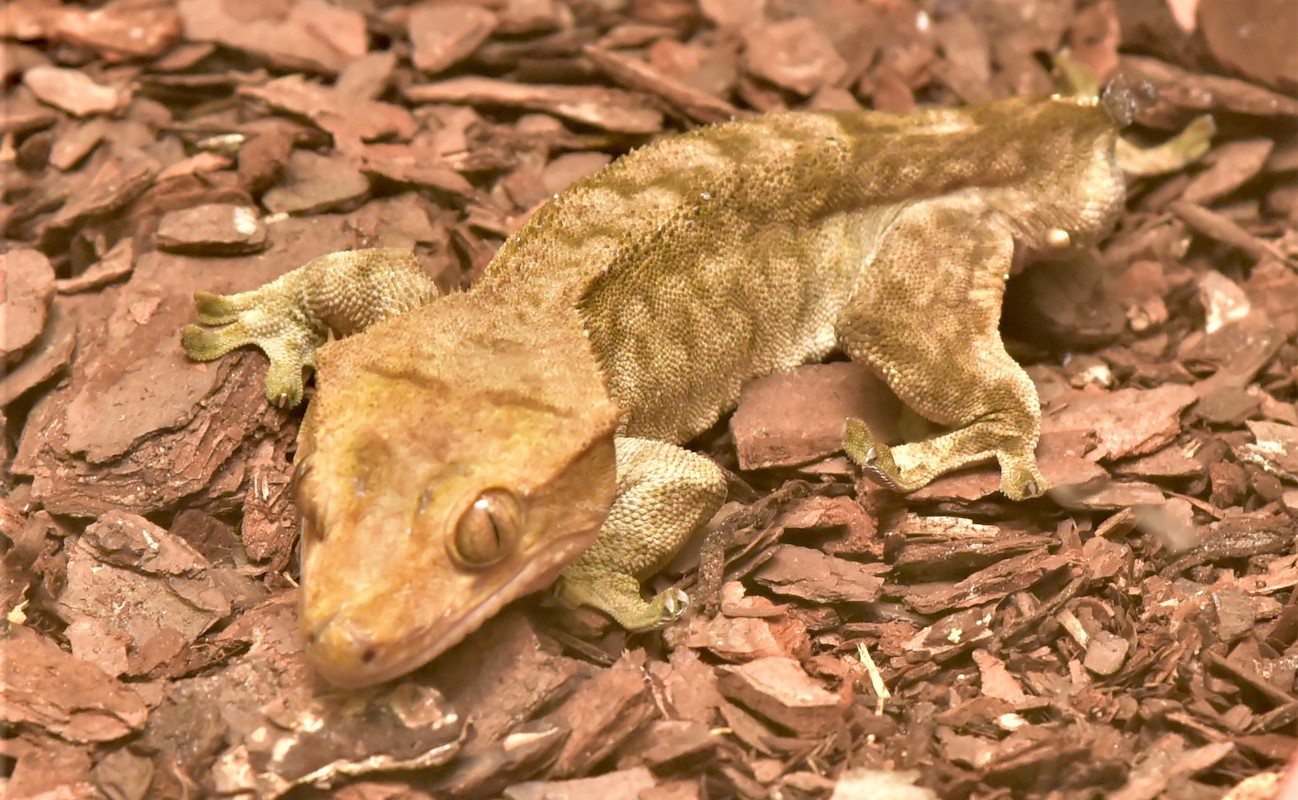
New Caledonian crested gecko (Hopscotch)

The  IUCN Red List of Threatened Species has categorized the crested gecko as Vulnerable, and their population is continuing to decrease.  The crested gecko was actually thought to be extinct, until some were accidentally found in 1994 in New Caledonia. The invasive fire ant had previously been brought to the island and had caused the rapid decline of the gecko population. Since finding the geckos again in 1994, the population began to rebound, but the pet trade and habitat loss are now causing another decline.

Ways you can help crested geckos:

  • Become a responsible pet owner. Make sure you know the source of where your gecko came from and that the source is a responsible breeder. Never have a pet that came from their natural range since that encourages people to take animals from their habitat, which harms populations. Also make sure that geckos are a good fit for your lifestyle before getting one. Do your research to learn about all of their needs and upkeep.
  • Help reduce habitat loss by recycling paper and cardboard, and by purchasing pre-owned items when possible to lower factory demand.
  • Be aware of how you may spread invasive species (like the fire ant that caused the believed extinction of the crested gecko). Make sure to brush off your hiking boots and clean off boats before going to new areas.

Mallard Duck (Ernie)

While Ernie is a domestic mallard duck, meaning he lives with or around people, there are many species of wild ducks throughout the Northern Hemisphere.  Ducks face threats such as urbanization and habitat loss, as well as pollution.  Ducks need to migrate to warmer temperatures, which means they need access to natural areas with fresh water such as ponds, lakes, and rivers.  Ducks are greatly affected by pollution, as their main sources of food are found in and along waterways.  If a water source is polluted, then the fresh water plants, bugs, and fish that the ducks feed on may no longer be available, or may  make them sick from the chemicals.  Ducks may also eat litter, thinking that it may be food, and may also get caught in things such as fishing line and soda six-pack rings.

Ways you can help ducks:

  • Make sure to look up your county’s recycling protocols and be aware of which products are recyclable.  Set up a recycling station in your house and encourage your friends and family to recycle.
  • Be aware of what goes down the storm drain.  To keep pollution to a minimum, make sure only rain goes down the storm drain.  Wash your car at car washes, rather than in your driveway.  Car washes have a process to properly filter their waste water.  Soapy water from your driveway will go into your yard, local waterways, and the closest storm drain, and can negatively affect the ecosystem.
  • Cut your soda six-pack rings and make sure they go into a waste receptacle.

Part II:
Marine Toad (Cane Toad) (Bubba)

Marine toads are an invasive species, meaning they are not native to many of the areas that they are found, and cause harm to those ecosystems. The marine toad’s native range is Texas down through Mexico to South America. In these areas, the toads have a niche in the ecosystem. However, areas like Hawaii and Australia, where the marine toad have been introduced, are suffering huge disruptions in their ecosystems. Marine toads are opportunistic, meaning they will eat almost anything that they think smells good. This means they can cause a lot of damage to prey species population numbers.

Also, marine toads are poisonous for their entire lifecycle, even when they are eggs. Predators that live in these new ranges are not used to this, and often become sick or can die when they eat a marine toad, causing damage to predator population numbers. When predators learn to avoid marine toads, the toad population increases to numbers that can’t be controlled, especially since marine toads can lay up to 40,000 eggs every time that they reproduce.

You can help prevent the disruption of ecosystems by invasive species:

  • Learn about which invasive species are moving towards your area, or are now found in your area. Help identify and report these on imapinvasives.org.  Your reports can help environmental and governmental organizations control these species and therefore decrease environmental damage.
  • Be aware of how you may spread invasive species. Make sure to brush off your hiking boots to stop seeds and insects from spreading to new areas.  Clean off boats to prevent seeds and aquatic animals from spreading to new areas.

Burmese Python (Garrett)

Although Burmese pythons are an invasive species in the southern United States (mainly due to the pet trade), their species numbers are declining in their native range of southeast Asia. Burmese pythons, as well as many more snake species, face the threat of poaching (illegal hunting).  Snake skins are used to create products such as purses, boots, belts, and hats. Snakes also face fear killings. Unfortunately, throughout history, humans have viewed snakes as scary, and sometimes even as evil.  Snakes are actually a very important part of the ecosystem, and don’t actively seek to harm others. Without snakes, the rodent and insect populations would increase to a point that may make the ecosystem unstable.  Seeing a snake in your yard means that there are less chances of insects and rodents invading your home.

Ways you can help Burmese pythons and snakes:

  • Don’t buy products that support poaching.  Find alternatives to snake skin products.  If you aren’t sure if something is snake skin, ask the seller.
  • If you see a snake in nature, leave it alone.  The snake will not harm you unless it becomes threatened by you.  Leaving the snake alone will allow it to do its job in the ecosystem.

 Follow Seneca Park Zoo on Facebook for the latest Zoo Project and animal news.

– Rhonda McDonald, Program Manager & Annie Wheeler, Lead Naturalist for Programs