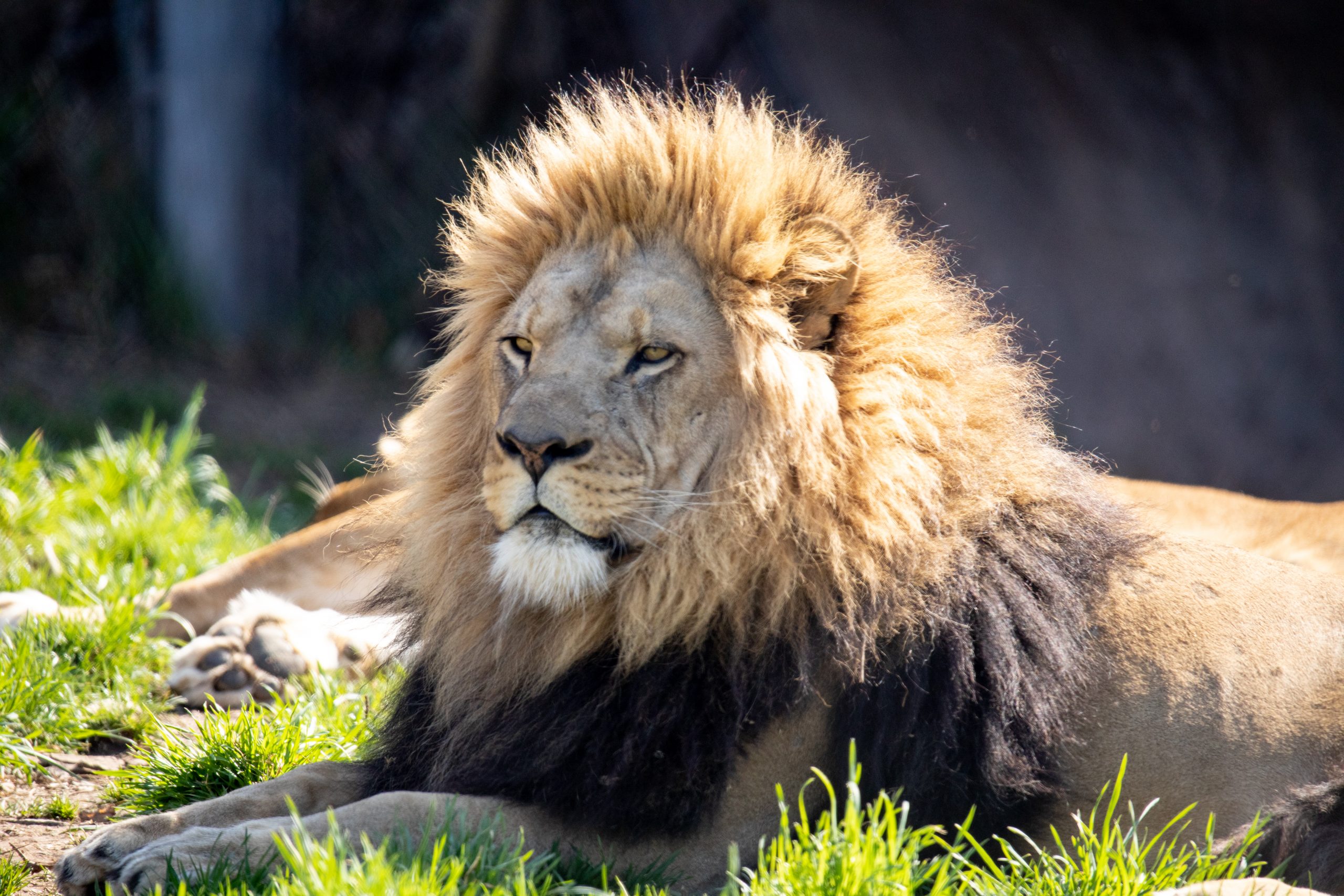
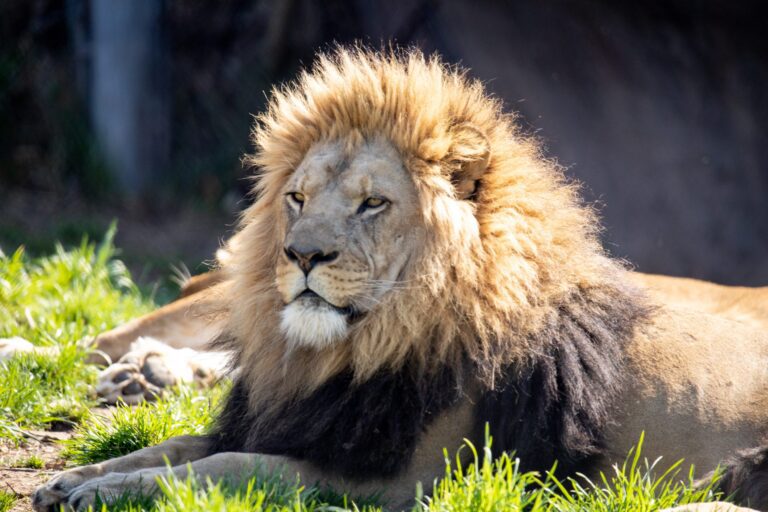
The Zoo is home to three adult African lions that arrived in December 2011 from an animal park outside Pretoria, South Africa. There is one male, Chester, born in September 2010 and two females: Zuri, born in September 2010 and Asha, born in January of 2011.
Animal Facts
Lions roar in chorus. This may be a form of social bonding and the roars can be heard as far as five miles away!
In the wild, most male lions live between five and nine years, while females live until 15 or 16 years. In the Serengeti, females have lived up to 18 years.
Individual lions can be identified by their unique whisker spot pattern, similar to how our fingerprints are used.
Most cat species are solitary, but lions are social and live in groups called prides
Females do most of the hunting in a pride, sometimes in a group. Hunting typically takes place at night.
Diet
Large ungulates, birds, rodents, fish, ostrich eggs, amphibians and reptiles. Lions also actively scavenge, taking cues from hyenas and vultures.
Status in The Wild
Vulnerable
International Union for Conservation of Nature (IUCN) Red List status
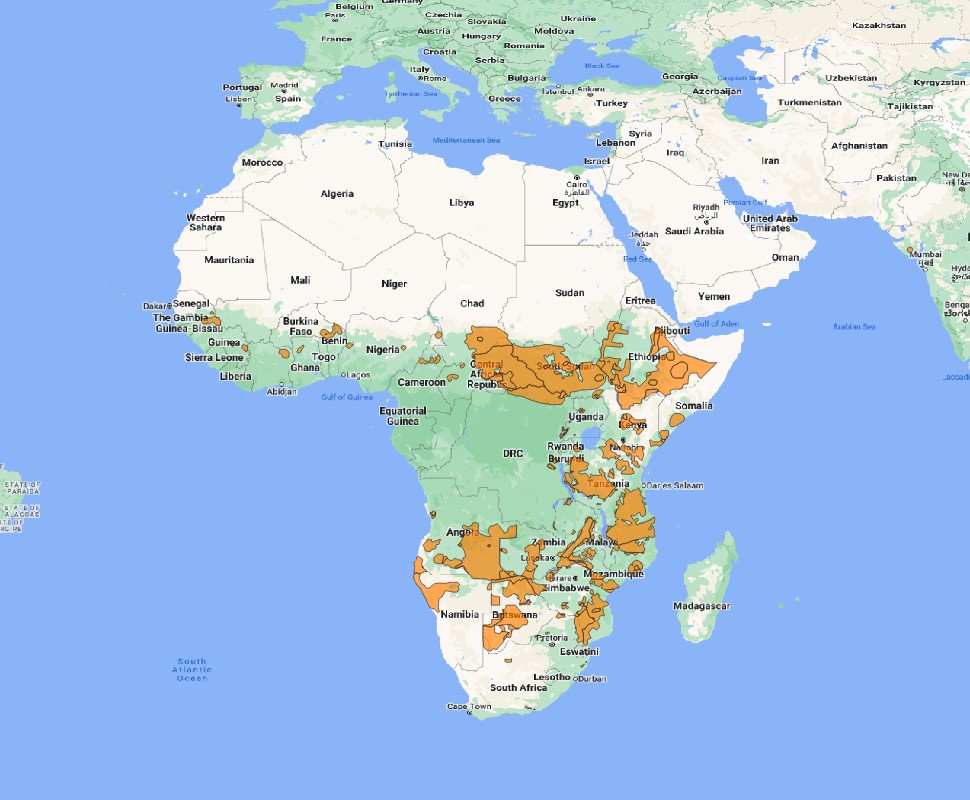
African lions are most common in plains or savanna habitat.
African lions are protected under CITES Appendix II. They are part of the Zoo’s Species Survival Plan (SSP) Program. It is believed that during the past two decades, the lion population has declined by nearly 30 percent. Main threats listed by IUCN are indiscriminate killing by humans and prey base depletion. Other problems include habitat loss, agricultural expansion and geographic isolation of different groups.
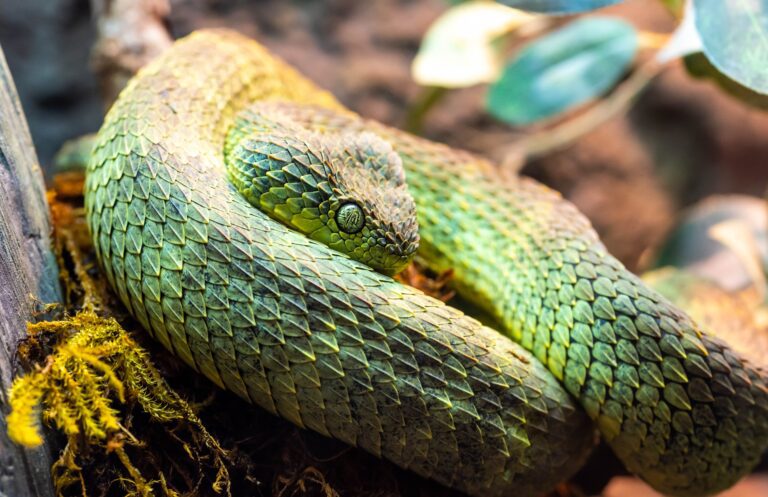
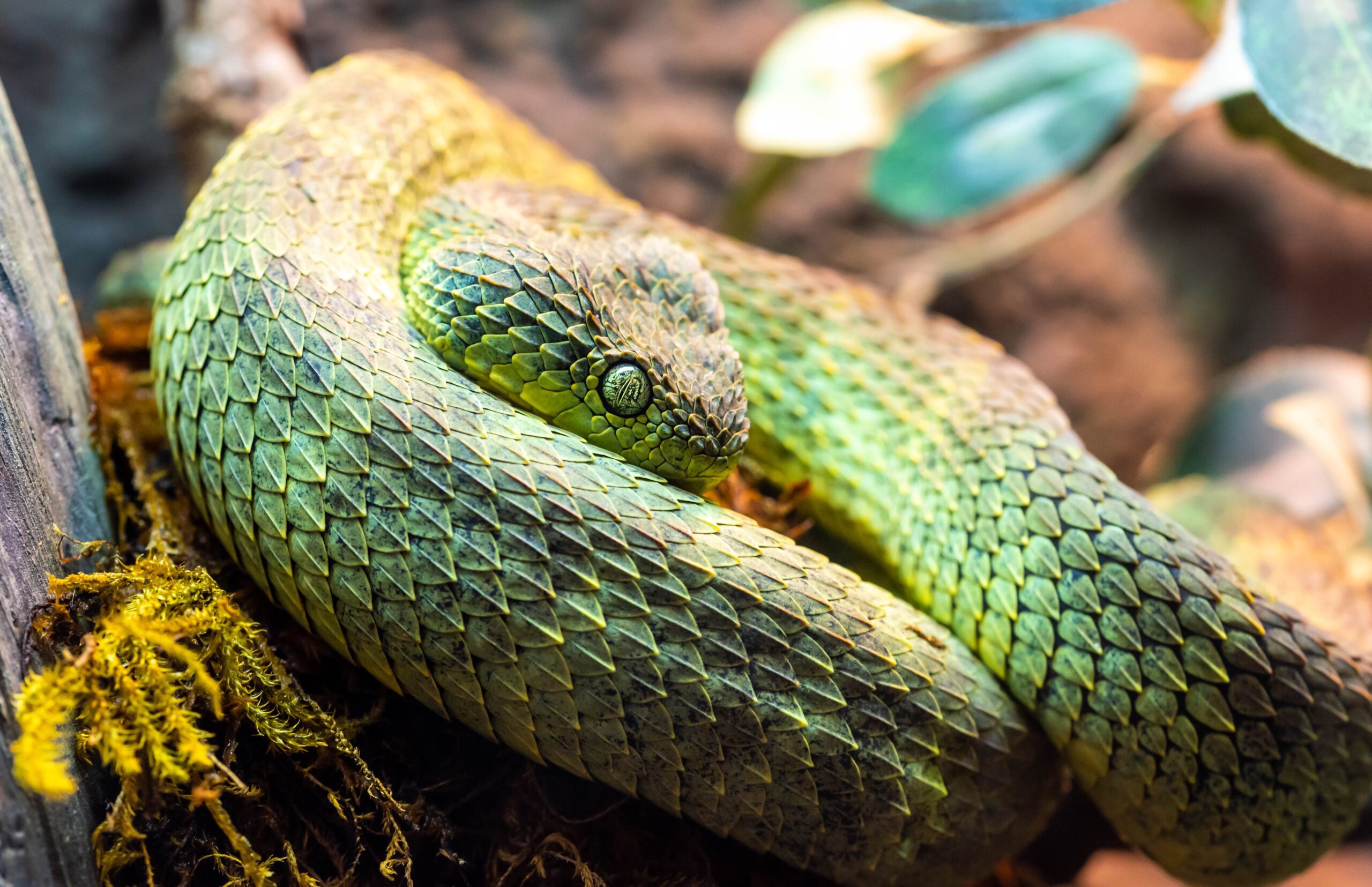
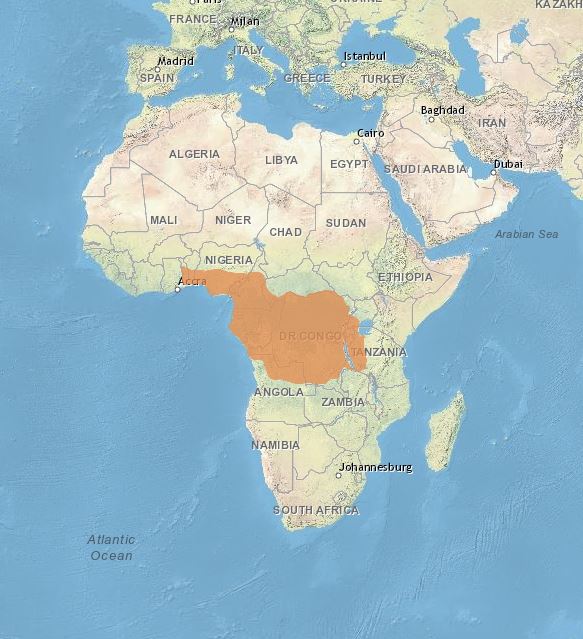
Seneca Park Zoo’s African bush viper resides inside the Animals of the Savanna building, in the micro-habitat tree.
Animal Facts
African bush vipers are ambush predators, and commonly strike their prey while hanging upside down from a tree limb.
There is no antivenom for this species of snake.
African bush vipers are commonly called “green vipers”, however they can be found in variations of red, orange, gray, yellow, black, blue, olive, and brown. They may also change color throughout their lifespan.
They are viviparous, meaning they give live birth.
They are nocturnal which means they sleep during the day and are awake at night which is also when they hunt.
Diet
African bush vipers are carnivorous, and primarily eat small rodents. They may also eat birds, frogs, and small reptiles when available.
Status in The Wild
Not Evaluated
International Union for Conservation of Nature (IUCN) Red List status
African bush vipers are mainly arboreal and prefer tropical rainforests in West and Central Africa. They are typically found far from human settlements.
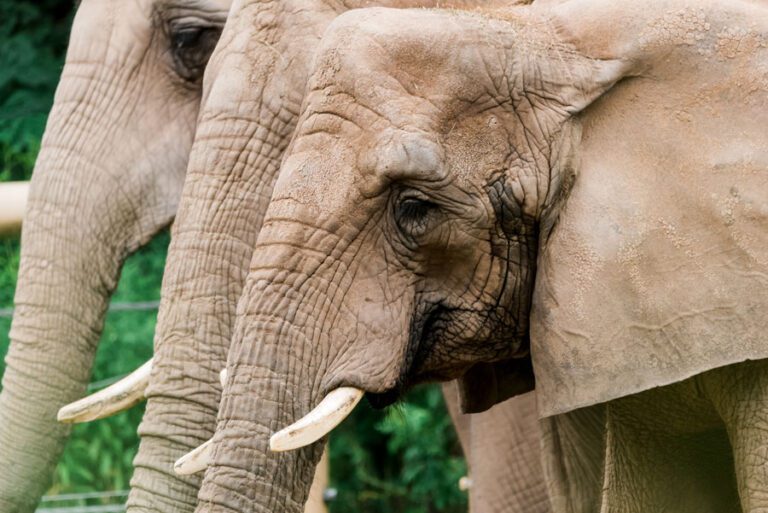
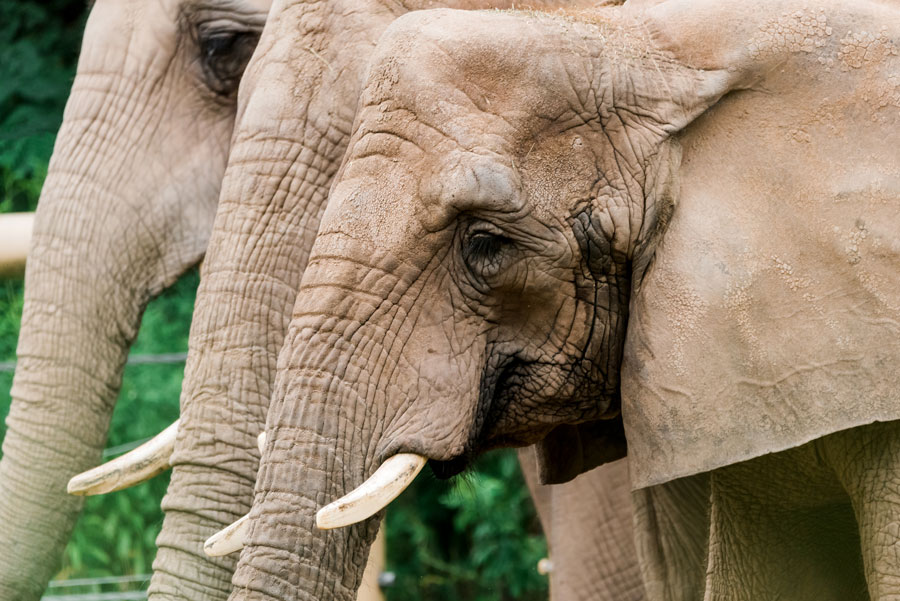
Three female African elephants reside at Seneca Park Zoo. Genny C and Lilac were born in South Africa in 1977 and 1978, respectively, and came to live at the Zoo in 1979. Moki was born in Zimbabwe in 1982 and joined the Zoo family in April 2015. All of our elephants respond to, and understand, more than 50 verbal commands. To date, they are the only African elephants in New York.
African elephants are the largest land animals on Earth, slightly larger than their Asian cousins
Upper incisor teeth develop into tusks and grow throughout their lifetime.
One way to tell an African elephant apart from their Asian counterparts is by looking at their ears
Elephants are highly social animals living in groups led by the oldest female, made up of cows, their calves and young males
Sounds, touch and posture are all ways they are known to communicate with one another
Diet
Elephants eat leaves, branches, fruit and grasses. They consume 300 pounds of food and 50 gallons of water every day.
Status in The Wild
Endangered
International Union for Conservation of Nature (IUCN) Red List status
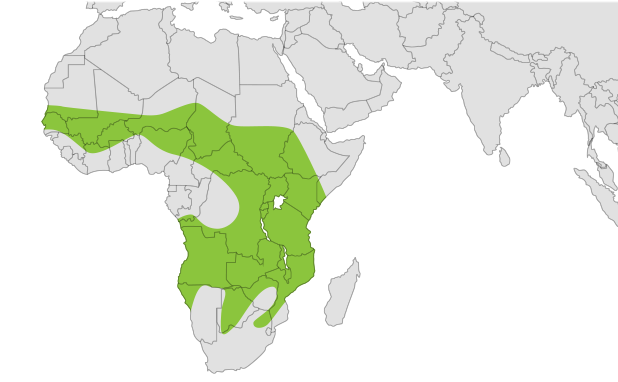
African elephants can be found in open forests and grasslands in Africa.
The biggest threats to African elephants are the ivory trade and habitat destruction. Poaching for meat and ivory significantly reduced the population of African elephants in the 20th century. The African elephant has governmental protection, but such poaching is still a serious threat to the species. In Africa, some people have resorted to culling large amounts of elephants to help sustain the ecosystem and reduce the elephant population. The Seneca Park Zoo participates in the Species Survival Plan for the African elephant.