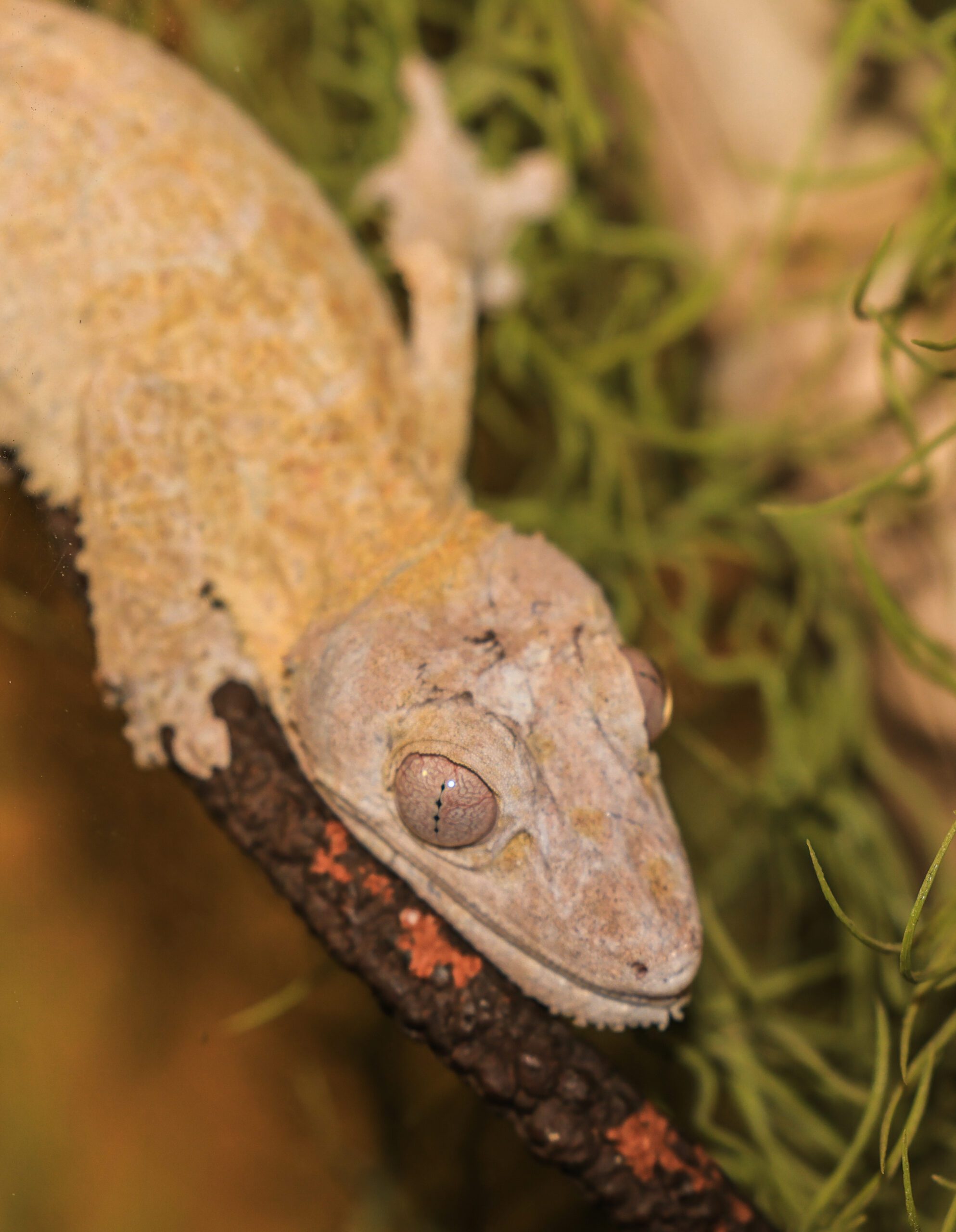
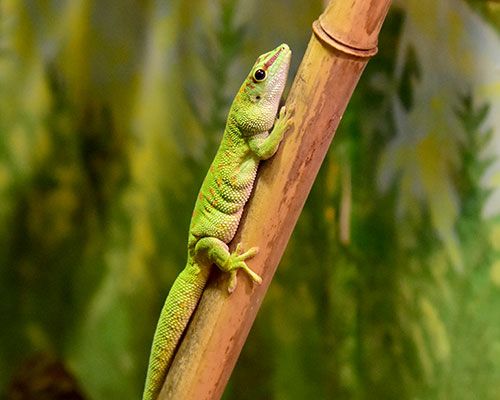
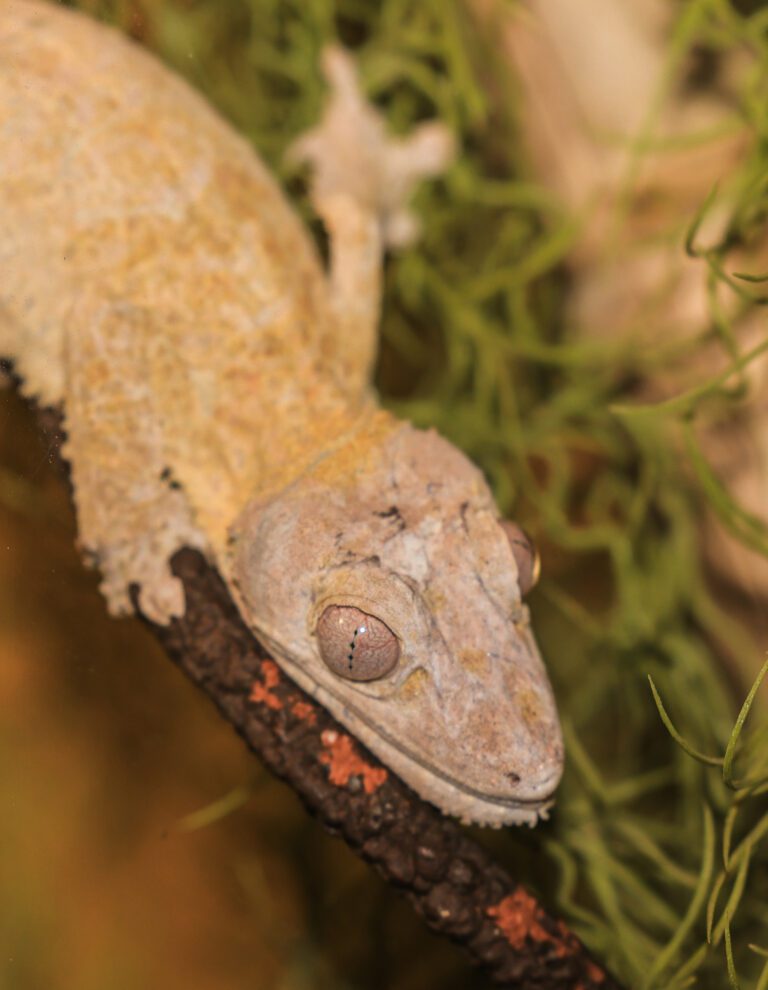
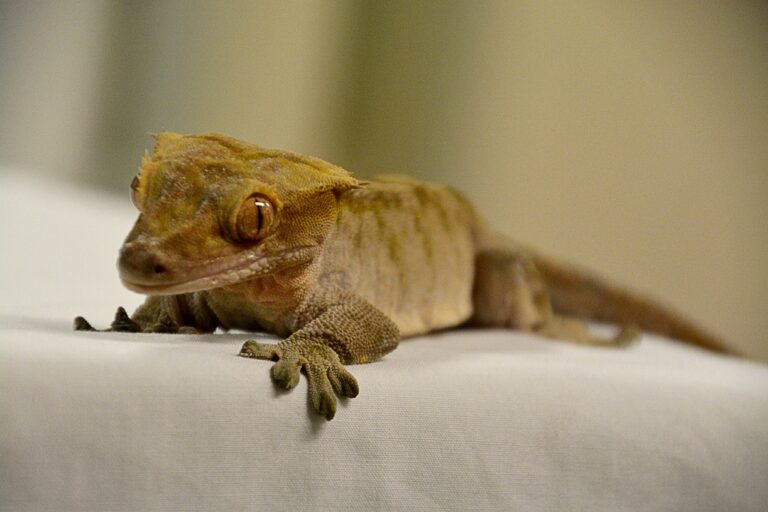
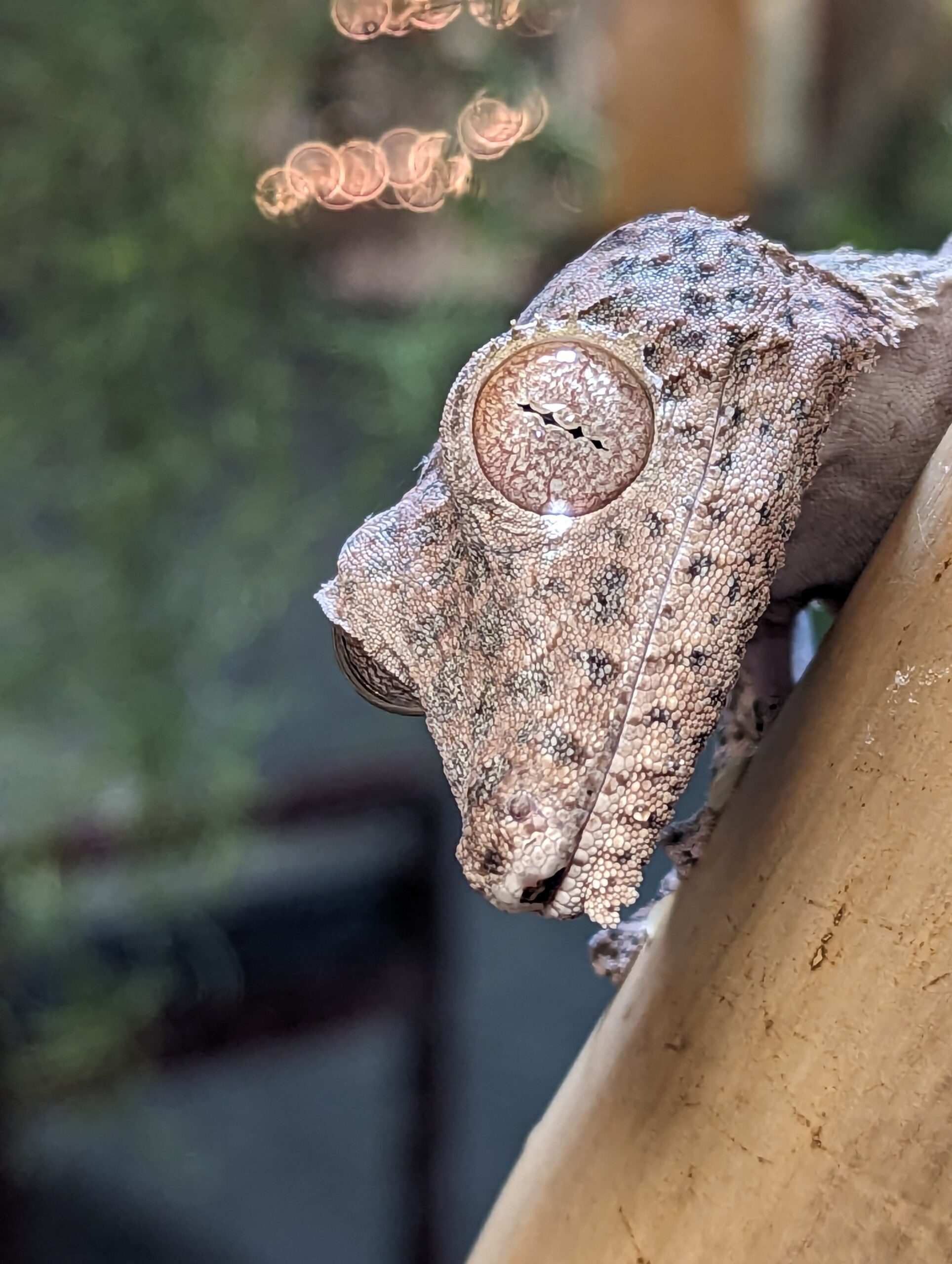
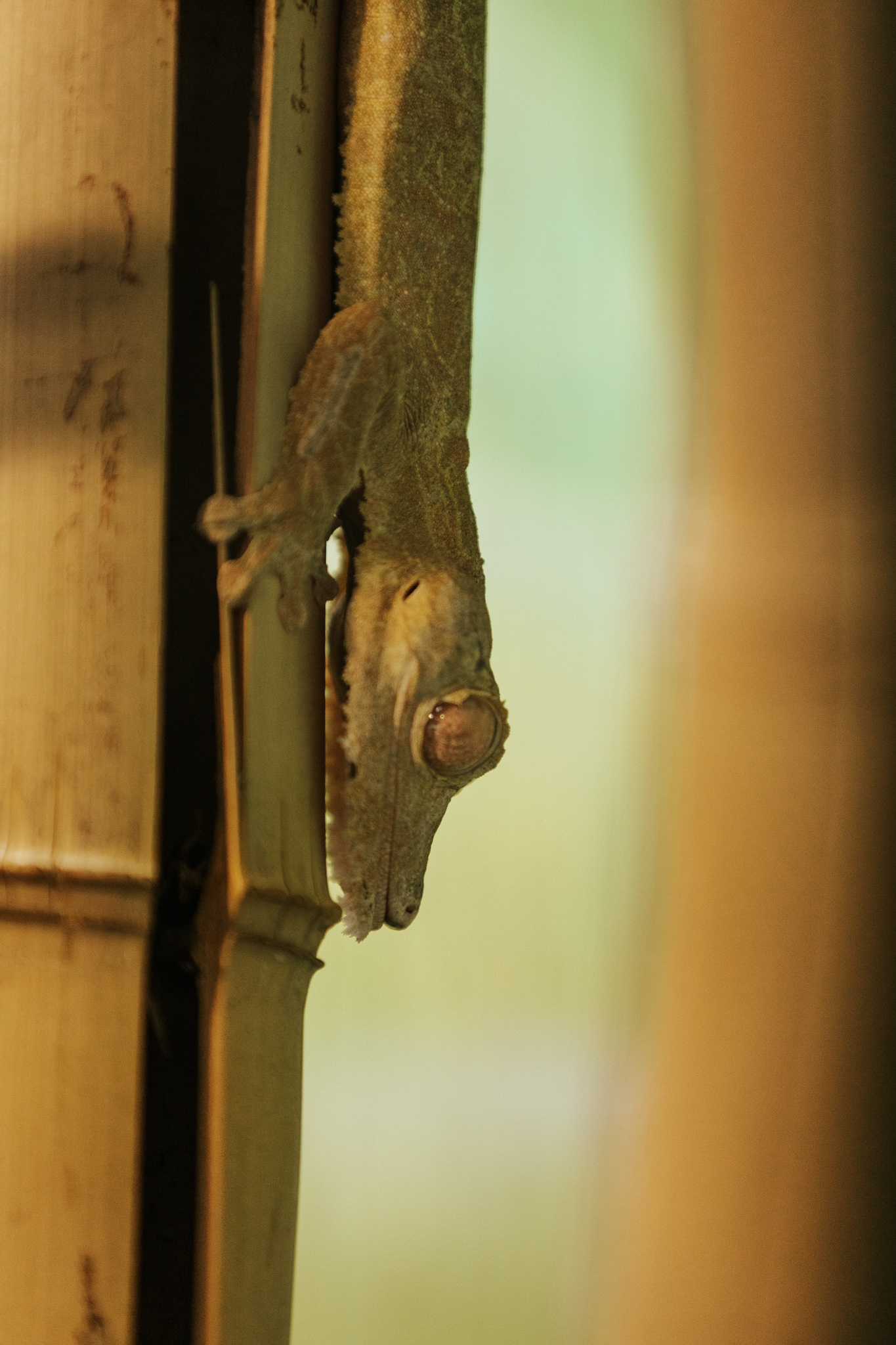
Seneca Park Zoo is home to six leaf-tailed geckos. Their habitats can be found inside the Creatures of the River’s Edge building; 3 reside in their on habitat while 3 are in the giant Madagascar Green Gecko habitat.
Animal Facts
Leaf-tailed geckos use their superb coloration, fringed skin, and leaf-like tail to blend into their surroundings.
They usually hide with their tail up, like a leaf.
If threatened, this gecko can drop its tail, leaving it behind to distract the predator. A new, slightly different tail will grow back.
Solitary except for the breeding season
Arboreal; nocturnal, sleep all day in a head down position; no eyelids, licks eyes to keep them clean
Diet
Carnivorous. Eats primarily insects and arachnids, but may also eat some snails.
Status in The Wild
Vulnerable
International Union for Conservation of Nature (IUCN) Red List status
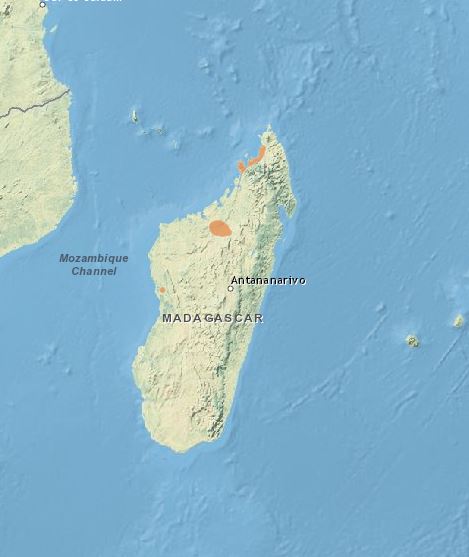
Inhabits lower levels of trees in dense, low-altitude rainforest in four separated areas in Western and Northern Madagascar.
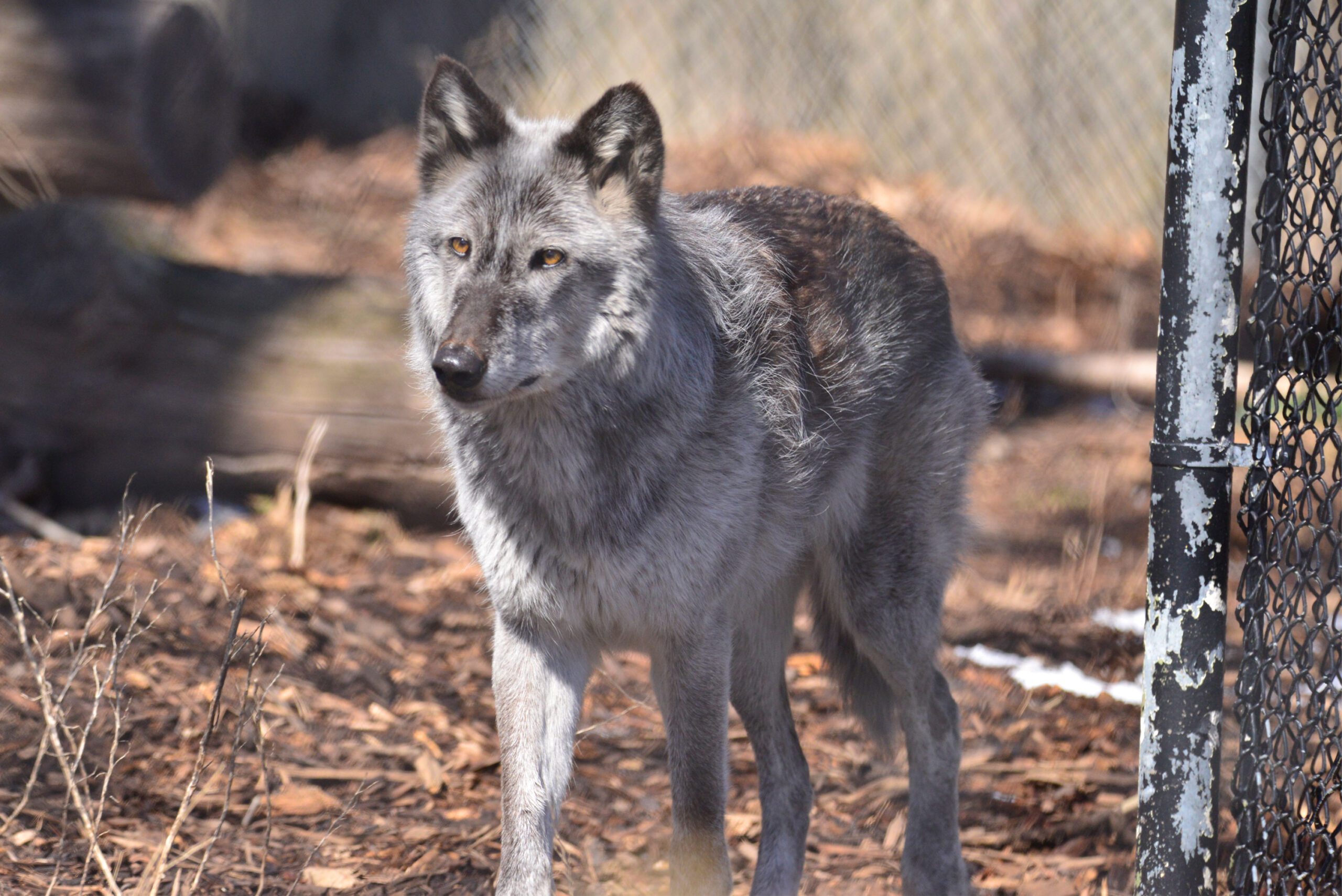
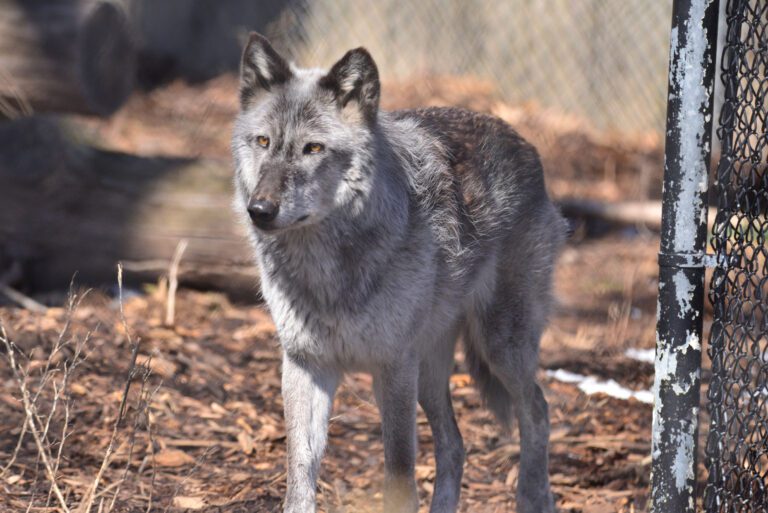
The Zoo is home to two gray wolves, Timber and Willow. Born in April 2014 at New York State Zoo in Watertown, NY, the brother and sister pair came to the Zoo from Buffalo Zoo in March 2016. Wolves are intelligent, social predators. Their complex social structure divides responsibilities, allowing packs to better raise young, patrol territory, and secure prey. By controlling prey populations, wolves balance the ecosystem and promote biodiversity.
Animal Facts
Very social animals with complex communication, including body language and sounds; tail, ear, body and head positions are important, as are facial expressions.
They howl to assemble the pack for a hunt, to locate pack members, to warn other packs, and sometimes for no apparent reason at all!
Wolves typically mate for life, although if one of the pair dies, they will accept another mate.
They can run at speeds up to 40mph
Often times other carnivores eat from kills wolves have made
Diet
Carnivorous. Gray wolves eat large animals such as deer and elk; occasionally smaller animals, and carrion.
Status in The Wild
Least Concern
International Union for Conservation of Nature (IUCN) Red List status
Gray Wolves inhabit a variety of habitats including: deserts, plains, forests, and tundra. Their range is throughout the Northern Hemisphere, generally in areas with fewer humans.
Because of the diversity in climate, topography, vegetation, human settlement and development of wolf range, wolf populations in various parts of the original range vary from extinct to relatively pristine.
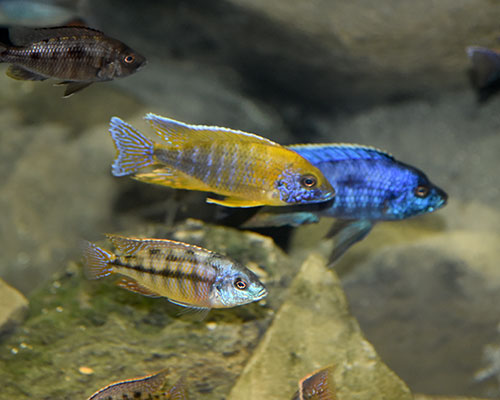
Seneca Park Zoo is home to multiple species of Lake Malawi cichlids. The cichlid aquarium can be found inside the Animals of the Savanna building. Many of the species have very similar behaviors, and almost all of them eat algae and plankton. However, they do live at varying depths.
Animal Facts
Lake Malawi Cichlids are very colorful freshwater fish.
Since each species is specialized to use the environment in different ways, they do not compete for food or habitat within Lake Malawi.
Studying the diversity of these cichlids is important to understanding the science of speciation: the evolution of new species.
Lake Malawi is a freshwater lake over 300 miles long and around 50 miles wide, and is an African Great Lake.
Diet
Hundreds of cichlid species reside in Lake Malawi, and each species has a very specific diet as either algae scrapers, fish eaters, or insectivores.
Status in The Wild
Not Evaluated
International Union for Conservation of Nature (IUCN) Red List status
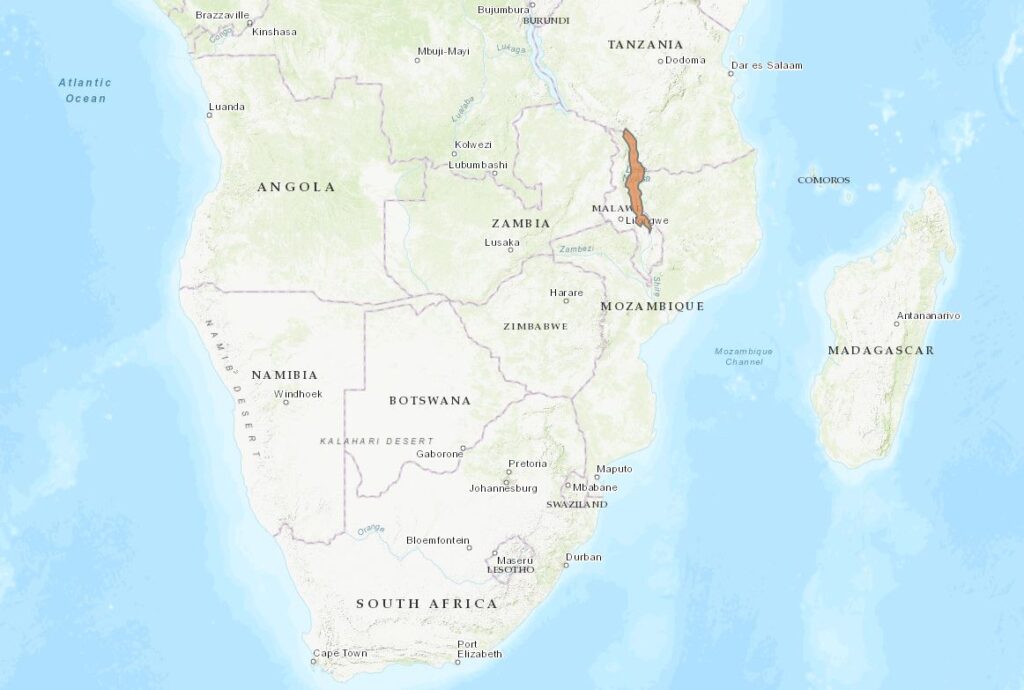
These cichlids are endemic to Lake Malawi, which runs through areas of Tanzania, Mozambique, and Malawi. They are found in varying depths and micro-habitats within the freshwater lake.
Their threats include pollution, invasive species, and overfishing for the pet trade.
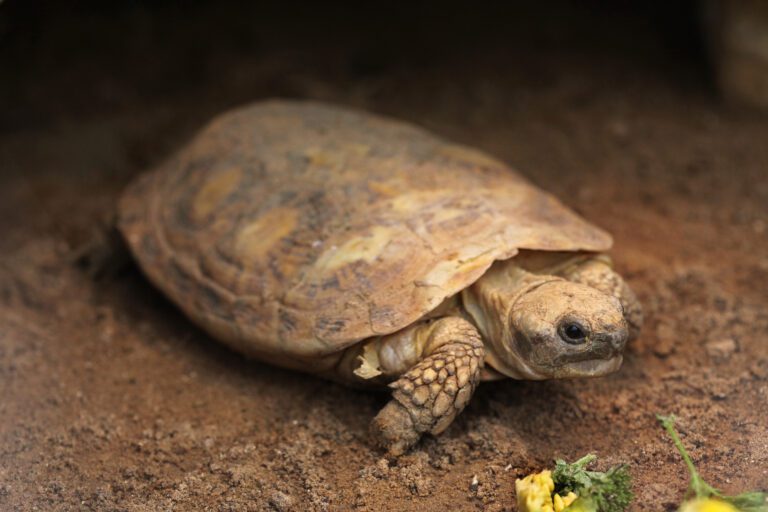
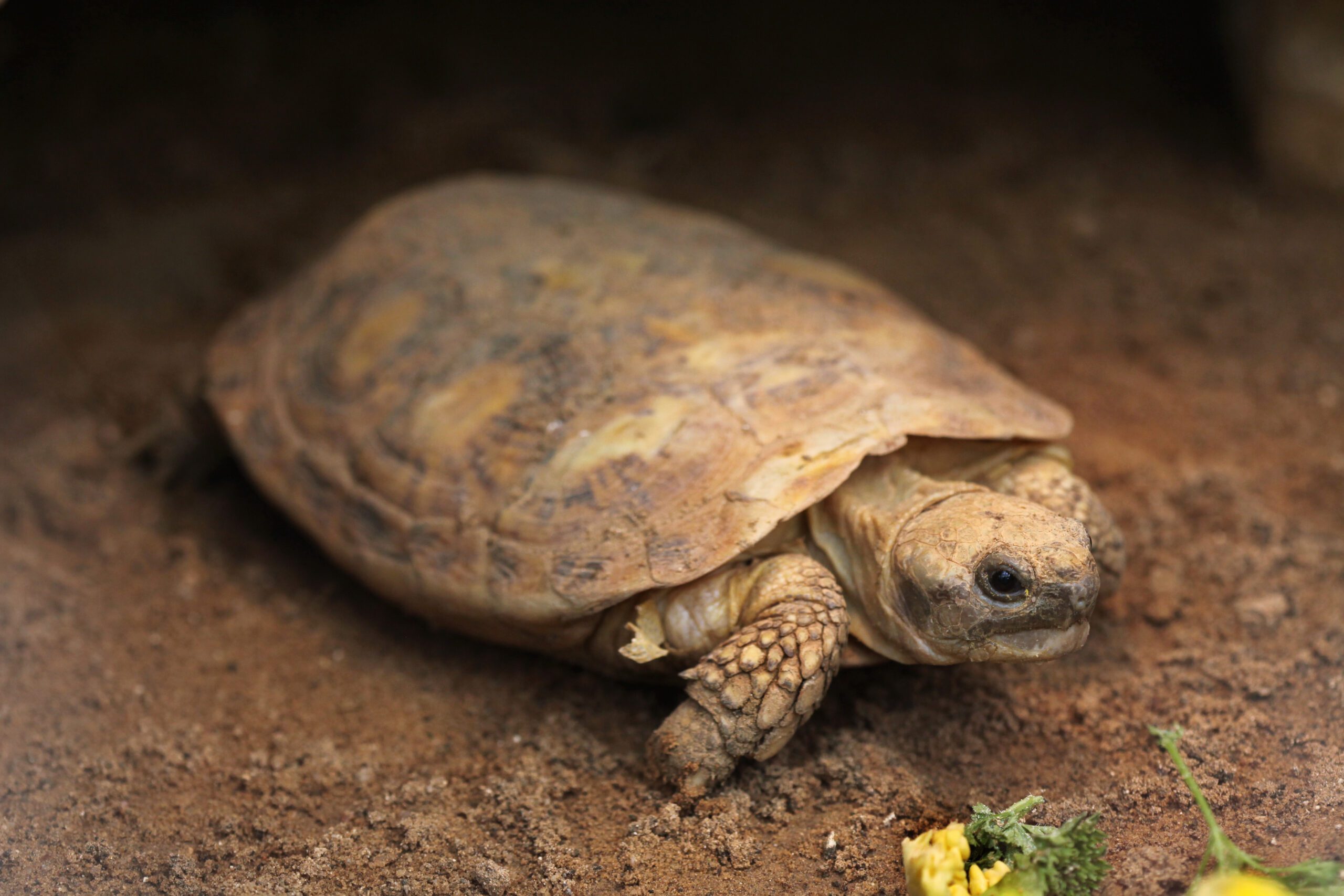
Seneca Park Zoo is home to three Pancake tortoises, one male and two female. A male and a female reside inside the Animals of the Savanna building, while the second female serves as a program animal.
Animal Facts
Unlike most tortoises that sport a heavy domed shell, the Pancake tortoise relies on its speed and flattened shape to outrun and hide from its predators.
The average size of an Pancake tortoise is six to seven inches long and one inch thick.
To lock itself into a protective crevice, the Pancake tortoise will take in a large quantity of air to expand its flexible shell to fit the space between the rocks.
Pancake tortoises have one or two clutches of eggs per year, of one to four eggs each clutch.
They are excellent climbers and active at dawn and dusk; spend day in rock crevices and spend very little time away from their hiding place.
Diet
Pancake tortoises are strictly herbivorous. They eat dry grasses, fallen fruits and available vegetation.
Status in natural range
Critically Endangered
International Union for Conservation of Nature (IUCN) Red List status
These tortoises inhabit isolated locations in eastern Africa, from Kenya to Tanzania. The habitat they prefer is areas of small hills with rocky outcropping in arid thornbrush.
Pancake tortoises are popular in the pet trade, which has made them considerably vulnerable in the wild. Habitat loss in Africa combined with a slow reproductive rate make this species’ recovery difficult.
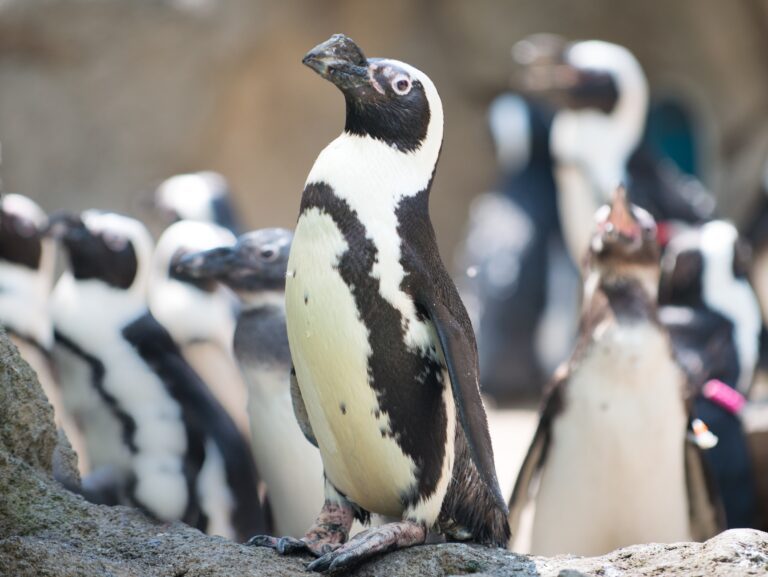
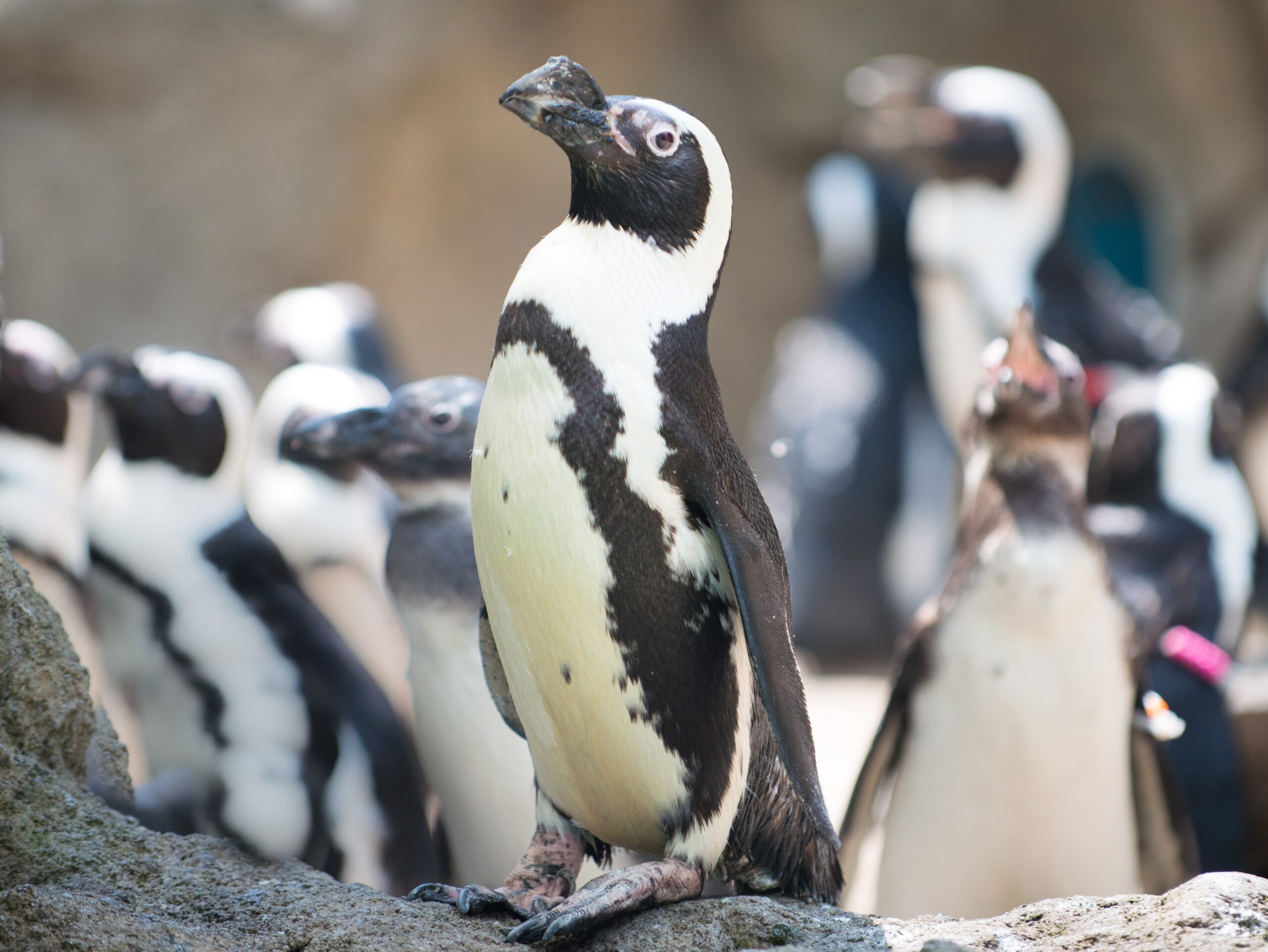
Seneca Park Zoo is home to a thriving colony of African penguins. Thirty adult penguins currently call our zoo home. Their habitat is outdoors along the Rocky Coasts.
Animal Facts
The Zoo has hatched over 100 penguins, most of which have been sent to other AZA-accredited zoos and aquariums.
African penguins have up to 70 feathers per square inch. These feathers are stiff and overlap in layers, trapping air against their skin. This makes their feathers both windproof and waterproof.
Seneca Park Zoo partners with SANCCOB, the largest volunteer-based wildlife organization in the world. Volunteers rehabilitate thousands of coastal birds every year that fall victim to oil spills or are orphaned due to lack of fish.
They will generally pair bond for life.
These penguins molt once a year; molt takes 20 days.
Diet
African penguins are carnivorous, eating fish and crustaceans. They rely heavily on sardines and anchovies, which are being overfished by humans.
Status in The Wild
Endangered
International Union for Conservation of Nature (IUCN) Red List status
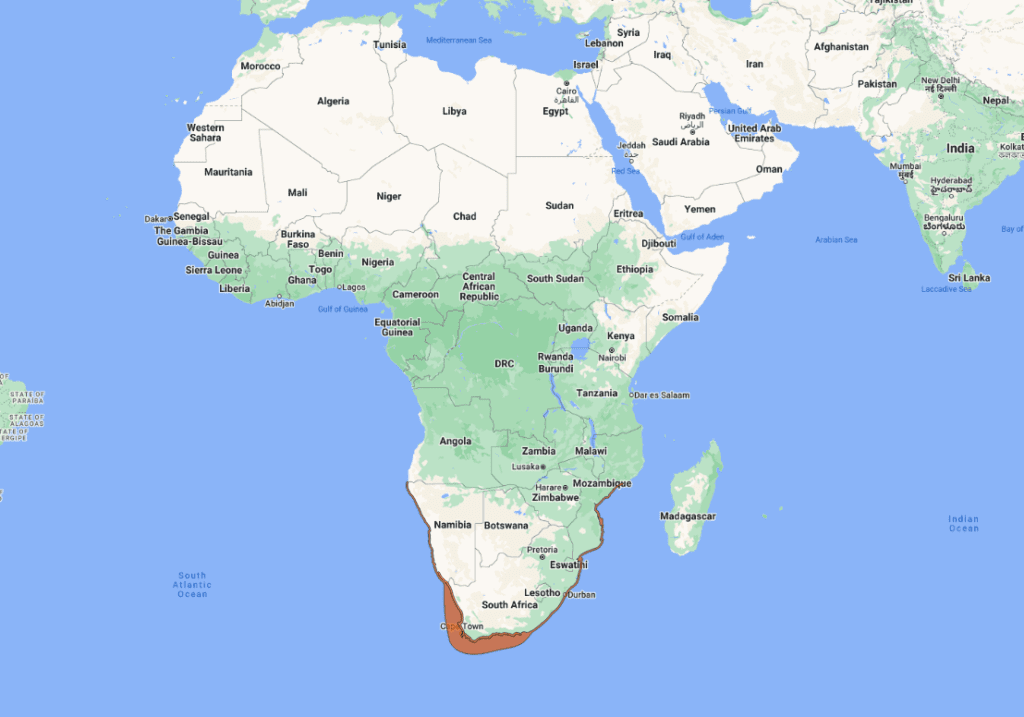
African penguins live in large colonies along the coast of southern Africa, and prefer water temperatures between 40°F and 70°F. They use their own excrement, called guano, to build nests under bushes and rocks.
The biggest threats to African penguins are rising sea temperatures, overfishing, and oil spills.
Seneca Park Zoo is home to one female Amur tiger, Katya, who was born here in 2005. Amur tigers were formerly known as Siberian tigers, but these tigers are not native to Siberia and actually inhabit the area around the Amur River Valley. The name change occurred to accurately reflect the true origin of this large cat.
Animal Facts
Amur tigers are the largest of all living cats.
They grow to be 14-feet long, males weigh up to 400 pounds and females weigh up to 300 pounds.
The hind limbs of these animals are longer than their forelimbs. This is an adaptation for jumping.
Tiger cubs are born blind and weigh only 2 to 3 pounds at birth.
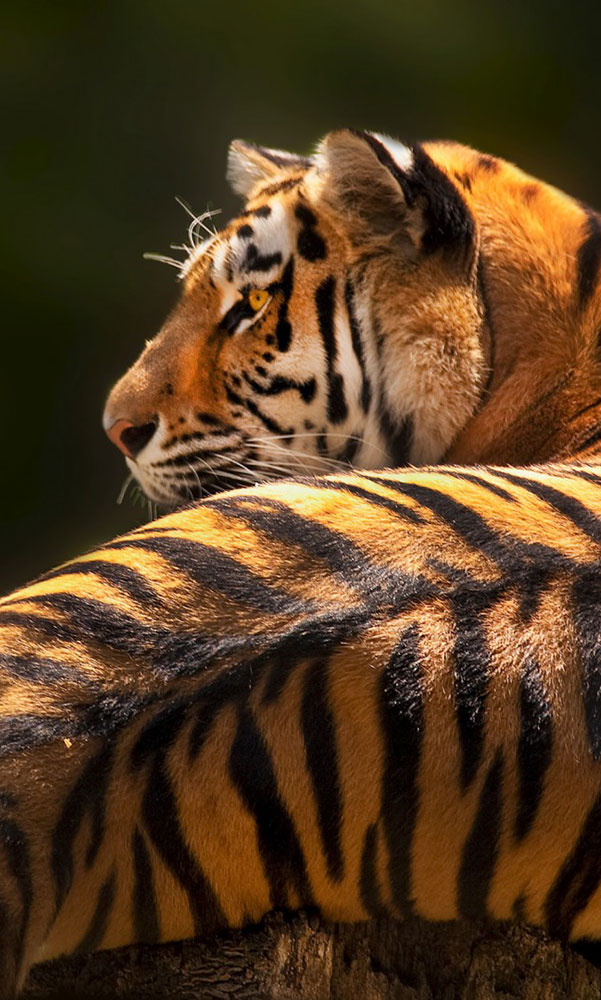
The uneven black stripes on the cats’ orange coats act as shadow marks and make for excellent camouflage.
Tigers are solitary animals except during the mating season. A male’s territory may cover 400 square miles, with several females within that range.
Diet
Tigers eat deer, elk, antelope, and wild boar.
Status in Nature
Endangered
International Union for Conservation of Nature (IUCN) Red List status
Amur tigers can be found in Coniferous and taiga forests and bush mountains in southeastern Russia, northeastern China and north regions of Korea.
Amur tiger population is estimated to be fewer than 500 individuals. In accordance with the Species Survival Plan (SSP), Seneca Park Zoo seeks to conserve the Amur tiger in human care through preservation of breeding populations. In the United States, 137 such tigers are part of the SSP.
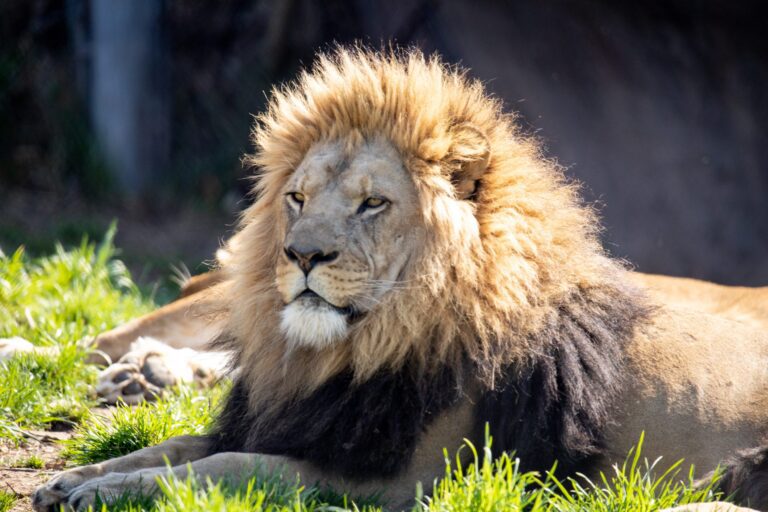
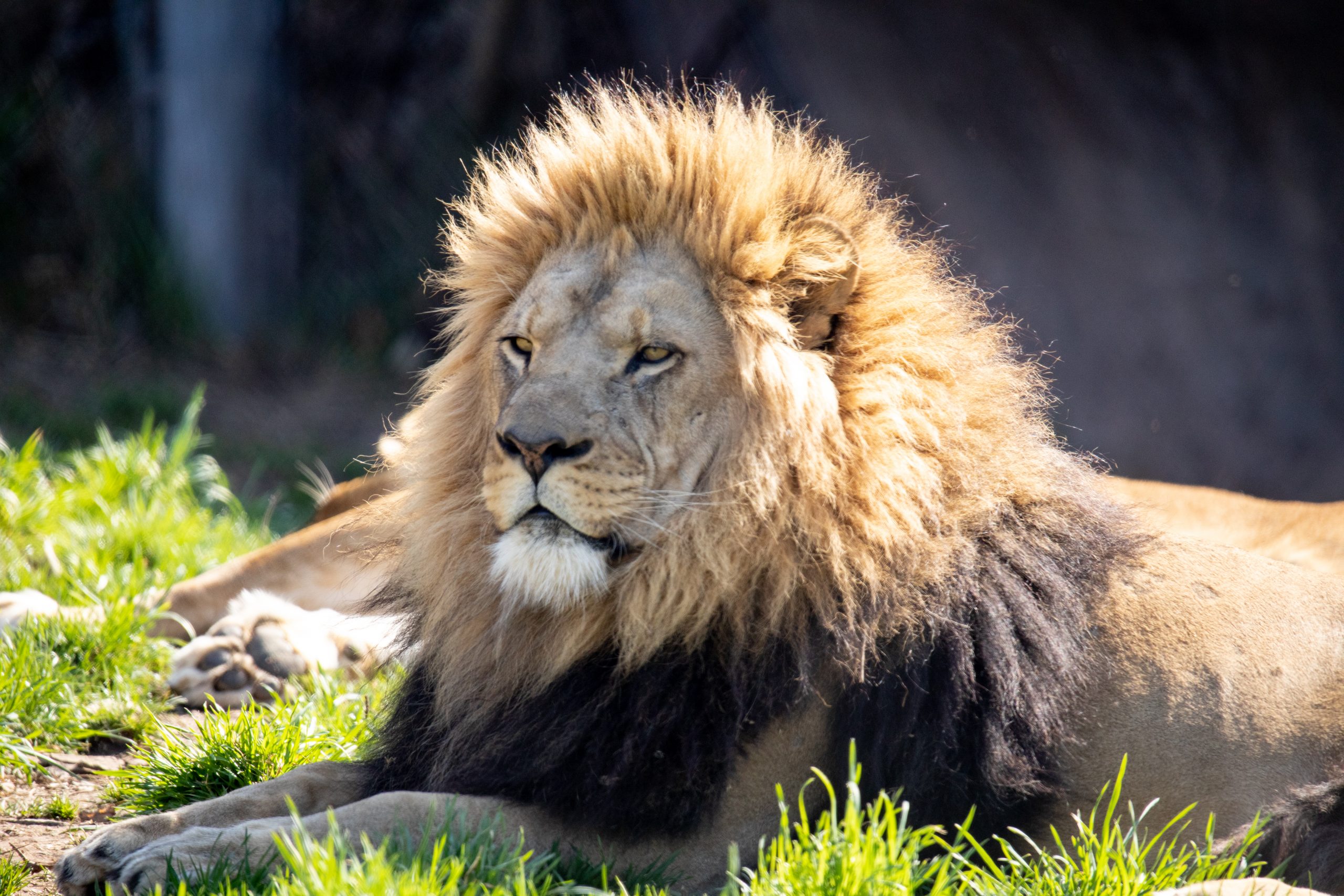
The Zoo is home to three adult African lions that arrived in December 2011 from an animal park outside Pretoria, South Africa. There is one male, Chester, born in September 2010 and two females: Zuri, born in September 2010 and Asha, born in January of 2011.
Animal Facts
Lions roar in chorus. This may be a form of social bonding and the roars can be heard as far as five miles away!
In the wild, most male lions live between five and nine years, while females live until 15 or 16 years. In the Serengeti, females have lived up to 18 years.
Individual lions can be identified by their unique whisker spot pattern, similar to how our fingerprints are used.
Most cat species are solitary, but lions are social and live in groups called prides
Females do most of the hunting in a pride, sometimes in a group. Hunting typically takes place at night.
Diet
Large ungulates, birds, rodents, fish, ostrich eggs, amphibians and reptiles. Lions also actively scavenge, taking cues from hyenas and vultures.
Status in The Wild
Vulnerable
International Union for Conservation of Nature (IUCN) Red List status
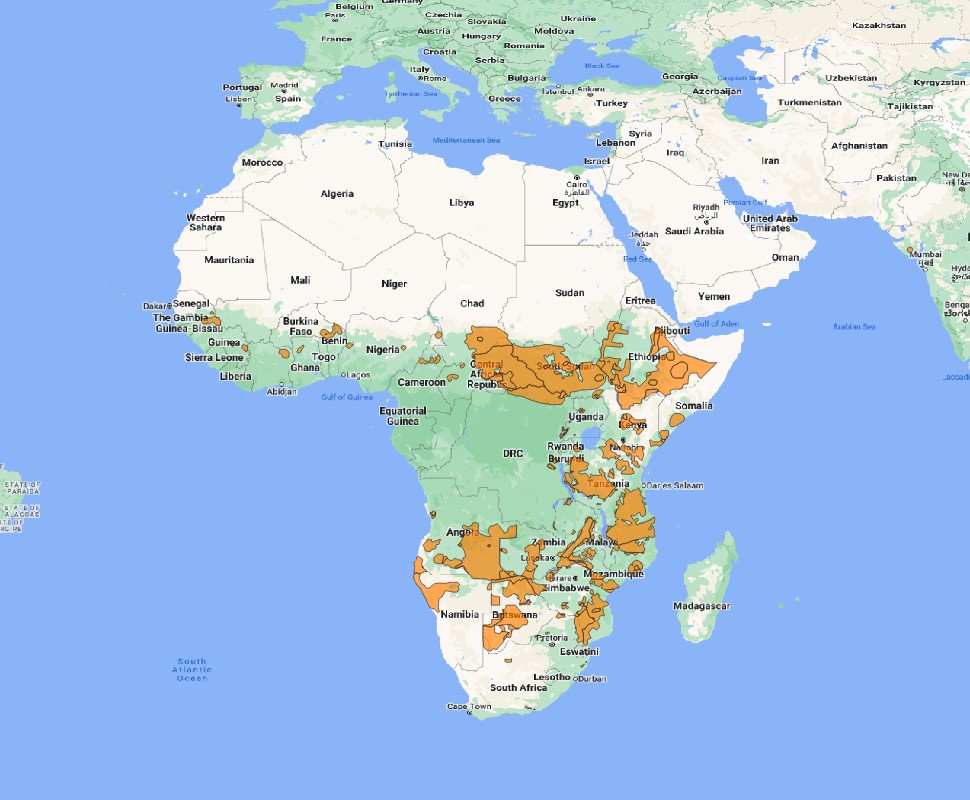
African lions are most common in plains or savanna habitat.
African lions are protected under CITES Appendix II. They are part of the Zoo’s Species Survival Plan (SSP) Program. It is believed that during the past two decades, the lion population has declined by nearly 30 percent. Main threats listed by IUCN are indiscriminate killing by humans and prey base depletion. Other problems include habitat loss, agricultural expansion and geographic isolation of different groups.
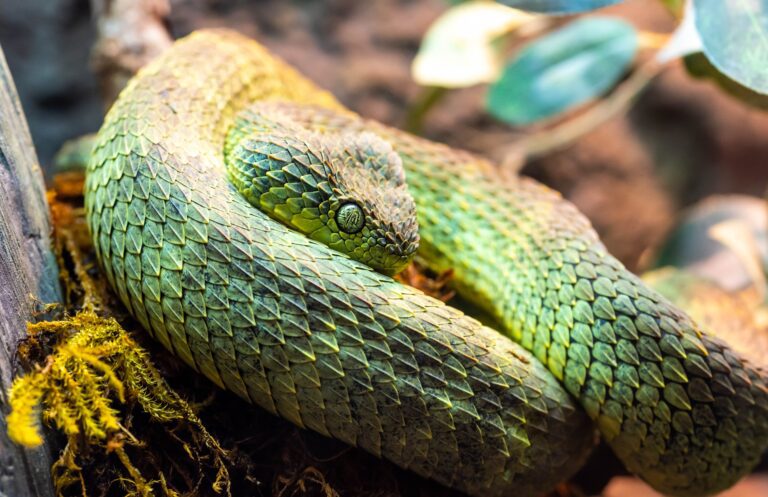
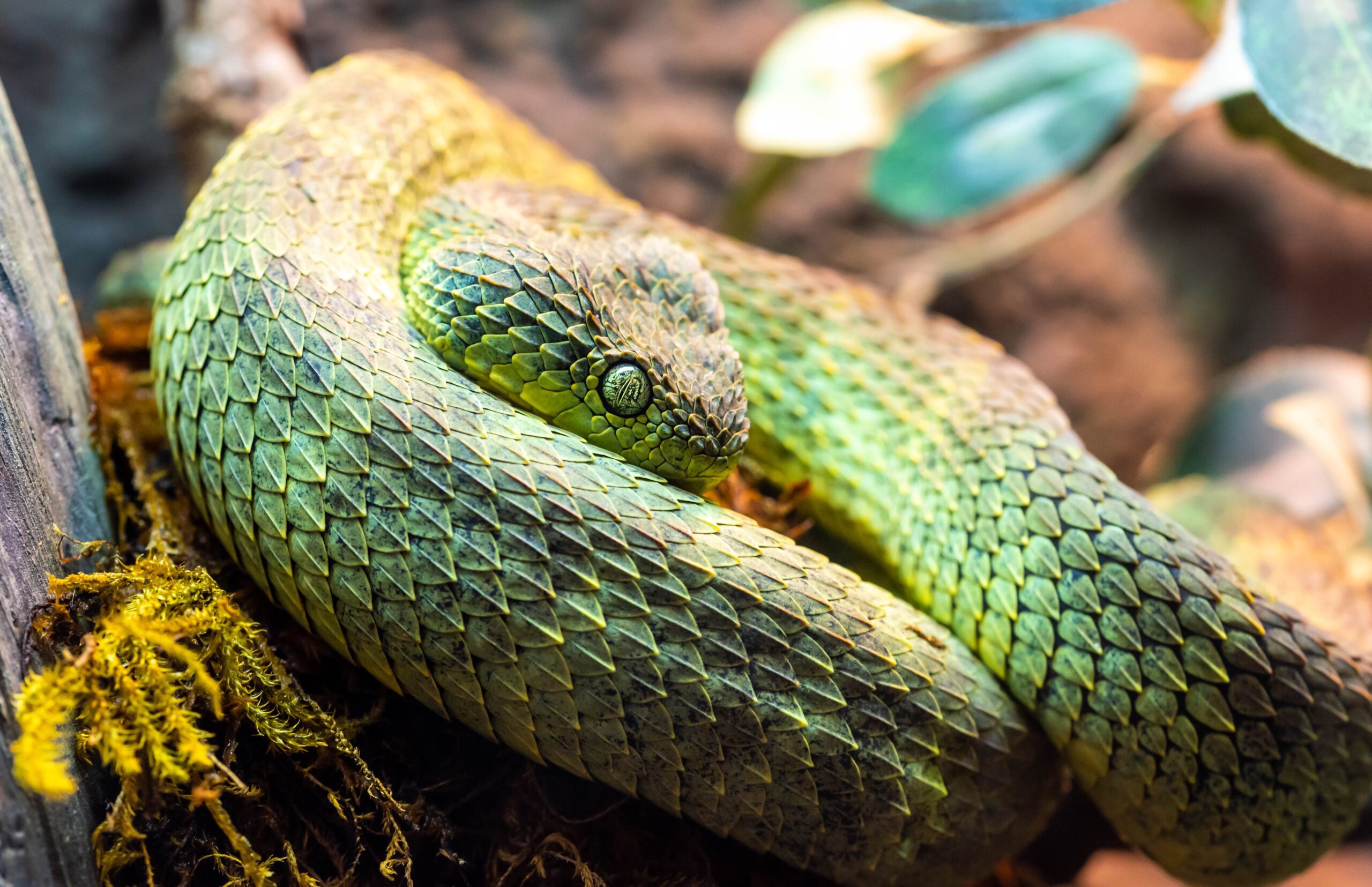
Seneca Park Zoo’s African bush viper resides inside the Animals of the Savanna building, in the micro-habitat tree.
Animal Facts
African bush vipers are ambush predators, and commonly strike their prey while hanging upside down from a tree limb.
There is no antivenom for this species of snake.
African bush vipers are commonly called “green vipers”, however they can be found in variations of red, orange, gray, yellow, black, blue, olive, and brown. They may also change color throughout their lifespan.
They are viviparous, meaning they give live birth.
They are nocturnal which means they sleep during the day and are awake at night which is also when they hunt.
Diet
African bush vipers are carnivorous, and primarily eat small rodents. They may also eat birds, frogs, and small reptiles when available.
Status in The Wild
Not Evaluated
International Union for Conservation of Nature (IUCN) Red List status
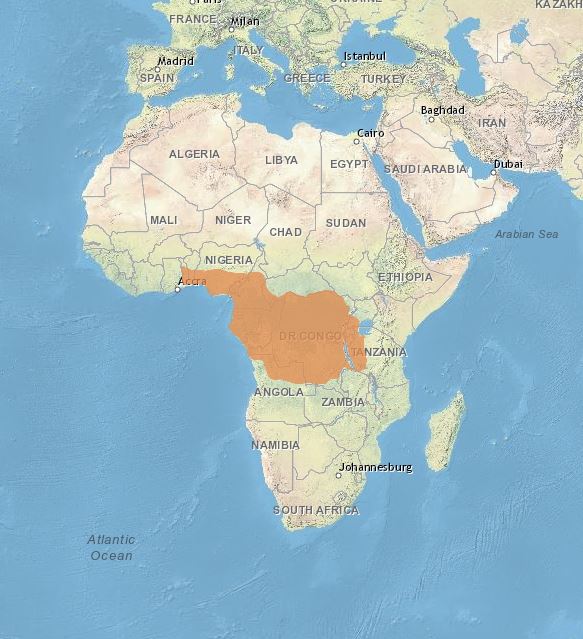
African bush vipers are mainly arboreal and prefer tropical rainforests in West and Central Africa. They are typically found far from human settlements.
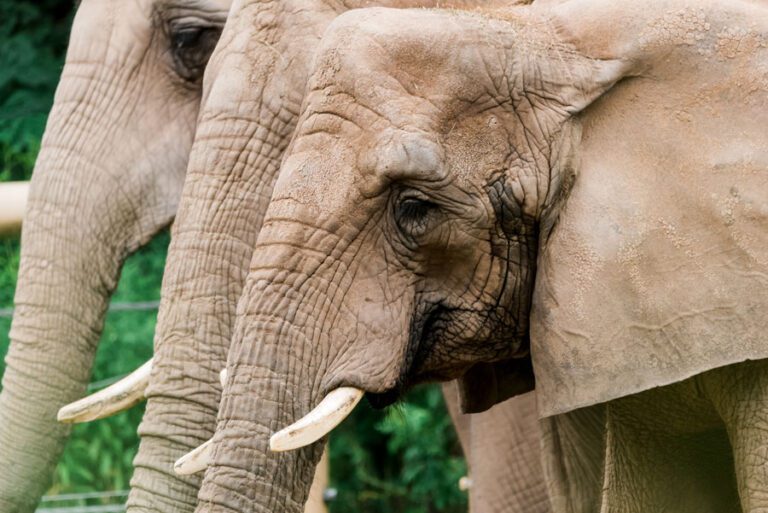
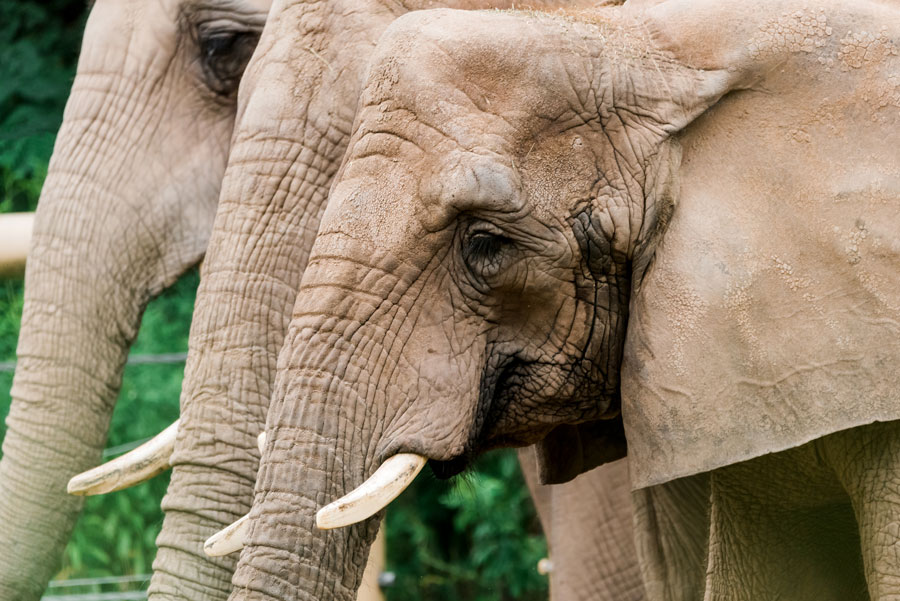
Three female African elephants reside at Seneca Park Zoo. Genny C and Lilac were born in South Africa in 1977 and 1978, respectively, and came to live at the Zoo in 1979. Moki was born in Zimbabwe in 1982 and joined the Zoo family in April 2015. All of our elephants respond to, and understand, more than 50 verbal commands. To date, they are the only African elephants in New York.
African elephants are the largest land animals on Earth, slightly larger than their Asian cousins
Upper incisor teeth develop into tusks and grow throughout their lifetime.
One way to tell an African elephant apart from their Asian counterparts is by looking at their ears
Elephants are highly social animals living in groups led by the oldest female, made up of cows, their calves and young males
Sounds, touch and posture are all ways they are known to communicate with one another
Diet
Elephants eat leaves, branches, fruit and grasses. They consume 300 pounds of food and 50 gallons of water every day.
Status in The Wild
Endangered
International Union for Conservation of Nature (IUCN) Red List status
African elephants can be found in open forests and grasslands in Africa.
The biggest threats to African elephants are the ivory trade and habitat destruction. Poaching for meat and ivory significantly reduced the population of African elephants in the 20th century. The African elephant has governmental protection, but such poaching is still a serious threat to the species. In Africa, some people have resorted to culling large amounts of elephants to help sustain the ecosystem and reduce the elephant population. The Seneca Park Zoo participates in the Species Survival Plan for the African elephant.